
In the field of piping and fittings, understanding different thread types is crucial for ensuring compatibility and functionality. The two most common thread types are National Pipe Taper (NPT) and British Standard Pipe (BSP). Understanding the differences between BSP and NPT is essential, particularly when working with plumbing, hydraulic systems, or industrial applications. Although these two thread types serve similar functions, they are not interchangeable and possess their own unique characteristics.
The primary differences between BSP and NPT threads lie in their design and regional usage. BSP threads are more common in Europe and Asia, whereas NPT threads are primarily used in North America. They differ in thread angle, profile, and sealing method, which affects their compatibility.
This article explores the key differences between NPT and BSP thread fittings, their specific applications, and best practices for their use.
What is NPT Thread?
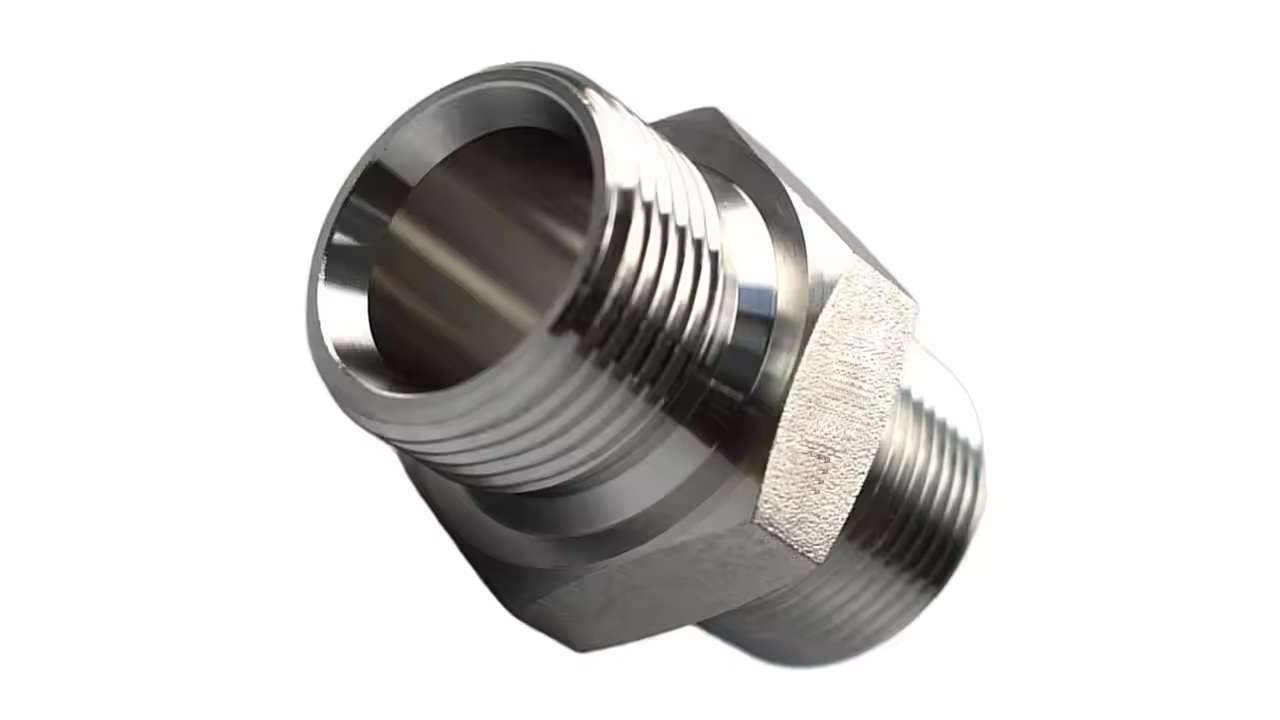
The National Pipe Taper (NPT) thread is a U.S. standard thread widely used across various sectors, particularly in hydraulic piping and gas fittings. NPT threads feature a tapered design, meaning the thread diameter gradually decreases along its length. This design allows for a tighter seal upon engagement, making it especially suitable for high-pressure applications.
Characteristics of NPT Threads
NPT threads feature a 60-degree thread angle and a taper of 1 inch per 16 inches. Tapered threads not only help ensure a secure fit but also minimize the risk of leakage.
Thread sizes are typically measured in inches, ranging from 1/8 inch to 6 inches or larger, depending on the application. Below is a standard thread chart for NPT threads.
| NPT Size | Diameter | NPT Standard | TPI | Outer Diameter | Taper |
| 1/8" NPT | 1/8 inch | ASME B1.20.1 | 27 TPI | 0.405"(10.3 mm) | 1:16 |
| 1/4" NPT | 1/4 inch | ASME B1.20.1 | 18 TPI | 0.540"(13.7 mm) | 1:16 |
| 3/8" NPT | 3/8 inch | ASME B1.20.1 | 18 TPI | 0.675"(17.1 mm) | 1:16 |
| 1/2" NPT | 1/2 inch | ASME B1.20.1 | 14 TPI | 0.840"(21.3 mm) | 1:16 |
| 3/4" NPT | 3/4 inch | ASME B1.20.1 | 14 TPI | 1.050"(26.7 mm) | 1:16 |
| 1" NPT | 1 inch | ASME B1.20.1 | 11.5 TPI | 1.315"(33.4 mm) | 1:16 |
| 1-1/4" NPT | 1-1/4 inch | ASME B1.20.1 | 11.5 TPI | 1.660"(42.2 mm) | 1:16 |
| 1-1/2" NPT | 1-1/2 inch | ASME B1.20.1 | 11.5 TPI | 1.900"(48.3 mm) | 1:16 |
| 2" NPT | 2 inch | ASME B1.20.1 | 11.5 TPI | 2.375"(60.3 mm) | 1:16 |
Another key characteristic of NPT threads is the requirement for sealant or Teflon tape to ensure a leak-proof connection. While the tapered threads create a wedging effect upon tightening that aids in forming a seal, this effect alone is insufficient to prevent leakage without additional sealing material. This reliance on sealing aids also underscores the critical importance of proper installation techniques; improper application of tape or sealant can lead to seal failure and create potential hazards, particularly in gas applications.
When replacing NPT fittings handling high-pressure or high-temperature media, it is essential to verify the material and temperature rating of the seals; use high-temperature sealant or specialized gaskets if necessary to ensure long-term sealing integrity. Sealing materials and coatings should be selected based on the specific medium—such as tap water, gas, or lubricating oil. Adhere to equipment manufacturer specifications and industry standards to prevent safety hazards caused by material incompatibility.
Furthermore, the standardization of NPT threads ensures compatibility across various products and manufacturers, making it easier for engineers and contractors to procure materials without worrying about compatibility issues. This uniformity is crucial for large-scale projects involving multiple suppliers, as it guarantees the seamless connection of all components.
Applications of NPT Threads
Primarily used in the United States, NPT threads are an ideal choice for applications involving pressurized liquids and gases. Due to their superior sealing capabilities, NPT threads are frequently employed in industrial settings—such as manufacturing plants and oil refineries—where safety and reliability are paramount. Beyond these industries, NPT threads are also widely used in residential plumbing systems to connect various fixtures and equipment, ensuring the safe and efficient flow of water within the home. Their versatility extends to HVAC systems, where they connect components requiring secure, leak-proof joints, particularly in high-pressure environments.
Common applications include:
- Water supply systems
- Natural gas pipelines
- Hydraulic systems
- Pneumatic systems
Advantages of NPT Threads
NPT threads feature a 1:16 taper design; as the threads are tightened, a secure mechanical fit is formed between them, effectively reducing the risk of liquid or gas leakage and making them suitable for pressurized systems.
The tapered thread design creates a wedge-like sealing effect that enhances connection strength, leading to widespread use in hydraulic systems, gas pipelines, and industrial equipment.
NPT complies with the ASME B1.20.1 standard and is adopted by manufacturers worldwide; the high degree of interchangeability between different brands simplifies procurement and maintenance.
NPT specifications cover a wide range of sizes—from 1/8" to 6" or even larger—making them suitable for applications ranging from small instrument connections to large-scale industrial piping systems.
Unlike certain thread types that require precise positioning for flat-face sealing, NPT is easy to install; successful assembly simply requires selecting the correct size and using appropriate sealing material.
Disadvantages of NPT Threads
NPT threads typically require auxiliary materials—such as PTFE tape or sealant—to ensure a complete seal; relying solely on thread engagement may not prevent leakage.
Sealing performance is significantly influenced by the installation method; incorrect application of sealant or tape, as well as under-tightening or over-tightening, can lead to leaks or thread damage.
Repeated disassembly can cause thread wear and compromise the seal, making them unsuitable for connections requiring frequent maintenance.
In high-temperature or high-vibration environments, sealing materials may degrade or fail, necessitating the use of heat-resistant sealing materials.
Although NPT and BSP threads appear similar, they differ in thread pitch and thread angle (60° for NPT vs. 55° for BSP) and are not directly interchangeable.
What is a BSP Thread?
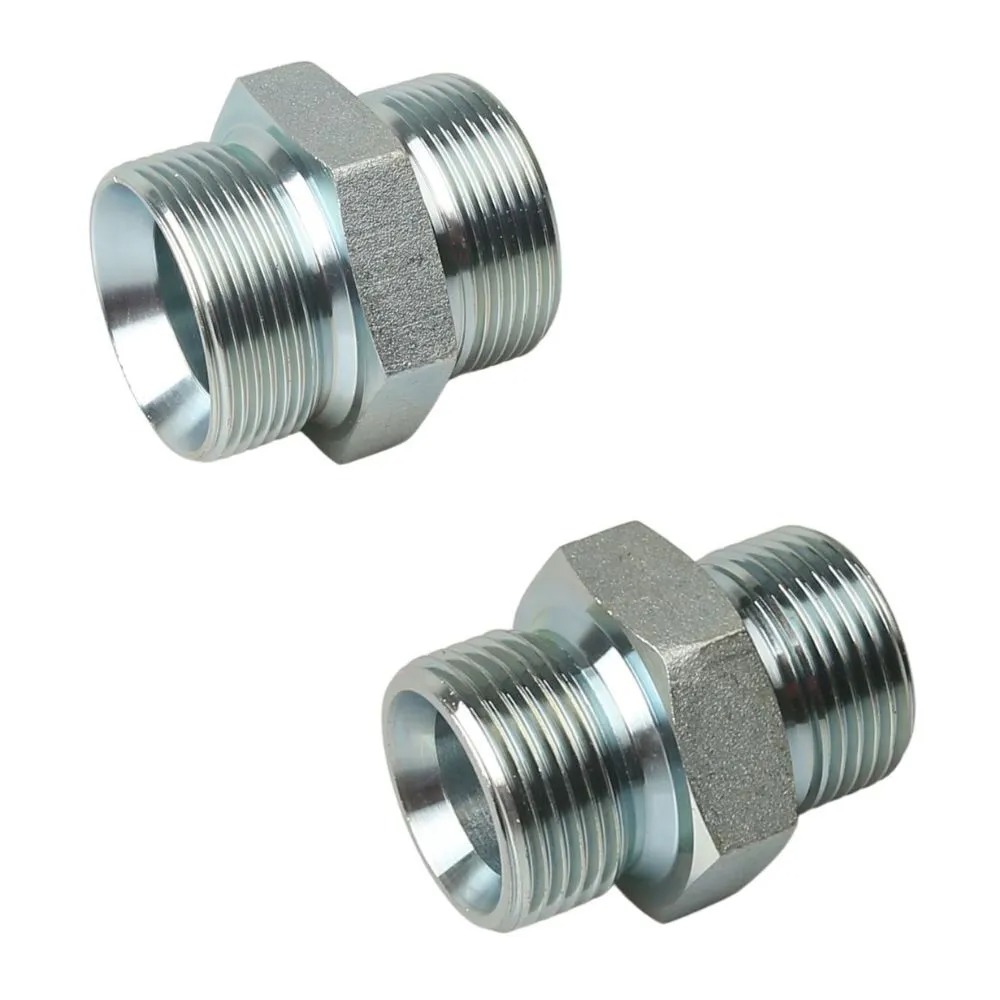
British Standard Pipe (BSP) threads are primarily used in the UK and other countries or regions that follow British standards. Unlike NPT threads, BSP threads come in two types: BSPT (tapered) and BSPP (parallel).
BSPT tapered threads are similar to NPT threads; based on ISO 228 and Whitworth thread standards, they feature a 55-degree thread angle and are commonly found in European and Asian markets.
In contrast, BSPP parallel threads are straight threads that require a sealing washer or O-ring to prevent leakage. BSP is one of the widely recognized international technical standards for threading, connecting, and sealing pipes and fittings, and it has been broadly adopted as a global standard for piping components.
BSPP features parallel threads with a 55° thread angle; the threads themselves do not provide a seal, requiring a face seal (such as a bonded washer or O-ring) to ensure tightness. This design makes it well-suited for connections requiring frequent assembly and disassembly. Widely used in Europe, Commonwealth nations, and certain equipment in my country, these threads are commonly found in low-pressure or static pipeline connections within hydraulic and pneumatic systems.
BSPT features a tapered thread with a 55° thread angle and a 1:16 taper; it achieves a seal through the deformation of the thread profile. Typically requiring the use of a sealant (such as PTFE tape or thread sealant), it is generally considered to offer superior sealing performance and is therefore frequently selected for high-pressure applications.
Selection can be based on pressure conditions: parallel threads (BSPP) paired with a sealing ring are suitable for low-pressure or static systems, whereas tapered threads (BSPT) are appropriate for high-pressure environments. Regarding sealing requirements, BSPT is often preferred for applications demanding reliable sealing under high pressure, while BSPP offers greater operational convenience for pipe connections that require frequent disassembly and maintenance.
Characteristics of BSP Threads
BSP threads feature a 55-degree thread angle, which differs from that of NPT threads. While BSP threads are also designed to create a seal via a tapered profile, they require less tightening force than NPT threads. Like NPT threads, BSP thread sizes are typically specified in inches; however, actual dimensions may vary, potentially leading to compatibility issues if mismatched. Below is a table of common BSP thread specifications.
| Size | Threads Per Inch (TPI) | Pitch (inch) | Major Diameter (inch) | Minor Diameter (inch) | Thread Length (inch) |
| 1/16 | 28 | 0.0357 | 0.3041 | 0.2583 | 0.2559 |
| 1/8 | 28 | 0.0357 | 0.383 | 0.3372 | 0.2559 |
| 1/4 | 19 | 0.0526 | 0.518 | 0.4506 | 0.3587 |
| 3/8 | 19 | 0.0526 | 0.656 | 0.5886 | 0.4724 |
| 1/2 | 14 | 0.0714 | 0.825 | 0.7335 | 0.5197 |
| 3/4 | 14 | 0.0714 | 1.041 | 0.9495 | 0.5709 |
| 1 | 11 | 0.0909 | 1.309 | 1.1926 | 0.6614 |
| 1 1/4 | 11 | 0.0909 | 1.65 | 1.5335 | 0.752 |
| 1 1/2 | 11 | 0.0909 | 1.882 | 1.7656 | 0.752 |
| 2 | 11 | 0.0909 | 2.347 | 2.2306 | 0.9213 |
Another key feature is that BSP threads typically do not require sealing tape or sealant—especially BSPP threads, which rely on gaskets or O-rings to achieve a seal. This can simplify installation and maintenance in certain applications.
BSP Applications
The selection of BSP threads requires a comprehensive assessment of factors such as pressure ratings, fluid characteristics, and the frequency of disassembly.
BSPP threads are suitable for low-pressure, non-critical applications requiring frequent disassembly, such as instrument ports and access points.
BSPT threads are better suited for medium- to high-pressure sealed connections, particularly in demanding environments like oil and gas pipelines and hydraulic systems where sealing integrity is critical.
Notably, the Rp/R1 parallel-taper joint configuration within the BSPT series is widely used in Europe, whereas the Rc/R2 taper-taper joint configuration is more common in Asia.
In any case, BSP threads are widely used across various sectors—specifically for connecting water, oil, and gas lines—and are particularly prevalent in piping and hydraulic systems. Typical applications include:
- Water supply and drainage systems
- Heating systems
- Compressed air systems
- Fuel distribution
Beyond piping systems, BSP threads are also commonly found in agricultural and industrial machinery, serving to securely connect various components.
BSP Advantages
BSP is one of the most widely used pipe thread standards globally, particularly in markets across Europe, the UK, Commonwealth nations, and Asia; it is suitable for hydraulic, pneumatic, industrial piping, plumbing, and gas systems.
Additionally, BSP fittings enjoy high market acceptance and are extensively used in sectors such as hydraulic machinery, agricultural equipment, construction machinery, pneumatic equipment, and industrial piping.
Disadvantages of BSP
Although BSP threads resemble NPT or metric threads in appearance, they differ in thread angle, pitch, and dimensions, making them prone to mismatching; mixing them up can lead to leaks or thread damage.
BSPP threads do not provide a seal on their own and require additional sealing elements, such as O-rings or gaskets; aging or damage to these seals can result in leaks.
Installing BSPT requires careful control of tightening force, as the seal is achieved through thread deformation; overtightening can damage the threads. Additionally, the use of sealant or thread seal tape is typically required during installation.
BSP vs. NPT Threads: What Are the Differences?
BSP (British Standard Pipe) and NPT (National Pipe Thread) are common pipe thread standards in the industrial sector, widely used in hydraulic systems, pneumatic equipment, piping connections, and industrial machinery.
Although they look very similar and both use inch-based sizing, BSP and NPT threads are not directly interchangeable due to differences in thread angles, pitch, sealing methods, and target markets.
Regions of Use
The primary difference between BSP and NPT threads lies in the regions where they are used, rather than in the threads themselves; this is an important distinction. NPT threads are common in the United States and Canada, whereas BSP threads are the prevailing standard in the UK, Europe, Asia, Australia, New Zealand, South Africa, and many other countries.
Thread Angle and Design
One of the most significant differences is the thread angle. NPT threads have a 60-degree angle, whereas BSP threads have a 55-degree angle. This difference affects how the threads engage and seal. The taper of NPT threads creates a wedging effect that results in a tighter fit, though care must be taken to avoid overtightening.
In contrast, BSP threads—particularly parallel BSPP threads—are designed to be more forgiving during installation; they are easier to connect and disconnect without the risk of damaging the threads.
Sealing Methods
Another significant difference lies in the sealing methods employed for different thread types. NPT threads typically require the use of Teflon tape or sealant to achieve a leak-free connection; while this additional step is time-consuming, it is crucial for ensuring safety and reliability.
BSP threads—particularly parallel threads—can utilize sealing washers or O-rings, thereby simplifying the installation process. However, the correct sealing method must be selected based on the specific application to prevent leakage.
Interchangeability and Compatibility
The interchangeability of NPT and BSP threads is a common issue. Due to differences in thread angles and design, NPT and BSP fittings are not directly compatible. Attempting to connect these two thread types can result in leaks and potential system failure.
For example, using an NPT fitting with a BSP threaded component may lead to a poor fit, as the threads cannot engage correctly. Therefore, it is essential to verify the thread type before making any connections to ensure compatibility and maintain system integrity.
Applications
NPT and BSP tapered threads are utilized because, unlike straight threads, they can form a fluid-tight or airtight seal when torque is applied. While straight threads serve merely to join components together, tapered threads compress and seal the connection upon tightening.
Tapered pipe threads provide an effective seal for piping systems transporting liquids, gases, steam, and hydraulic fluids. They are widely used across various industries, including power generation, oil and gas, chemicals, manufacturing, and shipping. For instance, many pressure systems on ships employ BSP threads, whereas numerous applications in the oil and gas sector utilize NPT threads.
NPT and BSP threads are compatible with a wide range of materials; in addition to steel and brass, they can be used with bronze, cast iron, and plastics such as PTFE, PVC, and nylon.
Maintenance and Repair
BSP threads—particularly parallel threads—are easier to handle during maintenance due to a design that facilitates disassembly and reassembly.
In contrast, NPT threads may require greater care during maintenance to avoid damaging the threads or compromising sealing performance. Understanding the system's long-term maintenance requirements helps in selecting the most suitable thread type.
| BSP Thread | NPT Thread | |
| Full Name | British Standard Pipe Thread | National Pipe Thread |
| Main Standard | ISO 228 / BS 21 | ASME B1.20.1 |
| Country of Origin | United Kingdom | United States |
| Thread Angle | 55° | 60° |
| Thread Type | BSPP (Parallel) and BSPT (Tapered) | Mainly NPT (Tapered) |
| Taper | BSPT: 1:16 | NPT: 1:16 |
| Size Unit | Inch | Inch |
| Sealing Method | BSPP: O-ring or gasket; BSPT: Thread sealing | Sealing by tapered thread wedging |
| Sealant Required | BSPP: Usually not required; BSPT: Usually required | Usually requires PTFE tape or thread sealant |
| Main Markets | Europe, Asia, the UK, and Commonwealth countries | United States, Canada, and North America |
| Common Applications | Hydraulic systems, pneumatic systems, industrial equipment, and water piping systems | Hydraulic systems, gas systems, and industrial piping |
In summary, both NPT and BSP threads are vital components of the piping industry, each possessing unique characteristics and applications. Understanding the key differences between these two thread types is essential to ensuring compatibility and functionality across various systems.
Despite various attempts, issues inevitably arise when connecting NPT male threads to BSPP female threads. Mismatched thread pitches can lead to misalignment, resulting in fluid leaks or even catastrophic failure under pressure.
By considering factors such as location, application requirements, and maintenance needs, you can make informed decisions when selecting the appropriate thread type. Adhering to best practices for installation and maintenance will further enhance the reliability and safety of threaded connections, ultimately ensuring project success.
Whether using NPT or BSP threads, knowledge and attention to detail are crucial for achieving optimal performance in piping systems.
NPT vs. BSP: Frequently Asked Questions
Can BSP and NPT fittings be used together?
BSP and NPT fittings should not be mixed in permanent installations. While they may partially engage in some instances, they cannot form a reliable seal due to differences in thread angles and profiles. Mixing them can lead to leaks or thread damage.
What are the main differences between BSP and NPT threads?
The primary differences lie in the thread angle and the sealing method. NPT threads feature a 60° angle and seal through an interference fit between tapered threads. BSP threads feature a 55° angle and can be either tapered (BSPT) or parallel (BSPP), depending on the connection type. Due to these geometric differences, BSP and NPT threads are not interchangeable.
Do BSP threads require thread sealant?
Whether thread sealant is required depends on the specific type of BSP thread. BSPT threads require sealant to achieve a proper seal, whereas BSPP threads utilize a bonded seal washer rather than thread sealant.
How can I tell if a fitting is BSP or NPT?
You can distinguish between BSP and NPT fittings by measuring the thread angle: NPT threads have a 60° angle, whereas BSP threads have a 55° angle. Since visual inspection is unreliable, a thread pitch gauge is required for accurate identification.
Which pipe thread standard is better: NPT or BSPT?
The two standards are very similar across most sizes, but the key difference is that the American NPT (National Pipe Taper) standard has a steeper thread taper. Neither can be simply declared "better" than the other; rather, countries adopt specific piping systems for their own reasons, and the leakage rate of the system itself does not vary based on the thread type.