
प्लंबिंग प्रणालियों के लिए, उचित स्थापना और संचालन के लिए पाइपिंग घटकों को समझना महत्वपूर्ण है, क्योंकि ऐसा न करने पर रिसाव हो सकता है। एनपीटी फिटिंग प्लंबिंग प्रणालियों में सबसे अधिक इस्तेमाल किए जाने वाले फिटिंग्स में से एक हैं। एनपीटी के लिए खड़ा है राष्ट्रीय पाइप टेपरयह एक मानकीकृत प्रणाली (ANSI B1.20.1) है जिसका उपयोग उत्तरी अमेरिका में पाइपों और फिटिंग्स के बीच थ्रेडेड कनेक्शन के लिए आमतौर पर किया जाता है। यह लेख NPT पाइप फिटिंग्स और NPT थ्रेड्स क्या हैं, NPT फिटिंग्स को सही तरीके से कैसे मापें, और सही NPT फिटिंग्स चुनने में आपकी मदद करने के बारे में विस्तार से बताएगा।
एनपीटी पाइप फिटिंग क्या है?
एक एनपीटी फिटिंग यह एक थ्रेडेड जोड़ है जिसका उपयोग प्लंबिंग सिस्टम में दो पाइपों के बीच या एक पाइप और फिटिंग के बीच सील बनाने के लिए किया जाता है। एनपीटी धागे फिटिंग के आधार की ओर पतले होते जाते हैं। यह पतला आकार फिटिंग को पेंच करने पर एक मज़बूत सील बनाता है। रिसाव-रोधी कनेक्शन सुनिश्चित करने के लिए एनपीटी धागे पाइप सीलेंट या टेफ्लॉन टेप जैसे सीलेंट पर निर्भर करते हैं।
ये समुद्री या रासायनिक प्रसंस्करण जैसे संक्षारक वातावरणों के लिए आदर्श हैं। सामान्य एनपीटी थ्रेड फिटिंग सामग्रियों में पीतल, कार्बन स्टील और स्टेनलेस स्टील शामिल हैं।

एनपीटी थ्रेड क्या हैं?
एनपीटी थ्रेड्स में एक पतला डिजाइन, यह एक मजबूत प्रदान कर सकता है यांत्रिक कनेक्शन पाइप और फिटिंग के बीच। जैसे ही नर और मादा धागे एक साथ जुड़ते हैं, टेपर एक सघन सील बनाता है, जिससे रिसाव को रोकने में मदद मिलती है, खासकर जब इसे उपयुक्त थ्रेड सीलेंट, जैसे टेफ्लॉन टेप या पाइप सीलेंट के साथ इस्तेमाल किया जाता है। ताकि यह उच्च दबाव का सामना कर सके। मुख्य रूप से प्लंबिंग और अन्य द्रव प्रवाह अनुप्रयोगों में उपयोग किया जाता है।
एनपीटी थ्रेड कोण क्या है?
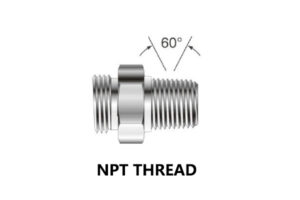
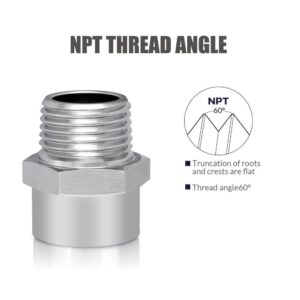
एनपीटी थ्रेड मानक निर्दिष्ट करता है 60-डिग्री धागा कोण और एक विशिष्ट पिच, जो धागों के बीच की दूरी है। पिच धागों के बीच की दूरी है। धागों को अन्य NPT फिटिंग्स के साथ संगत होने के लिए डिज़ाइन किया गया है, ताकि आवश्यकतानुसार उन्हें आसानी से जोड़ा और अलग किया जा सके। कृपया ध्यान दें कि NPT फिटिंग्स को सभी फिटिंग्स से नहीं जोड़ा जा सकता। NPT पाइप फिटिंग्स को टेपर्ड पाइप थ्रेड्स के लिए डिज़ाइन किया गया है।
क्या एनपीटी पाइप फिटिंग से सीलबंद कनेक्शन प्राप्त किया जा सकता है?
एनपीटी थ्रेड अपने टेपर्ड डिज़ाइन के कारण यांत्रिक कनेक्शन के माध्यम से सील हो जाते हैं। यह टेपर्ड आकार फिटिंग के पेंच लगाने पर एक मज़बूत सील बनाता है। जैसे ही नर और मादा धागे एक साथ जुड़ते हैं, टेपर एक मज़बूत सील बनाता है, जिससे रिसाव को रोकने में मदद मिलती है।
एनपीटी पाइप फिटिंग अनुप्रयोग
औद्योगिक प्रक्रियाएँ: एनपीटी फिटिंग का उपयोग उद्योगों में दबावयुक्त तरल पदार्थों और गैसों के स्थानांतरण के लिए किया जाता है। इनका उपयोग विनिर्माण, रासायनिक उत्पादन और तेल एवं गैस उद्योग में किया जाता है, जहाँ सुरक्षित कनेक्शन महत्वपूर्ण होते हैं।
ऑटोमोटिव अनुप्रयोग: ऑटोमोटिव उद्योग में, एनपीटी फिटिंग का उपयोग ईंधन और तेल लाइनों के लिए किया जाता है, जहां उनका सुरक्षित कनेक्शन रिसाव को रोकता है और इष्टतम प्रदर्शन सुनिश्चित करता है।
प्लंबिंग सिस्टम: एनपीटी फिटिंग का उपयोग पाइपों और फिक्स्चर को जोड़ने के लिए किया जाता है। ये एक रिसाव-रोधी सील बनाते हैं, जो पाइप इंस्टॉलेशन के रखरखाव के लिए आवश्यक है।
एचवीएसी सिस्टम: एनपीटी फिटिंग का इस्तेमाल अक्सर हीटिंग, वेंटिलेशन और एयर कंडीशनिंग (एचवीएसी) सिस्टम में किया जाता है। ये विभिन्न घटकों को जोड़ने में मदद करते हैं, जिससे कुशल वायु प्रवाह और तापमान नियंत्रण सुनिश्चित होता है।
अग्नि सुरक्षा प्रणालियां: एनपीटी फिटिंग की विश्वसनीयता उन्हें अग्नि सुरक्षा प्रणालियों के लिए उपयुक्त बनाती है, जहां पानी या रसायन वितरण सुसंगत और विश्वसनीय होना चाहिए।
एनपीटी फिटिंग के नुकसान
अधिक कसने के कारण पोर्ट विस्तार या दरार पड़ने की संभावना
आवश्यक थ्रेड स्नेहक प्रणाली संदूषण का कारण बन सकता है
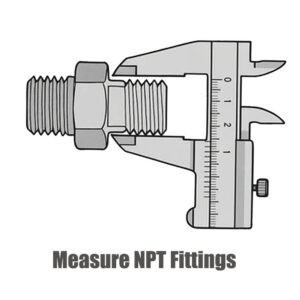
एनपीटी फिटिंग को कैसे मापें?
एनपीटी फिटिंग्स को सही ढंग से मापना यह सुनिश्चित करने के लिए ज़रूरी है कि वे आपके पाइपिंग सिस्टम में ठीक से फिट हों। एनपीटी पाइप फिटिंग्स को मापने के चरण इस प्रकार हैं:
एनपीटी थ्रेड्स को कैसे मापें
एनपीटी धागे को मापने का उद्देश्य यह निर्धारित करना है कि यह एक एनपीटी फिटिंग है या नहीं। सबसे पहले, दिखने में, एनपीटी एक पतला धागा होता है जो धीरे-धीरे मोटा होता जाता है, न कि एक सीधा बेलनाकार धागा। दूसरा, यह पुष्टि करें कि क्या यह 60° का धागा कोण है (एनपीटी 60° है, बीएसपी 55° है)।
एनपीटी कनेक्शन के प्रकार की पहचान करें
चुनने के लिए मेल कनेक्शन और फीमेल कनेक्शन होते हैं। एनपीटी मेल कनेक्शन को थ्रेड्स को स्वयं मापना चाहिए। फीमेल एनपीटी कनेक्शन थ्रेड्स के मेजर डायमीटर (ऊपरी व्यास) को मापता है।
फिटिंग का आकार पहचानें
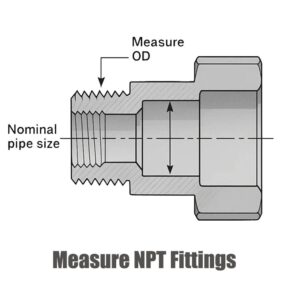
एनपीटी का आकार आंतरिक व्यास पर आधारित होता है पाइप का (आईडी), जो प्रभावी प्रवाह व्यास है जहां से हवा, पानी या अन्य तरल पदार्थ गुजरते हैं।
एनपीटी फिटिंग्स को आमतौर पर उनके नाममात्र आकार से पहचाना जाता है, जो उस पाइप के आंतरिक व्यास के अनुरूप होता है जिसमें उन्हें फिट करने के लिए डिज़ाइन किया गया है। सामान्य आकारों में 1/8″, 1/4″, 1/2″, 3/4″, 1″, इत्यादि शामिल हैं। हालाँकि, सामग्री की मोटाई के कारण फिटिंग का वास्तविक बाहरी व्यास नाममात्र आकार से बड़ा होगा।
बाहरी व्यास को मापें
एनपीटी फिटिंग का बाहरी व्यास मापने के लिए, कैलीपर या टेप मापक का उपयोग करें। मापने वाले उपकरण को फिटिंग के सबसे चौड़े हिस्से के चारों ओर रखें, यह सुनिश्चित करते हुए कि आप धागों के बाहरी किनारे को माप रहे हैं। इस माप को इंच या मिलीमीटर में लिखें।
The पाइप का बाहरी व्यास (OD) बड़ा है नाममात्र आकार की तुलना में पाइप की दीवार की मोटाई, जो लगभग 1/4 इंच (प्रति पक्ष लगभग 1/16 इंच) जोड़ता है।
उदाहरण के लिए, एक पाइप जिस पर लेबल लगा हो 3/4 इंच एनपीटी वास्तव में बाहरी व्यास पर लगभग 1 इंच मापता है, लेकिन नाममात्र आकार उस आंतरिक व्यास को संदर्भित करता है जहां प्रवाह होता है
थ्रेड पिच निर्धारित करें
पिच धागों के बीच की दूरी को दर्शाता है, और यह पाइप फिटिंग की अनुकूलता निर्धारित करने के लिए महत्वपूर्ण है। पिच को थ्रेड गेज या रूलर से मापा जा सकता है। एक निश्चित लंबाई (आमतौर पर एक इंच) में धागों की संख्या गिनें और पिच ज्ञात करने के लिए उसे लंबाई से भाग दें। उदाहरण के लिए, यदि एक इंच में 11 धागे हैं, तो पिच 11 धागे प्रति इंच (TPI) होगी।
टेपर कोण को मापें
हालांकि हमेशा ज़रूरी नहीं, लेकिन टेपर एंगल को मापने से सही फिटिंग सुनिश्चित करने में मदद मिलती है। एनपीटी थ्रेड्स के लिए मानक टेपर एंगल 1 डिग्री 47 मिनट (लगभग 1.75 डिग्री) होता है। ज़रूरत पड़ने पर, आप थ्रेड एंगल मापने के लिए प्रोट्रैक्टर का इस्तेमाल कर सकते हैं।
सामान्य एनपीटी थ्रेड आकार संदर्भ तालिका
| आकार | टीपीआई | आवाज़ का उतार-चढ़ाव | आयुध डिपो | पहचान |
| 1/16 इंच | 27 | 0.941 | 7.895 | 7.142 |
| 1/8 इंच | 27 | 0.941 | 10.242 | 9.489 |
| 1/4 इंच | 18 | 1.411 | 13.616 | 12.487 |
| 3/8 इंच | 18 | 1.411 | 17.055 | 15.926 |
| 1/2 इंच | 14 | 1.814 | 21.223 | 19.772 |
| 3/4 इंच | 14 | 1.814 | 26.568 | 25.117 |
| 1 इंच | 11.5 | 2.209 | 33.228 | 31.461 |
| 1 1/4 इंच | 11.5 | 2.209 | 41.985 | 40.218 |
| 1 1/2 इंच | 11.5 | 2.209 | 48.054 | 46.287 |
| 2 इंच | 11.5 | 2.209 | 60.092 | 58.325 |
| 2 1/2 इंच | 8 | 3.175 | 72.699 | 70.159 |
| 3 इंच | 8 | 3.175 | 88.608 | 86.068 |
| 3 1/2 इंच | 8 | 3.175 | 101.316 | 98.776 |
| 4 इंच | 8 | 3.175 | 113.973 | 111.433 |
टीपीआई = प्रति इंच धागे (1 इंच = 25.4 मिमी)
पिच = 25.4÷ टीपीआई
ओडी = आईडी+2* थ्रेड ऊंचाई
आईडी = OD-2* थ्रेड ऊंचाई
संगतता की जाँच करें
बाहरी व्यास, पिच और टेपर कोण मापने के बाद, आप इन मापों की तुलना उस फिटिंग के विनिर्देशों से कर सकते हैं जिसका आप उपयोग करने की योजना बना रहे हैं। इससे फिटिंग की अनुकूलता और कनेक्ट होने पर अच्छी सील सुनिश्चित करने में मदद मिलेगी।
थ्रेडेड पाइपिंग सिस्टम का उपयोग करने वाले किसी भी व्यक्ति के लिए, एनपीटी माप (एनपीटी) को मापना अत्यंत महत्वपूर्ण है। ऊपर दिए गए चरणों का पालन करके और एनपीटी व्यास तालिका का संदर्भ लेकर, आप यह सुनिश्चित कर सकते हैं कि आपके उपयोग के लिए सही थ्रेड आकार का चयन किया गया है, जिसके परिणामस्वरूप एक सुरक्षित और कुशल कनेक्शन बनता है। सही माप रिसाव को रोकता है और पाइपिंग सिस्टम की विश्वसनीयता सुनिश्चित करता है।