
क्रिम्प फिटिंग क्या होती हैं?
ए क्रिम्प फिटिंग यह एक स्थायी हाइड्रोलिक कपलिंग है। इसमें मुख्य रूप से फिटिंग बॉडी, नट और स्लीव होते हैं, और क्रिम्पिंग प्रक्रिया के माध्यम से फिटिंग को पाइपलाइन से मजबूती से जोड़ा जाता है, जिससे एक विश्वसनीय सील और सुरक्षित कनेक्शन प्राप्त होता है। इसका व्यापक रूप से पेट्रोकेमिकल्स, मशीनरी निर्माण, ऑटोमोटिव उद्योग और एयरोस्पेस जैसे कई क्षेत्रों में उपयोग किया जाता है।.
इन्हें हाइड्रोलिक नली के सिरे पर फिटिंग लगाकर और फिर क्रिम्पिंग मशीन से नली पर दबाकर जोड़ा जाता है। क्रिम्पिंग मशीन फिटिंग के आधार के चारों ओर समान रूप से दबाव डालती है, जिससे हाइड्रोलिक फिटिंग और हाइड्रोलिक नली के बीच एक मजबूत सील बन जाती है। नली पर लंबे दांत होते हैं जो दबाव पड़ने पर क्रिम्प फिटिंग से चिपक जाते हैं और एक अधिक टिकाऊ सील बनाते हैं जो उच्च दबाव वाले अनुप्रयोगों के लिए उपयुक्त है।.
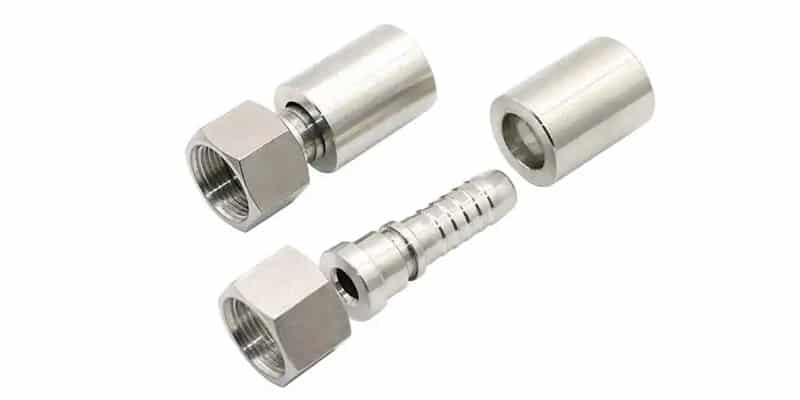
क्रिम्प फिटिंग प्रकार
क्रिम्पिंग फिटिंग कई सामान्य प्रकार की होती हैं।.
स्ट्रेट क्रिम्प फिटिंग की संरचना सरल होती है और इनका उपयोग एक सीधी रेखा में दो पाइपों को जोड़ने के लिए किया जाता है, जिससे माध्यम सीधी रेखा में प्रवाहित हो सके। इनका उपयोग विभिन्न पाइपिंग प्रणालियों में व्यापक रूप से किया जाता है।.
एल्बो क्रिम्प फिटिंग्स में 45 डिग्री और 90 डिग्री जैसे विभिन्न झुकाव कोण होते हैं, जो पाइप में माध्यम की प्रवाह दिशा को बदल सकते हैं। ये उन पाइप इंस्टॉलेशन के लिए उपयुक्त हैं जिनमें विशेष स्थानिक आवश्यकताएं होती हैं, जैसे कि कोनों या संकीर्ण स्थानों में पाइपों को जोड़ना।.
टी क्रिम्प फिटिंग्स एक पाइप को दो अन्य पाइपों से जोड़ सकती हैं। इन्हें इक्वल टीज़ और रिड्यूसिंग टीज़ में विभाजित किया गया है। इक्वल टीज़ में समान व्यास वाले तीन पोर्ट होते हैं और ये समान व्यास वाले ब्रांच पाइपों के लिए उपयुक्त होते हैं; रिड्यूसिंग टीज़ में अलग-अलग व्यास वाले पोर्ट होते हैं जो अलग-अलग व्यास वाले ब्रांच पाइपों की आवश्यकताओं को पूरा करते हैं और अक्सर उन पाइपिंग सिस्टम में उपयोग किए जाते हैं जिनमें प्रवाह को विभाजित या संयोजित करने की आवश्यकता होती है।.
चार-तरफ़ा क्रिम्प फिटिंग बहु-दिशात्मक पाइप कनेक्शन प्राप्त कर सकती है और अधिक जटिल पाइपिंग नेटवर्क में भूमिका निभा सकती है, जिससे माध्यम को कई दिशाओं में परिवहन और वितरित किया जा सकता है।.
इसके अतिरिक्त, कुछ विशेष प्रकार के क्रिम्प फिटिंग होते हैं, जैसे कि फ्लैंज वाले क्रिम्प फिटिंग, जिनका उपयोग फ्लैंज वाले अन्य उपकरणों या पाइपों से जोड़ने के लिए किया जा सकता है, जिससे स्थापना और disassembly में आसानी होती है।.
क्रिम्प्ड होज़ फिटिंग विनिर्देश
विनिर्देशों में आमतौर पर फिटिंग का व्यास, कनेक्शन जोड़ की सामग्री और परिचालन दबाव शामिल होते हैं।.
सबसे पहले, क्रिम्प्ड होज़ फिटिंग के विनिर्देशों में आमतौर पर व्यास शामिल होता है। सामान्य व्यास में 1/4 इंच, 3/8 इंच और 1/2 इंच शामिल हैं, और विशिष्ट आकार पाइप के आयामों और कनेक्ट किए जाने वाले होज़ के व्यास पर निर्भर करता है।.
दूसरे, विनिर्देशों में कनेक्शन जॉइंट की सामग्री भी शामिल होती है। सामान्य सामग्रियों में स्टेनलेस स्टील, तांबा और एल्युमीनियम शामिल हैं। विभिन्न सामग्रियां अलग-अलग कार्य वातावरण और माध्यमों के लिए उपयुक्त होती हैं।.
इसके अलावा, विशिष्टताओं में परिचालन दबाव भी शामिल होता है। क्रिम्प्ड होज़ फिटिंग के विभिन्न मॉडल अलग-अलग अधिकतम दबाव सहन कर सकते हैं, इसलिए विशिष्ट परिचालन दबाव आवश्यकताओं के आधार पर उपयुक्त विनिर्देश का चयन करना आवश्यक है।.
संक्षेप में, क्रिम्प्ड होज़ फिटिंग की विशिष्टताएँ व्यास, सामग्री और परिचालन दबाव जैसे मापदंडों द्वारा निर्धारित की जाती हैं। उपयुक्त विशिष्टता का चयन कार्य वातावरण और माध्यम की आवश्यकताओं को पूरा करते हुए एक सुरक्षित और विश्वसनीय कनेक्शन सुनिश्चित करता है। आशा है, यह जानकारी आपको क्रिम्प्ड होज़ फिटिंग की विशिष्टताओं को बेहतर ढंग से समझने में मदद करेगी।.
हाइड्रोलिक होज़ फिटिंग और क्रिम्पिंग विधियाँ
1. होज़ के बाहरी आवरण की स्किमिंग: क्रिम्पिंग के दौरान बाहरी रबर परत की एक निश्चित लंबाई को हटाना आवश्यक है। यह GB/T3683-92, GB/T 10544-03, DIN20022, SAE100R1A/R2A मानकों के अनुरूप स्टील वायर ब्रेडेड होज़ और स्टील वायर स्पाइरल होज़ के लिए उपयुक्त है।.
2. बाहरी आवरण को छीलने की आवश्यकता नहीं है, जिससे क्रिम्पिंग प्रक्रिया सरल हो जाती है। फाइबर ब्रेडेड होसेस और स्टील वायर ब्रेडेड होसेस जैसे SAE100RIAT/R2AT के लिए उपयुक्त।.
3. स्किवा-प्रकार की क्रिम्पिंग के लिए, भीतरी ट्यूब और बाहरी आवरण दोनों की एक निर्दिष्ट लंबाई को हटाना आवश्यक है। इस डिज़ाइन को इनर-लॉक, सेफ्टी-टाइप क्रिम्प्ड होज़ फिटिंग कहा जाता है। यह GB/T10544-89, SAER12 जैसे बड़े व्यास वाले पाइपों और DIN20023-4SH जैसे अति उच्च दबाव वाले स्टील वायर स्पाइरल होज़ के लिए उपयुक्त है।.
क्रिम्पिंग फिटिंग्स इंस्टॉलेशन विधि
क्रिम्प फिटिंग लगाते समय, संबंधित इंस्टॉलेशन विनिर्देशों और मानकों का सख्ती से पालन करना आवश्यक है। सबसे पहले, पाइप की सतह को समतल और साफ रखें ताकि कनेक्शन की सीलिंग प्रभावित न हो। दूसरा, पाइप के विभिन्न आयामों और दबाव आवश्यकताओं के आधार पर उपयुक्त क्रिम्प फिटिंग का आकार और मॉडल चुनें। अंत में, कनेक्शन की गुणवत्ता और स्थिरता सुनिश्चित करने के लिए इंस्टॉलेशन और कमीशनिंग हेतु आवश्यक उपकरणों और तकनीकों का उपयोग करें।.
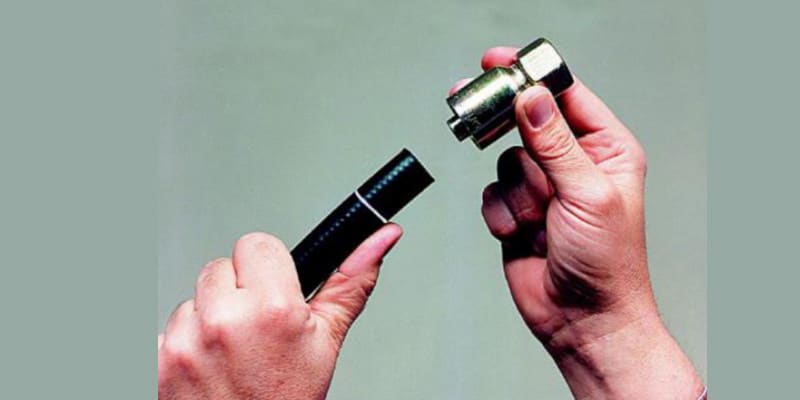
फिटिंग को हाइड्रोलिक नली के सिरे पर रखें, फिर एक क्रिम्पिंग मशीन फिटिंग को नली पर कसने के लिए। क्रिम्पिंग मशीन फिटिंग के निचले हिस्से पर समान दबाव डालती है, जिससे हाइड्रोलिक फिटिंग और हाइड्रोलिक नली के बीच एक मजबूत सील बन जाती है। नली में लंबे दांत होते हैं जो दबाव पड़ने पर क्रिम्प फिटिंग के साथ जुड़ जाते हैं, जिससे एक अधिक टिकाऊ सील बनती है, जो उच्च दबाव वाले अनुप्रयोगों के लिए उपयुक्त है।.