
हाइड्रोलिक नली क्या है?
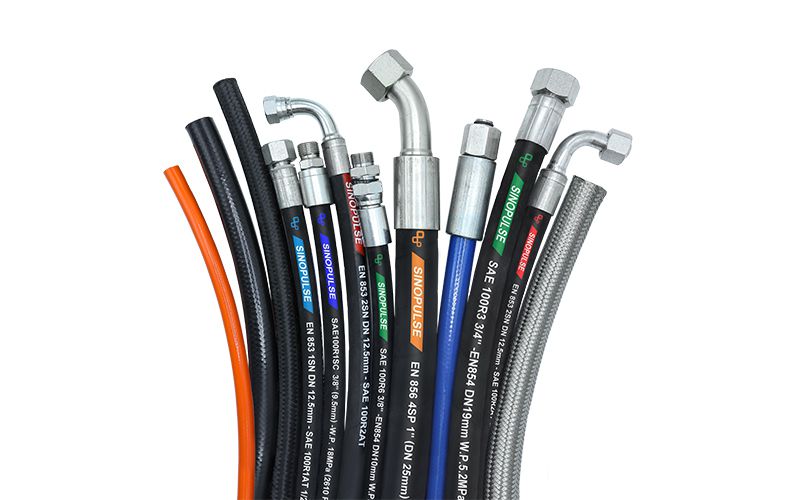
Understanding the basics of हाइड्रॉलिक होस is crucial for the proper use and maintenance of industrial equipment. Hydraulic hoses are responsible for transmitting high-pressure hydraulic oil, providing power for the normal operation of equipment. They are designed to withstand high pressure and transport hydraulic oil between different components such as pumps, valves, cylinders, and motors. They are widely used in various industrial equipment, such as excavators, loaders, cranes, and injection molding machines. A hydraulic hose is a flexible tube made of rubber, thermoplastic, or stainless steel used to transport fluid in hydraulic systems. This article will explore the hydraulic hoses guide in depth, including their types, materials, design, and applications.
हाइड्रोलिक होज़ के प्रकार
High-Pressure Braided Hydraulic Hoses
High-Pressure Braided Hydraulic Hoses: These hoses consist of an inner tube made of synthetic or natural rubber, reinforced with one or more layers of braided fabric or steel wire. They offer excellent flexibility and high abrasion resistance. They are mainly categorized into fiber-braided silicone hoses and steel wire-braided silicone hoses.
These braided hoses are widely popular across various industries due to their superior strength and flexibility. Whether you need hoses for industrial, automotive, or household applications, braided hoses can meet your needs.
The key characteristic of braided hoses lies in their structure. They consist of multiple reinforcing layers, typically made of high-strength materials such as stainless steel or synthetic fibers. This braided structure enhances the hose's strength and stability, enabling it to withstand pressure, abrasion, and even extreme temperatures.
The inner rubber layer typically uses abrasion-resistant and corrosion-resistant synthetic rubber materials, such as nitrile rubber and polyurethane rubber. The reinforcing layer uses steel wire braiding or fiber braiding. The outer rubber layer uses weather-resistant and abrasion-resistant rubber materials to ensure the high-pressure hose maintains excellent performance in various harsh environments.
High-strength steel wires are cross-braided at a 54°44' angle to the hose axis. At this angle, the axial and radial forces generated by internal pressure are evenly distributed. Single-layer braiding can handle medium pressure ranges, while double or multi-layer braiding distributes stress layer by layer through a cascading effect, increasing pressure resistance to a higher level. The steel wire surface is typically brass- or galvanized to enhance adhesion to rubber and prevent delamination.
A major advantage of using braided hoses is their ability to easily handle high-pressure applications. The reinforcing layers ensure the hose can withstand enormous internal pressures without compromising its integrity. This makes them ideal for hydraulic systems, pneumatic equipment, and other environments with extremely high reliability requirements.
Furthermore, the braided structure enhances the hose's flexibility. It allows the hose to easily maneuver around narrow corners and obstacles without tangling or obstructing fluid flow. This flexibility makes it easier to install and ensures smooth operation in a variety of applications.
Braided hoses are widely used in numerous industries, including manufacturing, construction, automotive, and aerospace. They can be used to transport fluids such as water, oil, gas, and chemicals while maintaining optimal flow rates and preventing leaks or bursts.
High-Pressure Multi-Spiral Hydraulic Hoses
Multi-layer spiral hoses are reinforced with four or six layers of high-strength steel wire, offering enhanced strength and durability, making them suitable for high-pressure applications.
The inner tubing is typically made of high-pressure, chemically resistant synthetic rubber or thermoplastic materials to withstand the pressure of hydraulic fluids. The reinforcing layers usually consist of multiple layers of high-strength steel wire spirally wound to enhance the hose's pressure resistance. The outer rubber layer provides additional protection against physical damage, UV radiation, and chemical corrosion.
Hydraulic spiral hoses offer numerous features and advantages, including high-pressure load capacity, excellent abrasion resistance, chemical stability, a wide operating temperature range, and good fatigue resistance. Their steel wire braided or spirally wound reinforcing layers give the hose excellent pressure resistance, enabling it to withstand the pressure of high-pressure hydraulic systems. Furthermore, the choice of inner tubing material offers excellent abrasion resistance, helping to extend the inner tubing's service life. Spiral hoses are also resistant to chemicals in hydraulic fluids, reducing corrosion and damage.
These hoses are widely used in industrial, construction, agricultural, automotive, and aerospace fields, for various applications including construction machinery, agricultural equipment, automotive manufacturing, aircraft, and marine engineering. They are able to maintain the reliability and efficiency of hydraulic systems under high pressure, high temperature and harsh environments.
थर्मोप्लास्टिक हाइड्रोलिक होसेस
Thermoplastic hoses are made of synthetic materials such as nylon, polyethylene, or polyurethane. They offer excellent chemical resistance, high flexibility, and a wide operating temperature range.
Thermoplastic hoses are characterized by their lightweight and ease of installation. Made from special thermoplastic materials, they exhibit good chemical resistance, making them suitable for use in chemical equipment or offshore environments. Compared to rubber hoses, they have a smaller bending radius, allowing for more compact layouts. However, it should be noted that thermoplastic hoses may not perform as stably as rubber hoses under continuous high pressure conditions.
A major advantage of thermoplastic hydraulic hoses is their light weight. Compared to rubber hoses, they are significantly lighter, resulting in reduced fuel consumption and improved overall efficiency. This makes them ideal for applications with extremely high weight control requirements, such as mobile equipment or the aerospace industry.
Furthermore, thermoplastic hydraulic hoses offer excellent chemical resistance. They effectively resist oils, fuels, solvents, acids, and other corrosive substances common in industrial environments. This corrosion resistance ensures the hoses maintain a long service life and reliability even in the most demanding applications.
Another notable feature of these hoses is their exceptional flexibility. The thermoplastic material allows for greater flexibility without compromising performance or integrity. This flexibility makes them easier to install in confined spaces or complex piping configurations, while minimizing the risk of fluid flow obstruction due to kinks or bends.
Thermoplastic hoses have a wide range of applications, primarily in hydraulic control systems across industries such as automotive, construction machinery, machine tools, agricultural machinery, mining, painting, aerospace, and refrigeration.
कम दबाव वाली नली
Low-pressure hoses are designed for applications where operating pressures are below 300 psi. They are typically used in general-purpose hydraulic systems.
Low-pressure hoses are carefully designed to withstand a wide range of pressures, making them suitable for a variety of applications. From pneumatic systems to fluid delivery, this versatile hose ensures optimal performance and durability.
Stainless Steel Wire-Braided Hose
These hoses are reinforced with stainless steel wire braiding, resulting in increased strength and corrosion resistance, making them ideal for harsh environments.
This stainless steel wire braided hose features a flexible inner tube made of synthetic rubber or polytetrafluoroethylene (PTFE) with a tightly braided outer layer of multiple layers of high-quality stainless steel wire, making it more robust and durable. This hose can withstand extreme temperatures, corrosive chemicals, and heavy-duty applications.
One of the main advantages of stainless steel wire braided hoses is their superior strength and flexibility. The braided layers not only enhance the hose's strength but also give it greater flexibility, allowing for easy handling even in confined spaces. This makes it ideal for numerous industries, including automotive, aerospace, oil and gas, pharmaceuticals, and food processing.
Furthermore, this hose exhibits excellent abrasion resistance, puncture resistance, and resistance to external damage. It can withstand harsh environmental conditions without compromising its structural integrity or performance. In addition, the stainless steel construction ensures its resistance to corrosion caused by prolonged exposure to chemicals or humid environments.
वॉटरब्लास्ट नली
The Waterblast Hose features a multi-layered, reinforced braided structure. The outer layer is abrasion-resistant, the inner layer is corrosion-resistant, and the middle steel wire mesh enhances pressure resistance, ensuring stable water flow over extended periods. This design not only improves safety but also maintains a powerful water jet, making it an indispensable component for car washing and yard cleaning. The high-performance WATERBLAST hose features flexibility, lightweight construction, and durability, and comes in three pressure series with color-coded branding for easy identification. Both the hose and fittings are engineered and manufactured from the highest quality materials, within recognized quality standards, to surpass industry specifications and deliver maximum service reliability.
हाइड्रोलिक नली मानक
The importance of adhering to standards for hydraulic high-pressure hoses lies in ensuring their safety, reliability, and quality stability. Standardized hydraulic high-pressure hoses can withstand higher pressures and temperatures, possess superior durability, abrasion resistance, and corrosion resistance, effectively preventing leaks and accidents, and laying a solid foundation for the normal operation and safety of hydraulic systems.
The main international standards for hydraulic high-pressure hoses include:
ISO Standards: ISO 1436, ISO 3862, ISO 18752
SAE Standards: SAE J517
DIN Standards: DIN EN 853, DIN EN 854, DIN EN 856, DIN EN 857
These international standards mainly cover the dimensions, pressure ratings, test methods, durability, abrasion resistance, and symbols of hydraulic high-pressure hoses.
SAE Standards:
The Society of Automotive Engineers (SAE) has developed standards for hydraulic hoses, fittings, and components. These standards ensure compatibility and performance of products from different manufacturers.
SAE J517 is a specification for hydraulic hoses and hose assemblies developed by the Society of Automotive Engineers. Widely used in the US automotive and construction machinery industries, this standard covers various types of hydraulic hoses, including hoses with different numbers of layers and reinforcing materials, and clearly defines technical parameters and markings. For example, for hoses commonly used in vehicle hydraulic braking systems, SAE J517 strictly specifies data such as corrosion resistance and flexibility to ensure the stability of automotive braking systems.
SAE J1273 is mainly used for high-pressure hydraulic hose assemblies. This standard plays an important role in some high-pressure industrial fields, such as oil extraction equipment and aerospace engineering hydraulic systems. It provides detailed standards for the design, manufacturing, and inspection of high-pressure hose assemblies, ensuring that products can withstand high-pressure environments and reducing the risk of safety accidents caused by hose cracking.
EN Standards:
European standards (EN) are widely adopted in Europe to ensure the quality and safety of hydraulic hoses. These standards cover dimensions, performance, and testing requirements.
EN 853 is a specification developed by the European Federation for Standardization (EFS) for single or multi-layer steel wire lifting hydraulic rubber hoses and assemblies. Many hydraulic equipment manufacturers in the international industrial market follow this standard. This standard sets requirements for hose appearance, standard tolerances, bending tests, and torsion tests, ensuring the quality of hydraulic hoses from multiple dimensions.
EN 856 is for the composition of hydraulic rubber hoses and hoses reinforced with spiral steel wire. Spiral steel wire reinforced hoses are widely used in areas with special requirements for pressure flexibility. This specification strictly adheres to overall design, pressure testing, fatigue life, etc., guaranteeing product quality and safety in the European market.
आईएसओ 18752 मानक
The ISO 18752 standard is not based on construction style, but rather on the pressure and flow required by the hydraulic system. After initial classification, hoses are further classified according to their resistance to pressure peaks and refined according to compactness, bending radius, and temperature rating. For example, any given hose must meet all pressure requirements, regardless of diameter. A 2-inch hose must be as reliable as a ¼-inch hose in terms of rated pressure, and to achieve this, the construction does not need to be exactly the same.
Materials Used in Hydraulic Hoses
Hydraulic Rubber Hoses
Rubber hoses are the most common type of hydraulic hose. They possess good flexibility, high strength, and resistance to wear, oil, and weathering. The inner layer of rubber hydraulic hoses is typically made of synthetic rubbers such as nitrile rubber (NBR) or neoprene rubber (CR), which have good oil resistance, abrasion resistance, and aging resistance, adaptable to various hydraulic oils and working environments. The outer layer is often made of neoprene rubber or chlorosulfonated polyethylene rubber to enhance the hose's weather resistance and UV resistance. Rubber hydraulic hoses are flexible and easy to bend, suitable for hydraulic systems requiring frequent movement or bending. Applications: General hydraulic systems (such as construction machinery, machine tools)
Hydraulic Thermoplastic Hoses
Thermoplastic hoses are lightweight, flexible, and have excellent chemical corrosion resistance. They are often used in low-temperature or high-pressure environments. Thermoplastic hoses are a new type of hydraulic hose that has emerged in recent years, with lightweight and easy installation as their significant features. These hoses are made of special thermoplastic materials, have good chemical corrosion resistance, and are suitable for use in chemical equipment or offshore operating environments. Compared to rubber hoses, thermoplastic hoses have a smaller bending radius, allowing them to fit into more compact spaces. However, it's important to note that thermoplastic hoses may not perform as stably as rubber hoses under continuous high pressure conditions. Applications: High-temperature hydraulic systems (e.g., aerospace, chemical equipment).
PTFE (Polytetrafluoroethylene) Hose:
Teflon hoses use a PTFE inner tube, offering excellent chemical resistance and a wide temperature range, suitable for applications conveying corrosive fluids.
Stainless Steel Hose: Stainless steel hoses are suitable for applications requiring high temperature and corrosion resistance. They are often used in extreme environments or for conveying corrosive fluids. Metal hydraulic hoses are primarily made of metals such as stainless steel or copper, with an inner lining that may be plastic or rubber to prevent corrosion. Metal hydraulic hoses offer extremely high pressure and corrosion resistance, suitable for hydraulic systems with high temperature, high pressure, or corrosive media. However, metal hydraulic hoses are relatively rigid, less flexible, and more expensive. Applications: Extreme environments (e.g., high temperature, high pressure, corrosive media).
Composite Hose:
Composite hydraulic hoses combine the advantages of metals and non-metals, possessing both excellent pressure resistance and the flexibility of non-metallic materials. They are commonly used in hydraulic systems requiring high strength, corrosion resistance, and lightweight flexibility.
Hydraulic Hose Sizes and Dimensions
Choosing the right hydraulic hose size not only affects system performance but also ensures safe operation. Inappropriately sized hoses can lead to hydraulic oil leaks or even hose bursts, causing equipment damage and personal injury. A correct understanding and application of hydraulic hose size charts is fundamental to hydraulic system design and maintenance.
Hydraulic hoses come in various sizes, distinguished by their inner diameter (ID) and outer diameter (OD). Common sizes range from 1/4 inch to 2 inches, with larger sizes available for specialized applications.
आंतरिक व्यास
Hydraulic hoses are primarily classified into two categories: metric and imperial sizes. Metric sizes range from 4mm to 25mm in inner diameter, while imperial sizes range from 1/4 inch to 2 inches. These inner diameter specifications are widely used in various hydraulic systems.
According to hydraulic hose inner diameter standards, there are two main methods for calculating the hose inner diameter: one is based on the outer diameter and wall thickness, and the other is based on flow rate and velocity. Calculations based on outer diameter and wall thickness are generally suitable for simpler applications, while calculations based on flow rate and velocity are more scientific and accurate.
The performance of a hydraulic system is closely related to the inner diameter of the hose. Generally, a larger inner diameter results in a larger flow rate but a slower flow velocity, while a smaller inner diameter results in a faster flow velocity. Simultaneously, a larger inner diameter also means lower resistance and pressure drop, while a smaller inner diameter results in greater pressure drop and higher resistance. Therefore, when selecting hydraulic system hoses, it is necessary to choose an appropriate inner diameter based on the actual situation.
Outer Diameter:
The outer diameter is the overall diameter of the hose, including the thickness of the inner tube and reinforcing layers. The size of the outer diameter affects the matching of the hose with the fittings and the required installation space. The outer diameter of hydraulic hoses is typically a few millimeters larger than the inner diameter; this difference depends on the material and number of reinforcing layers used inside the hose. A reasonable outer diameter design ensures sufficient strength and durability of the hose under high pressure.
The outer diameter of hydraulic oil pipes primarily ensures the strength of the oil pipe under high pressure. The larger the outer diameter of the hydraulic hose, the higher its strength and the greater the pressure it can withstand. Typically, the outer diameter is larger than the inner diameter to provide sufficient protection against rupture under high pressure. Generally, the outer diameter ranges from 10mm to 60mm, depending on the system's working pressure. How to select the appropriate inner and outer diameter specifications? This depends on the design requirements of the hydraulic system. Factors such as the hydraulic system's working pressure, working environment, type of hydraulic oil used, and flow rate all affect the selection of the hose's inner and outer diameters. We often see high-pressure hydraulic systems with large inner and outer diameter hoses, capable of withstanding exceptionally high working pressures. Conversely, some low-pressure systems have smaller inner and outer diameters to meet daily flow requirements.
लंबाई:
The working length of a hydraulic hose refers to the distance between the connection points at both ends of the hose, a crucial parameter to consider during installation. Excessive length leads to complex system layout, increased material waste, and installation difficulty; insufficient length may cause the hose to tighten, affecting its service life. Hydraulic hoses can usually be customized to meet specific needs, but when purchasing them, it is best to choose products that are close to the standard length to better suit equipment installation and maintenance.
Other Important Parameters of Hydraulic Hoses
कार्य का दबाव:
The working pressure of a hydraulic hose refers to the maximum internal pressure the hose can withstand. For DN20 hydraulic hoses, the working pressure is usually higher, but this needs to be determined based on specific product specifications.
बर्स्टिंग प्रेशर:
This refers to the maximum pressure the hose can withstand without being damaged. Burst pressure is usually several times the working pressure, ensuring the safety of the system during use.
Minimum Bending Radius:
This refers to the minimum radius the hose can be bent without damage. Understanding the minimum bending radius is crucial for installation and wiring.
Advantages of High-Pressure Hydraulic Hose
1. High Pressure Withstandability: High-pressure hoses can withstand high working pressures, ensuring the normal operation of equipment and systems.
2. Excellent Corrosion and Abrasion Resistance: The inner rubber layer of high-pressure hoses is made of wear-resistant and corrosion-resistant synthetic rubber material, resisting various corrosive media and abrasion.
3. Good Flexibility and Bending Capability: High-pressure hoses have good flexibility and bending capability, adapting to various complex installation environments and spatial layouts.
4. High Safety: High-pressure hoses are designed and manufactured in strict accordance with relevant standards and specifications, ensuring product quality and safety.
Hydraulic Hose Fittings and Couplings
Hydraulic hose fittings are used to connect hoses to hydraulic systems. They come in various types, including straight fittings, elbows, tees, and cross fittings. The assembly process involves cutting the hose to the required length, installing the fitting, and firmly crimping it to form a leak-free connection. Types include quick-connect couplings, threaded couplings, and flanged couplings. Quick-connect couplings are easy to install and remove, improving work efficiency, and are suitable for applications requiring frequent hose replacements; threaded couplings provide a more robust connection and are suitable for applications requiring high connection stability; flanged couplings are used in large hydraulic systems, offering convenient connection and the ability to withstand greater forces.
There are various connection methods for hydraulic hoses, including threaded connections, flanged connections, and compression fittings. Different connection methods have different requirements for the outer diameter of the hydraulic hose. For example, threaded connections require a thread on the outer diameter of the pipe, so the outer diameter of the pipe itself is larger than other connection methods. Compression fittings, on the other hand, do not require threads, so the outer diameter of the pipe can be relatively smaller.
Hydraulic hose fittings are important components for connecting hydraulic hoses to hydraulic equipment or other hoses. Hydraulic hose fittings come in various types to meet different application requirements, such as straight fittings, elbow fittings, and tee fittings. These fittings are designed to ensure the sealing of the hydraulic system and the stability of fluid transmission.
Straight fittings are the most common type of hydraulic hose fitting, used for straight connections between two hoses or devices. Elbow fittings are used to change the direction of fluid flow, accommodating complex layout requirements. Tee fittings allow for fluid distribution and control in three directions.
When selecting hydraulic hose fittings, attention must be paid to parameters such as the fitting material, connection method, working pressure, and temperature range to ensure compatibility with the hydraulic hoses used, thereby maintaining the stability and safety of the entire hydraulic system.
Hydraulic Hose Crimping Processes
Preparation: Confirm that the required hydraulic hose and connector specifications match. Prepare the crimping tools, such as a crimping machine and corresponding molds. Check the equipment's operating condition, ensuring the molds are clean and undamaged.
Cutting and Stripping: Use a dedicated cutting tool to cut the hose to the required length, ensuring a clean cut. Use the stripping machine to remove the outer adhesive from the hose end. The stripping length depends on the connector specifications, generally slightly longer than the connector's outer sleeve length.
Connecting the Connector: Insert the sleeve and connector onto the stripped end of the hose in sequence. The connector must be fully inserted, ensuring a tight fit against the hose's inner wall.
Crimping: Place the hose with the connector attached into the crimping machine mold, adjusting its position to align the connector with the mold's center. Start the crimping machine and press the connector's outer sleeve according to the set pressure and stroke, pressing it tightly against the hose. Observe pressure changes during the crimping process, ensuring the pressure is uniform and stable.
Inspection: After crimping, check that the connector and hose connection is secure, without any looseness or deformation. Inspect the appearance, ensuring there are no cracks, uneven indentations, or other problems. A simple pressure test can be performed to check for leaks; the device can only be used after passing the test.
Applications of Hydraulic Hoses
Hydraulic Systems: High-pressure hoses are used in hydraulic systems to transmit hydraulic oil, enabling energy conversion and transfer. They can withstand high operating pressures, ensuring stable operation of the hydraulic system.
Mining and Petroleum Industry: In oil extraction, transportation, and storage, high-pressure hoses are used to connect various equipment and pipelines, ensuring smooth oil transport. They are also widely used in oil drilling and well workover operations.
Chemical Industry: In chemical production, high-pressure hoses are used to transport various corrosive media, such as acids, alkalis, and salts. They possess excellent corrosion resistance, ensuring the media is not contaminated during transmission.
Marine and Aerospace Applications: In the marine and aerospace industries, high-pressure hoses are used to connect various equipment and systems, such as fuel systems, hydraulic systems, and cooling systems. They require excellent resistance to oil, water, and extreme temperatures.
Construction: Hydraulic hoses are used in construction machinery such as excavators, loaders, and cranes to transmit hydraulic power for lifting, digging, and other operations.
Agriculture: Hydraulic hoses are crucial in agricultural machinery such as tractors and harvesters. They enable hydraulic systems to operate, allowing them to perform tasks such as lifting, steering, and controlling accessories.
Mining: Mining equipment relies on hydraulic hoses for functions such as drilling, crushing, and conveying materials. These hoses can withstand harsh conditions and high-pressure environments.
Manufacturing: Hydraulic hoses are widely used in manufacturing processes such as injection molding, metal forming, and robotics, facilitating the operation of hydraulic machinery and control systems.
Aerospace: Hydraulic systems are crucial in aircraft, controlling functions such as landing gear, wings, and brakes. Hydraulic hoses ensure the transmission of hydraulic power in these applications.
Automotive: Hydraulic hoses are used in vehicles for various functions, including power steering, braking, and suspension systems. They ensure the smooth and reliable operation of these systems.
Functions of Hydraulic Hoses:
Transmitting Hydraulic Oil: As a flow channel for hydraulic oil, hydraulic hoses deliver hydraulic oil with a certain pressure and flow rate from the hydraulic pump to actuators such as hydraulic cylinders and motors, driving their movement and realizing various actions of equipment, such as the extension and rotation of the boom in construction machinery.
Transmitting Power: In a hydraulic system, hydraulic hoses play a role in transmitting power, efficiently transmitting hydraulic energy to various parts, ensuring a stable power supply for the system and stable equipment operation.
Connecting Components: Used to connect various components in the hydraulic system, such as pumps, valves, and oil tanks, forming a complete circuit and ensuring normal system operation.
Regulating Pressure and Flow: Through hydraulic hoses of different specifications and materials, the pressure and flow rate of hydraulic oil can be adjusted and controlled to meet the needs of different working conditions.
Adapting to Complex Environments: In harsh working environments, such as high temperature, high pressure, and high corrosion, hydraulic hoses, with their special materials and structures, ensure the normal operation of the hydraulic system and have good adaptability.
सही हाइड्रोलिक नली कैसे चुनें
When selecting a hydraulic hose, factors such as operating pressure, temperature, fluid compatibility, flexibility, and environmental conditions should be considered. Always consult industry standards, manufacturer specifications, and seek professional advice to ensure the right hose is chosen for your specific application.
Making an informed decision is crucial when selecting the right hydraulic hose for your project. The performance and safety of a hydraulic system depend on choosing the correct hose that meets the specific needs of the project.
To ensure the right hydraulic hose is selected, you need to consider the following factors. First, assess the system's operating pressure and temperature requirements. Different projects have different pressure and temperature ranges, so it is essential to select a hose that can maintain performance under these conditions.
Next, assess the compatibility of the hose material with the fluid being transported. Hydraulic systems use different types of fluids, such as oil, water, or synthetic fluids. Choosing a hose compatible with the specific fluid used in the project is crucial to prevent any chemical reactions or performance degradation.
Another key factor is the hose's size and length. The size should be determined based on the system's flow requirements and pressure drop limitations. Furthermore, ensure that the selected hose length provides sufficient flexibility without being too loose or too tight.
In addition, environmental factors should be considered, such as abrasion resistance and resistance to chemicals or UV radiation. If your project requires operation in harsh conditions or exposed environments, choose hoses with additional protective features, such as abrasion-resistant outer coatings or UV stabilizers.
Finally, don't forget industry standards and certifications. Ensure that the hydraulic hoses you choose comply with relevant industry standards, such as SAE (Society of Automotive Engineers) specifications, to ensure optimal performance and safety.
Precautions for Using Hydraulic Hoses
Hydraulic hoses have a wide range of applications, but the following points should be noted during use:
1. The installation and connection of hydraulic hoses must comply with relevant standards and specifications to ensure secure connections and reliable sealing.
2. The operating environment for hydraulic hoses should be dry and clean to avoid contamination and corrosion.
3. The operating temperature of hydraulic hoses should be within the material's allowable range to avoid performance degradation due to excessively high or low temperatures.
4. The working pressure and flow rate of hydraulic hoses should be within the design range to avoid overloading.
5. Regular inspection and maintenance of hydraulic hoses are crucial. Check for cracks, deformation, corrosion, and other problems, and replace or repair them promptly.
Maintenance and Care of High-Pressure Hydraulic Hose
To ensure the normal operation and extend the service life of high-pressure hoses, regular maintenance and care are necessary. Here are some common maintenance and care measures:
1. Regular Inspection: Regularly inspect the appearance and connections of high-pressure hoses to ensure there are no cracks, wear, or leaks.
2. Cleaning and Drying: Regularly clean the inside and outside of the high-pressure hose to remove dirt and impurities, keeping it clean and dry.
3. Replacing Damaged Parts: If any damaged or aged parts are found on the high-pressure hose, replace them promptly to ensure its performance and safety.
4. Avoiding Excessive Bending and Stretching: During use, avoid excessive bending and stretching of the high-pressure hose to prevent damage.
निष्कर्ष के तौर पर:
Hydraulic hoses, as a crucial component of hydraulic transmission systems, play a vital role in improving production efficiency and safety in fields such as machinery, engineering, agriculture, shipbuilding, and aviation. The type, materials, design, and application of hydraulic hoses require careful consideration to ensure they can withstand the various challenges of the working environment. Choose the best hydraulic hose manufacturer, choose Sinopulse.