

Sinopulse Hydraulic Hose Selection Center
Hydraulic hoses are used to transport hydraulic fluid between components in a system, enabling the transfer of power and control. They must be able to handle high pressures and various operating conditions while maintaining flexibility and durability. Selecting the appropriate hydraulic hose is crucial for ensuring efficiency, safety, and longevity. With the wide variety of hydraulic hose types available, the choices can be confusing. Here, you can explore the full range of hydraulic hose types to help you make an informed decision and ensure the smooth operation of your hydraulic system.

Browse Sinopulse Hydraulic Hoses by Pressure, Size, Construction, Application, Surface Type, and Industry Standards. Here you can quickly find the suitable hose. You are sure to find the hose you are looking for here.
Quick Selection
By Pressure
Choose hydraulic hoses based on your system working pressure for mining and heavy machinery.
We classify hydraulic hoses into low-pressure, medium-pressure, high-pressure, and ultra-high-pressure hydraulic hose selection to help you quickly choose the right hose based on the specific pressure requirements of your equipment and application. Sinopulse offers reliable hose solutions for every hydraulic application.


- SAE100R1AT (580 PSI to 3600 PSI)
- EN853 1SN (580 PSI to 3600 PSI)

- SAE100R2AT (1200 PSI to 6000 PSI)
- EN853 2SN (1200 PSI to 6000 PSI)
- EN857 2SC (2400 PSI to 5800 PSI)
- SAE 100R16 (1800 PSI to 5800 PSI)
- EN 856 4SP (2400 PSI to 6450 PSI)
- EN 856 4SH (2400 PSI to 6450 PSI)
- SAE 100R12 (2500 PSI to 4000 PSI)
- SAE 100R13 (Constant Pressure 5000 PSI)
- SAE 100R15 (Constant Pressure 6000 PSI)
By Size
If you are looking to select hydraulic hoses based on their inner diameter, please browse our product range to find the perfect match for your equipment's flow rate and connection dimensions. No matter the specifications required by your hydraulic system, you will find the right hose here, ranging from compact 1/4-inch hoses to heavy-duty 2-inch industrial hydraulic hoses.
Sinopulse offers all sizes of hydraulic hoses, widely applicable across construction machinery, agricultural equipment, mining systems, industrial hydraulic installations, and various heavy-duty applications.

Ideal for compact hydraulic systems, pilot lines, grease systems, and light-duty hydraulic equipment with lower flow requirements.

Commonly used in agricultural machinery, forklifts, compact construction equipment, and medium-flow hydraulic applications.

One of the most widely used hydraulic hose sizes for excavators, loaders, industrial machinery, and general hydraulic systems.

Designed for higher flow hydraulic systems requiring increased fluid transfer capacity and reliable pressure performance.

Suitable for heavy equipment, construction machinery, and industrial hydraulic systems with medium to high flow demands.

Used in high-flow hydraulic applications including mining equipment, large excavators, and industrial machinery.

Engineered for heavy-duty hydraulic systems requiring high fluid volume and continuous performance under demanding conditions.

Ideal for large hydraulic machinery, industrial transfer systems, and ultra high-flow hydraulic applications.

Large size hydraulic hose designed for extreme flow capacity in mining, oilfield, marine, and heavy industrial equipment.
By Construction
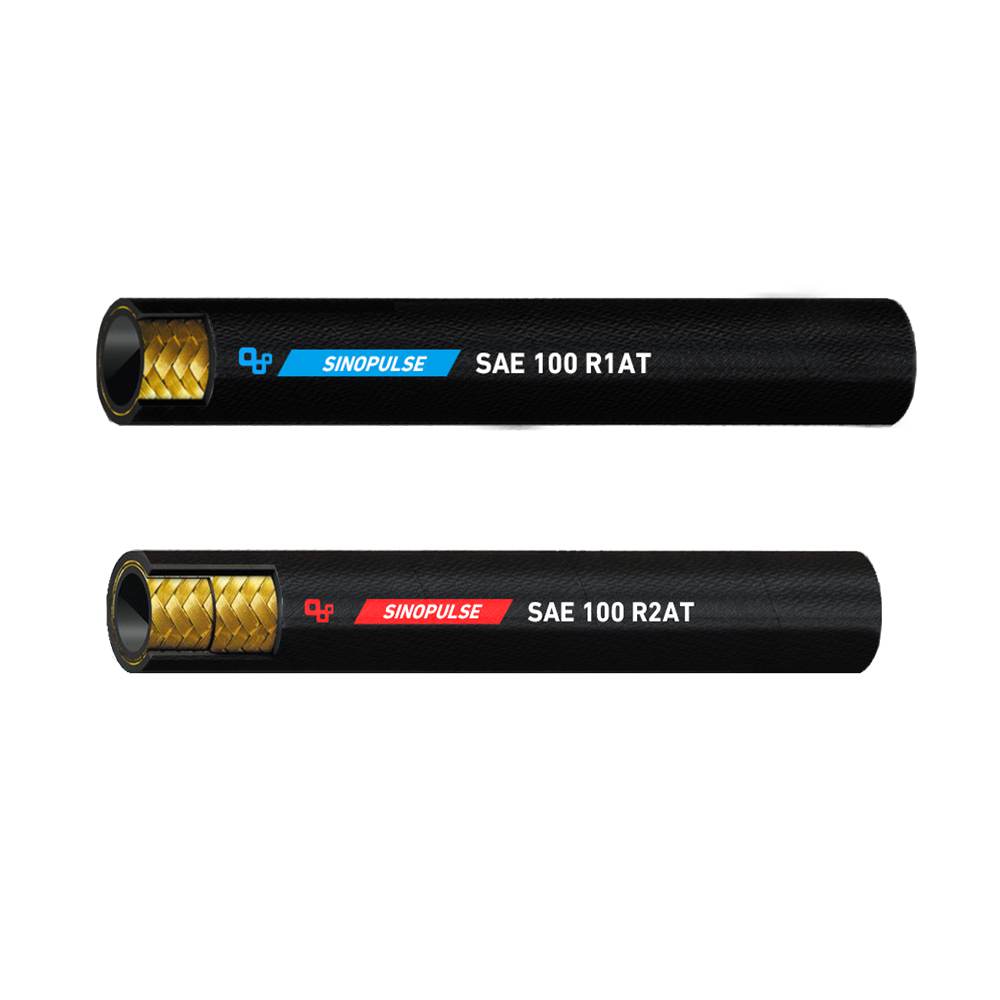
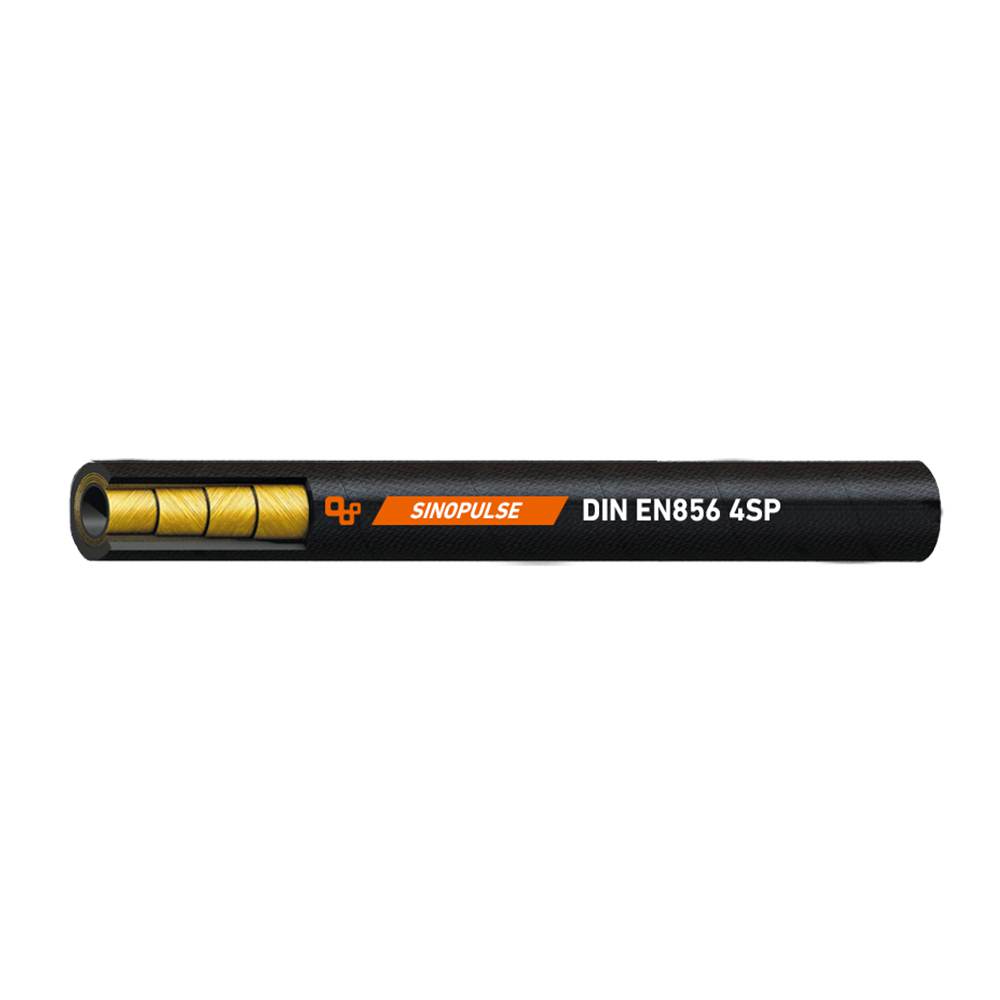
There are many different types of hydraulic hoses, each characterized by its own construction. Discover the most important types listed below.


By Standard
Sinopulse produces hydraulic hoses according to internationally recognized standards including SAE, DIN EN, and ISO.
Standard hydraulic hoses ensure compatibility, safety, pressure performance, and reliable operation across various hydraulic systems and industries.

Widely used hydraulic hose standards for construction machinery, industrial hydraulics, and heavy equipment applications in North America and global hydraulic industries.
- SAE100R1
- SAE100R2
- SAE100R12
- SAE100R13
- SAE100R15

DIN EN standards are commonly adopted in European hydraulic systems, focusing on hose dimensions, pressure performance, flexibility, and durability for demanding operating conditions.
- EN853 1SN
- EN853 2SN
- EN856 4SP
- EN856 4SH
- EN857 1SC
- EN857 2SC

ISO standards provide globally recognized specifications for hydraulic hose safety, dimensions, testing, and operational performance across global industries.
- ISO 18752 AS
- ISO 18752 BS
- ISO 18752 CS
- ISO 18752 AC
- ISO 18752 BC
- ISO 18752 CC
- ISO 18752 DC
By Application
Different applications impose varying requirements regarding hose performance, flexibility, pressure rating, and durability.
We manufacture hydraulic hoses designed for excavators, mining equipment, agricultural machinery, forklifts, cranes, industrial systems, and other demanding operating environments.

Designed for high-pressure hydraulic systems in excavators and earthmoving equipment, offering excellent flexibility, impulse resistance, and durability under tough construction conditions.

Heavy-duty hydraulic hoses engineered for abrasive, high-pressure, and extreme mining environments requiring superior durability and long service life.

Reliable hydraulic hose solutions for tractors, harvesters, sprayers, and other agricultural machinery operating in demanding outdoor conditions.

Flexible and durable hydraulic hoses designed for lifting systems, material handling equipment, and warehouse operations with continuous motion requirements.

High-performance hydraulic hoses for crane systems requiring flexibility, pressure stability, and reliable operation during lifting and heavy-load applications.

Hydraulic hose solutions for loaders, bulldozers, road machinery, and heavy construction equipment operating under high-pressure conditions.

Engineered for tough oilfield environments with excellent resistance to high pressure, abrasion, weather, and demanding hydraulic operations.

Used for manufacturing equipment, hydraulic systems, automation machinery, and industrial fluid power applications.
By Surface
Different hose covers could improve durability, protection, and service life. Sinopulse offers hydraulic hoses with multiple surface options to meet construction, mining, industrial, and heavy-duty equipment requirements.

Hydraulic hoses with a smooth surface feature a neat appearance, ease of installation, and excellent flexibility, making them suitable for general hydraulic systems and industrial applications.

Wrapped hydraulic hoses feature a textured outer surface, which enhances the hose's durability in heavy-duty hydraulic applications.

Heavy-duty hydraulic hoses designed to withstand severe wear, friction, and harsh working conditions.

MSHA approved hydraulic hoses designed for mining and underground applications requiring flame resistance, safety compliance, and reliable high-pressure performance.
By Special Features
Sinopulse provides hydraulic hoses designed for high temperature, low temperature, compact routing, high impulse performance, abrasion resistance, and other demanding operating conditions.

This series of hydraulic hoses is specifically designed for hydraulic systems operating under high temperatures (+135°C, with intermittent peaks up to 155°C) and in the presence of petroleum-based fluids, providing reliable flexibility, pressure resistance, and heat resistance in demanding industrial environments.

Flexible hydraulic hose specifically designed to maintain exceptional performance and crack resistance in severe cold climates, freezing temperatures, and harsh outdoor environments—at temperatures down to -50°C (and intermittently down to -55°C).

It is highly suitable for installation environments with limited space—particularly compact hydraulic systems that demand a smaller bending radius, greater flexibility, and ease of routing. Our flexible hoses feature a minimum bending radius as small as 75 mm.

Capable of withstanding repetitive pressure peaks and high-impulse cycles, ensuring a long service life for heavy-duty hydraulic equipment. Impulse cycle count: ≥ 1,000,000.

The hydraulic hose features enhanced outer-layer protection, specifically designed to withstand abrasion, friction, and harsh operating environments. Its abrasion loss (g) can be as low as 0.03.

Highly flexible hydraulic hoses designed for easier installation, reduced bending stress, and improved performance in dynamic hydraulic systems.
By Media
Hydraulic hoses must be compatible with the fluids used in hydraulic systems to ensure safety, durability, and long service life. Explore hydraulic hoses designed for mineral oils, water-based fluids, and chemically aggressive media across industrial and mobile hydraulic applications.

Designed for petroleum-based hydraulic fluids and mineral oils commonly used in construction machinery, industrial hydraulics, and mobile equipment.
- SAE100R1AT
- SAE100R2AT

Hydraulic hoses designed for water-based hydraulic media used in fire-resistant and specialized industrial hydraulic systems.
- EN857 2SC
- Compact Hydraulic Hose

Chemical-resistant hydraulic hoses engineered for demanding industrial environments involving corrosive or aggressive fluid media.
- PTFE Hose
- Stainless Steel Braided Hose
How to Choose the Right Hydraulic Hose—STAMPED
Size
Consider the inner and outer diameters, as well as the hose length and the overall length including fittings. In hydraulic systems, selecting a hydraulic hose size that is too large results in waste, while selecting one that is too small leads to excessive pressure. Common inner diameter sizes include 1/4", 1/2", 5/8", 3/4", 1", 1 1/4", 1 1/2", 2", and so on. Working pressure and burst pressure ratings vary depending on specific standards and models. These working pressure ratings (in PSI) typically decrease as the inner diameter of the hydraulic hose increases (as shown in the table below). When selecting a hydraulic hose, it is essential to determine the appropriate specifications based on application and requirements. Low-pressure systems (such as agricultural irrigation) typically utilize hoses with I.D. ranging from 6 to 25 mm; medium-pressure systems (such as machine tool hydraulics) commonly use hoses with inner diameters between 25 and 50 mm; while high-pressure systems (such as heavy construction machinery) require larger-diameter hoses ranging from 50 to 100 mm.
If no specific reference data is available, the required hydraulic hose inner diameter can be calculated based on the system's flow rate and pressure requirements. The hose's inner diameter is determined by the hydraulic system's flow rate and fluid velocity. The relationship between the hose's inner diameter, flow rate, and velocity is expressed by the formula: A = (1/6) * (q/v). Once calculated, consult the size chart to identify the appropriate hose size.
| I.D. | Pressure Rating |
| 1/4″ | 6,500 psi |
| 3/8″ | 5,800 psi |
| 1/2″ | 5,000 psi |
| 5/8″ | 4,000 psi |
| 3/4″ | 3,500 psi |
| 1″ | 3,000 psi |
| 1.25″ | 2,500 psi |
| 1.5″ | 2,000 psi |
| 2″ | 1,600 psi |
Once the inner diameter has been determined, the hose length must also be established; this is achieved by accurately measuring the distance between the two components requiring connection within the hydraulic system. During measurement, it is essential to account for the hose's intended routing and to allow for a certain amount of slack to ensure the hose does not become excessively stretched or taut after installation. For instance, if the actual straight-line distance between the connection points is 1 meter, but the hose must navigate around obstacles and maintain a specific bend radius, it may be necessary to select a hose with a length of 1.2 to 1.3 meters.
Temperature
Take into account both the fluid temperature and the external ambient temperature of your application. It is imperative to ensure that the temperature rating of the selected hose meets or exceeds the higher of these two values—either the temperature of the conveyed medium or the surrounding environment. Common rubber hydraulic hoses, such as those made from NBR (Nitrile Rubber), are suitable for environments ranging from -40°C to 100°C, whereas TPE (Thermoplastic Elastomer) hoses maintain excellent performance within a range of -50°C to 125°C.
Fluid Temperature: High-temperature fluids can cause the inner tube material to age and degrade, leading to hardening or softening; they may also affect the fluid's viscosity. Conversely, low temperatures can render the hose brittle and rigid, making it more susceptible to cracking. The normal operating temperature range for hydraulic hoses typically falls between -40°C and 120°C. Within this range, hydraulic hoses maintain excellent elasticity and sealing properties, thereby ensuring the smooth transmission of hydraulic fluid.
External Temperatures: The external environment can also lead to the aging of a hose's outer jacket, particularly in conditions of extreme heat or cold. If a system operates in a high-temperature environment, it is essential to select hydraulic hoses capable of withstanding such heat. These hoses typically utilize specialized rubber compounds—such as fluororubber—that possess excellent heat-resistance properties. Conversely, in low-temperature environments—such as on outdoor construction machinery operating at temperatures as low as -50°C—one must select hoses that retain their flexibility even in freezing conditions, thereby preventing them from cracking due to hardening or becoming brittle.
Application
It is essential to understand the intended use of the hose, its operating environment, and specific requirements—such as bend radius or abrasion resistance. In oilfield operations, hydraulic hoses are required to transport high-pressure hydraulic fluid containing impurities over extended periods; their oil-resistant and corrosion-resistant properties prevent hose body expansion or cracking. In agricultural machinery, hoses undergo frequent bending to accommodate equipment movements; a flexible design ensures durability and prevents breakage during long-term use. The marine sector, meanwhile, demands hoses that are resistant to seawater corrosion and capable of withstanding the high-temperature environments found within engine compartments.
Material
Ensure that the hose materials are compatible with the media being conveyed to prevent degradation. For instance, certain specialized hydraulic fluids may cause swelling or chemical reactions within the hose's rubber material, thereby compromising its performance. Furthermore, during prolonged contact with other components, the hose must not be susceptible to phenomena such as electrochemical corrosion. Mineral oil is the most common hydraulic medium and is suitable for use with most standard rubber hoses. However, if specialized media—such as phosphate ester-based hydraulic fluids or water-glycol mixtures—are utilized, hoses made of EPDM (ethylene propylene diene monomer) or FKM (fluorocarbon rubber) must be selected to prevent hose swelling or corrosion.
Pressure
Match the hose's pressure rating with the system's operating pressure and impulse pressure. It is generally recommended to select a hose with a rated pressure that is 30% to 50% higher than the system's maximum pressure to accommodate pressure fluctuations and surges. The hydraulic hose's working pressure represents the maximum pressure the hose can continuously withstand during operation. The burst pressure is the maximum pressure the hose can withstand before rupturing; typically, this is four times the working pressure. Impulse pressure refers to the hose's capacity to withstand pressure peaks or shocks, as well as the number of cycles it can endure.
Low-pressure hydraulic hoses typically operate at pressures below 16 MPa and are commonly utilized in low-pressure hydraulic systems, such as those found in machine tools and construction machinery. These hoses are typically constructed from low-pressure rubber reinforced with knitted cotton or hemp fibers, offering excellent flexibility and abrasion resistance. Medium-pressure hydraulic hoses operate within a pressure range of 16 to 31.5 MPa and are suitable for medium-pressure hydraulic systems in mechanical equipment such as excavators and loaders. To enhance their pressure-bearing capacity and prevent failures—such as bursting—during operation, medium-pressure hydraulic hoses typically incorporate a reinforcing layer of braided steel wire. High-pressure hydraulic hoses operate within a range of 31.5 to 63 MPa and are primarily deployed in high-pressure hydraulic systems, particularly in sectors such as aviation and aerospace. Ultra-high-pressure hydraulic hoses operate within a range of 63 to 100 MPa and are typically employed in ultra-high-pressure hydraulic systems, such as those used in rock crushing and oil drilling operations. These hoses are typically constructed using multi-layer spiral steel wire reinforcement or specialized alloy materials to withstand extremely high operating pressures and harsh working environments.
Note: Higher pressure ratings are not necessarily better; using hoses with specifications exceeding the actual requirements can increase costs and compromise the flexibility of the hydraulic hose.
Ends or Couplings
Ensure secure, leak-free connections that are compatible with both the hose and the overall hydraulic system. The end connections of a hydraulic hose must precisely match the interface ports of other hydraulic components within the system—such as hydraulic pumps, cylinders, and valves. For instance, if the hydraulic pump and cylinder in a system utilize a specific type of interface port, the hydraulic hose selected for that system must be fitted with the corresponding type of coupling to ensure compatibility. Common hydraulic hose couplings are designed to withstand high pressure and resist corrosion, while also accommodating the connection requirements of hoses with various diameters.
Coupling Types: JIC (37° seat), NPT (National Pipe Thread), SAE/O-Ring Boss, O-Ring Face Seal, Metric, and BSP.
Common coupling configurations for hydraulic hoses include straight end fittings, straight inline fittings, straight tee fittings, elbow fittings (right-angle), standard tee fittings, and cross fittings. The specific coupling configuration selected should be chosen based on the type of port interface present on the hydraulic system's components to ensure a proper and secure connection.
Delivery
When selecting a hose, consider not only the flow velocity and volume of the fluid being conveyed but also factors such as availability, testing, lead times, packaging, and the transportation of the complete hose assembly.
In hydraulic systems, the flow velocity within the piping directly impacts both system performance and service life. Typically, maintaining a flow velocity between 3 and 6 meters per second is considered optimal. Velocities that are too low may lead to the accumulation of impurities, while velocities that are too high can result in excessive noise and accelerated wear. The specific selection of flow parameters requires careful consideration of various factors, including fluid viscosity, piping materials, and system pressure.
It is essential to select the right hose supplier—one characterized by rapid delivery times, a comprehensive hose testing protocol, versatile packaging options, and the ability to facilitate various modes of transportation.
By systematically applying the STAMPED methodology—which comprehensively considers Size, Temperature, Application, Material, Pressure, End Fittings, and Delivery—we ensure that every stage of your hydraulic hose selection process undergoes a detailed and thorough evaluation.
Investing the necessary time upfront to make the right choice will undoubtedly save you significant time and money in the long run, while also mitigating potential risks. We will provide expert guidance throughout the entire process, ensuring that you consistently secure the most reliable and efficient hydraulic hose solutions—solutions that perfectly align with your specific requirements.
FAQ:
- What is the difference between 2SN and 4SP?
2SN/R2 designates a 2-layer steel wire braided hydraulic hose; the only difference lies in the applicable standards—2SN adheres to German standards, while R2 adheres to American standards.
4SP and 4SH are 4-layer steel wire spiral hydraulic hoses, both adhering to German standards.
- How to choose hydraulic hose pressure?
The pressure rating of a hydraulic hose refers to the maximum pressure value the hose can withstand. Common pressure ratings include the following: 1.5–2 MPa for low-pressure hoses, 6–10 MPa for medium-pressure hoses, and 20–35 MPa for high-pressure hoses.
- What is the difference between braided and a spiral hose?
A spiral hose is generally made of steel wire and rubber, with the steel wire used to enhance the hose's pressure resistance. A braided hose, on the other hand, is made of various materials, such as polyester fiber and steel wire.
Need Help Choosing Hydraulic Hose?
- Get Hose Recommendation
- Send Inquiry
- Download Catalog