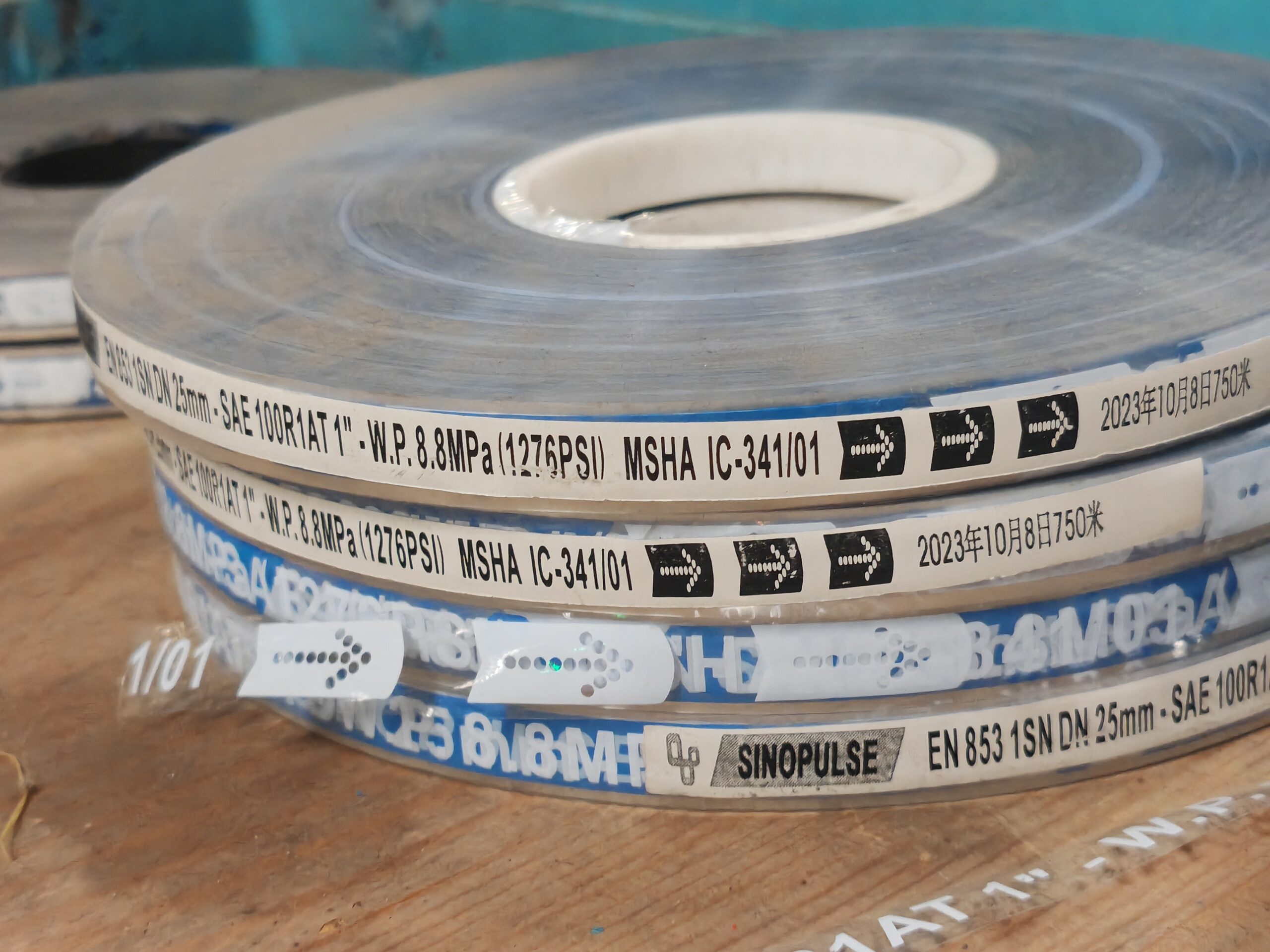
Czym jest linia układania węży hydraulicznych?
A linia układania węża hydraulicznego jest opublikowaną lub wytłoczoną linią szczegółów biegnącą wzdłuż zewnętrznej okładki wąż hydrauliczny. To nie tylko pasek estetyczny – służy jako wskazówka dla osób prywatnych i techników serwisowych. Oto, z czego się zazwyczaj składa i dlaczego jest tak ważny.
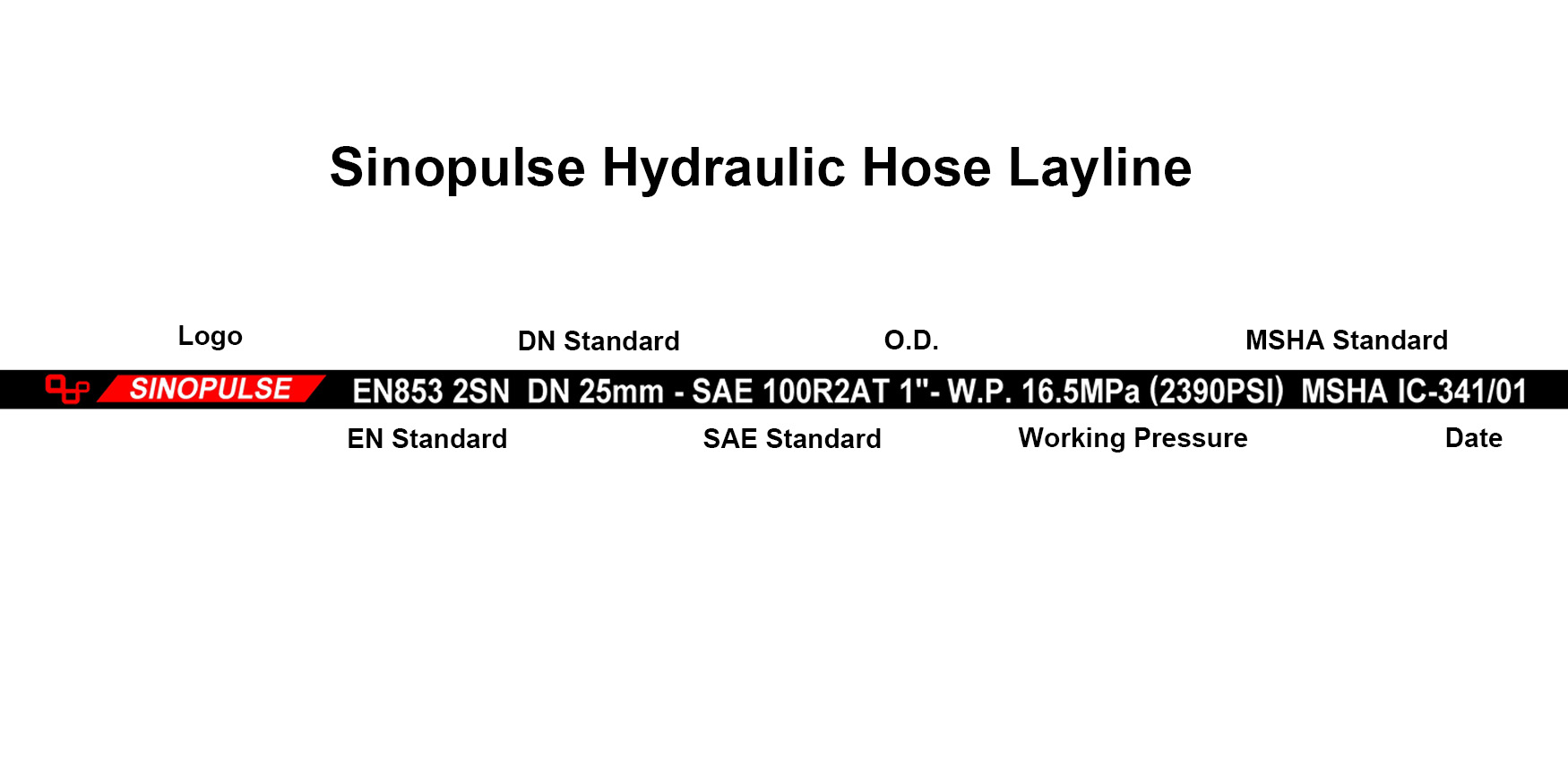
Odczyt linii układania węża hydraulicznego
Nazwa producenta lub marka: Identyfikuje producenta węża.
Typ lub seria węża: Na przykład, SAE 100R2AT, EN 857 2SCitp.
Rozmiar: Zwykle podawana w postaci myślników (np. -06 dla 3/8") lub w calach/mm.
Stopień ciśnienia: Maksymalne ciśnienie robocze, często podawane w PSI lub barach.
Zakres temperatur: Zakres działania materiału węża.
Budowa: Rodzaj wzmocnienia (np., oplot druciany, spirala).
Zgodność ze standardami: Certyfikaty SAE, EN, ISO lub inne stosowne certyfikaty.
Kod daty lub numer partii: Przydatne do śledzenia i kontroli jakości.
Strzałka kierunku przepływu (opcjonalnie):W przypadku węży, gdzie kierunek ma znaczenie.
Tabela rozmiarów złączek hydraulicznych
1. Rozmiar Dash:
Rozmiar płytki rozdzielczej to również metoda pomiaru rozmiaru węża hydraulicznego, a rozmiar płytki rozdzielczej można przeliczyć na cale. Poniżej znajduje się tabela przeliczeniowa rozmiaru płytki rozdzielczej węża hydraulicznego, dzięki której można obliczyć rozmiar płytki rozdzielczej na cale. Mówiąc prościej, rozmiar płytki rozdzielczej odpowiada średnicy wewnętrznej węża hydraulicznego z dokładnością do 1/16 cala. Na przykład, wąż -06 będzie miał średnicę wewnętrzną 6/16 cala lub 3/8 cala.
Średnica wewnętrzna (ID) Odnosi się do wewnętrznej szerokości przekroju kołowego węża i odgrywa kluczową rolę w określaniu prędkości przepływu cieczy. Wybór węża o zbyt dużej średnicy wewnętrznej może prowadzić do obniżenia wydajności systemu, a wybór węża o zbyt małej średnicy może skutkować nadmiernym spadki ciśnienia, potencjał przecieki, a nawet uszkodzenia systemu. Dlatego tak ważne jest, aby wybrać dokładny Średnica wewnętrzna — zazwyczaj mierzona z dokładnością do jednego miejsca po przecinku — gwarantuje optymalną wydajność i bezpieczeństwo.
3. Obliczenia w calach i mm:
Cal I mm są obiema jednostkami długość powszechnie używane do mierzyć rozmiar lub długość z wąż hydrauliczny. Aby zapewnić precyzyjne specyfikacje, możesz obliczać przeliczanie między tymi jednostkami. Dla porównania, 1 cal jest równe 25,4 milimetry. Konwerter jednostek może pomóc uprościć ten proces podczas przełączania między calami i milimetry podczas pomiarów.
4. Ciśnienie robocze węża hydraulicznego
Ciśnienie robocze odnosi się do zakresu ciśnienia a wąż hydrauliczny jest zaprojektowany tak, aby wytrzymać normalne warunki pracy. Wskazuje bezpieczny limit ciśnienia podczas normalnego użytkowania i pomaga zapewnić wąż hydrauliczny działa niezawodnie w ramach określonych parametrów ciśnienie robocze zakres.
Wybór odpowiedniego węża hydraulicznego do Twojego zastosowania
Określ ciśnienie robocze:
Określić maksymalny I minimum ciśnienie poziomy wymagane przez Ciebie układ hydrauliczny, biorąc pod uwagę zarówno ciągłość ciśnienie robocze i jakikolwiek potencjalne skoki ciśnienia lub przepięć. Pomaga to zapewnić wybrane wąż gumowy może obsługiwać pełen zakres warunków roboczych w sposób bezpieczny i niezawodny.
Oblicz natężenie przepływu:
Określ wymaganą szybkość przepływu, zwykle wyrażaną w galony na minutę (GPM) Lub litry na minutę (LPM). Informacja ta jest niezbędna do wyboru wąż gumowy z poprawnym średnica wewnętrzna aby zapewnić płynny przepływ cieczy, minimalizując jednocześnie straty ciśnienia i turbulencje.
Ocena zgodności płynów:
Sprawdź typ płyn hydrauliczny używany w Twoim systemie, jako węże musi być kompatybilny z różnymi typami płynów, takimi jak na bazie oleju, na bazie wody, Lub płyny syntetyczne. Użycie niekompatybilnego węża może spowodować zanieczyszczenie materiału. degradacja i zwiększa ryzyko przecieki, Dlatego wybór odpowiedniego węża do cieczy ma kluczowe znaczenie.
Oceń zakres temperatur:
Zidentyfikuj temperatura zakres, w którym układ hydrauliczny będzie działać, uwzględniając zarówno otaczające środowisko, jak i płyn hydrauliczny temperatura. Wybierz węże które są oceniane pod kątem efektywnego działania w tym zakresie, aby zapewnić stałą wydajność i utrzymać ich integralność strukturalna nadgodziny.
Weź pod uwagę czynniki środowiskowe:
Oceń środowisko zewnętrzne pod kątem takich czynników, jak ekspozycja na promieniowanie UV, kontakt z substancjami chemicznymi, ścieranie i naprężenia mechaniczne. Wybierz węże wyposażony w odpowiednie powłoki zewnętrzne I posiłki aby zapewnić trwałość i ochronę w tych warunkach.
Określ wymagania dotyczące elastyczności:
Oceń konieczność elastyczność I promień gięcia dla wąż gumowy, szczególnie w zastosowaniach wymagających częstego ruchu lub ograniczonej przestrzeni montażowej. W takich przypadkach należy użyć węże z większym elastyczność i mniejszy promień gięcia pomaga zapobiegać załamanie i potencjalnych uszkodzeń.
Wybierz odpowiednią średnicę wewnętrzną (ID):
Określ właściwy wąż Średnica wewnętrzna (ID) na podstawie obliczona szybkość przepływu aby zapewnić, że może przenosić wymaganą objętość bez wprowadzania nadmiernej ilości spadek ciśnienia Lub turbulencja w systemie.
Wybierz prawidłową średnicę zewnętrzną (OD):
Wybierz wąż z Średnica zewnętrzna który pasuje do przestrzeni instalacyjnej i zapewnia niezbędne złączki i zaciski dla bezpiecznych i stabilnych połączeń.
Sprawdź wartość ciśnienia:
Upewnij się, że wąż Ocena ciśnienia przekracza możliwości systemu ciśnienie robocze, w tym potencjalnych skoków ciśnienia, w celu utrzymania bezpiecznej i wydajnej pracy.
Sprawdź temperaturę znamionową:
Sprawdź, czy wąż jest przeznaczony do stosowania w zakresie temperatur układu, aby zagwarantować niezawodną pracę w każdych warunkach roboczych.
Potwierdź kompatybilność płynów:
Upewnij się, że materiał węża jest w pełni kompatybilny z płynem hydraulicznym układu, aby zapobiec degradacji chemicznej i zapewnić długotrwałą wydajność (Zgodność z płynami).
Ocena trwałości i długowieczności:
Wybierz węże z odpowiednimi warstwami wzmacniającymi i ochronnymi powłokami zewnętrznymi, aby zwiększyć trwałość i wydłużyć czas eksploatacji w wymagających warunkach pracy.
Często zadawane pytania
P1: Czym jest linia węża?
A: Ten linia jest to wydrukowany tekst wzdłuż węża, który zawiera kluczowe informacje, takie jak Średnica wewnętrzna (ID), ciśnienie znamionowe, typ węża, datę produkcji i zgodność z normami. Pomaga w prawidłowej identyfikacji i wymianie węża.
P2: Jak sprawdzić, czy wąż ma średnicę 3/4 czy 5/8?
A: Zmierz Średnica wewnętrzna (ID) węża za pomocą suwmiarki lub linijki.
-
A Wąż 5/8 cala ma identyfikator około 15,9 mm,
-
A Wąż 3/4 cala ma identyfikator około 19,1 mm.
Dokładny pomiar jest niezbędny do zapewnienia prawidłowego złączki i zaciski.
P3: Co oznacza cyfra 12 (-12) na wężu hydraulicznym?
A: Ten rozmiar deski rozdzielczej jest standardową metodą wskazywania Średnica wewnętrzna (ID) węża w szesnastych częściach cala.
-
A -12 (myślnik 12) wąż ma ID 12/16", Lub 3/4 cala.
To szybki sposób na sprawdzenie rozmiarów węży podczas wybierania lub wymiany węży hydraulicznych.
P4: Jak rozpoznać, czy wąż hydrauliczny jest 2- czy 4-żyłowy?
A: Spójrz na linia układania węża w przypadku specyfikacji takich jak normy SAE lub EN, które zwykle określają konstrukcję.
Alternatywnie możesz:
-
Sprawdź dokumentację producenta,
-
Sprawdź przekrój poprzeczny (jeśli przecięte),
-
Albo poczuj wąż: Węże 4-żyłowe są na ogół sztywniejsze i grubsze niż Węże 2-żyłowe ze względu na dodatkowe wzmocnienie.
Liczba przewodów ma bezpośredni wpływ na Ocena ciśnienia I ciśnienie robocze.
P5: Jaki rozmiar ma wąż hydrauliczny #4?
A: A Wąż hydrauliczny #4 (myślnik 4 lub -4) ma Średnica wewnętrzna (ID) z 4/16", Lub 1/4 cala.
Rozmiar ten jest powszechnie stosowany w układach niskiego i średniego ciśnienia w kompaktowych obwodach hydraulicznych.