
A wąż hydrauliczny is a key part in hydraulic systems. it transmit fluid power in machinery and equipment. It is designed to handle extreme high pressure. It can high perform to carry hydraulic fluids between different components, such as pumps, valves, cylinders, and motors.
Hydraulic Hose Components
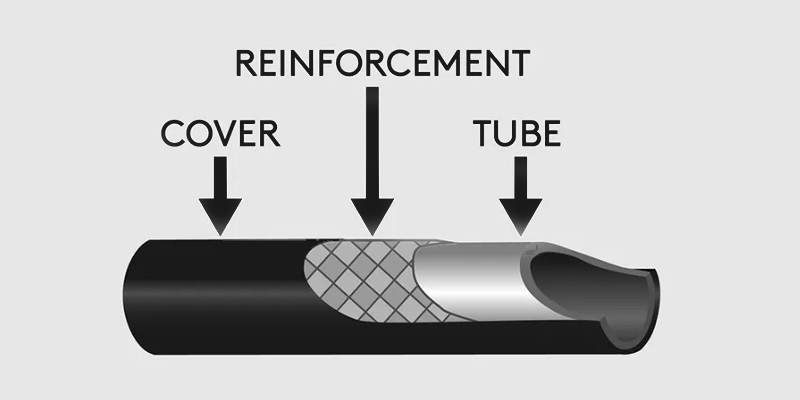
Wąż hydrauliczny jest specjalnie zaprojektowany do układów hydraulicznych. Przewodzi on olej lub wodę pod wysokim ciśnieniem z pomp do siłowników. To właśnie w siłownikach ten płyn jest wykorzystywany do generowania ruchu mechanicznego. Wąż składa się z trzech różnych części: rury wewnętrznej, warstwy wzmacniającej i osłony zewnętrznej. Poniżej przedstawimy szczegółowo te trzy części, aby lepiej zrozumieć działanie węży hydraulicznych.
Dętka
Hydraulic hose's inner tube, is the inner tube component that carries the hydraulic fluid from one end of the hose to the other. It needs to be flexible. This is particularly critical on equipment with flexible joints. Additionally, the hose must be compatible with the fluid it carries.
Poniżej wymieniono różne rodzaje płynów hydraulicznych:
Płyn na bazie ropy naftowej: Chroni przed zużyciem, utlenianiem, korozją i ekstremalnym ciśnieniem.
Płyn na bazie wody: Stosowany ze względu na wysoką zawartość wody, jako materiał ognioodporny.
Płyn na bazie syntetycznej: Zapewnia ognioodporność, niskie tarcie, stabilność termiczną i nadaje się do zastosowań w wysokich temperaturach i przy wysokim ciśnieniu.
Materiał dętki zwykle zawiera tworzywo termoplastyczne, gumę syntetyczną i politetrafluoroetylen (PTFE), aby zapewnić odporność na korozję i działanie substancji chemicznych.
Do stosowanych tworzyw termoplastycznych należą zazwyczaj poliamid, poliester, a nawet fluoropolimery. Wszystkie te materiały charakteryzują się wysoką odpornością na rozpuszczalniki, kwasy i zasady.
Kauczuki syntetyczne: Doskonała elastyczność.
Fluoropolymery: Doskonała odporność chemiczna i odporność na korozję, stabilna praca w wysokich temperaturach i długi okres przydatności do użycia.
Tworzywa termoplastyczne: Obsługuje mniejsze minimalne promienie gięcia, zapewniając jednocześnie doskonałą odporność na zginanie i splątywanie.
Warstwa wzmacniająca
Hydraulic hose reinforcement layer determines the hose's working pressure. The pressure capacity of a hydraulic hose is its defining characteristic. Consequently, the required working pressure directly determines the hose's construction. The more layers in the reinforcement, the higher the pressure rating. It typically comes in braided, spiral, or helical configurations. Reinforcement layers are typically made from materials such as braided wire, spiral-wound wire, or textiles. The choice of reinforcement depends on the required pressure rating and flexibility.
A spiral wire reinforcement hydraulic hose Wąż ten wykorzystuje cztery lub więcej warstw spiralnie zwiniętego, wysokowytrzymałego drutu stalowego. Taka konstrukcja sprawia, że wąż jest bardzo wytrzymały, ale jednocześnie dość sztywny. Z tego powodu jego elastyczność jest ograniczona. Został zaprojektowany specjalnie do zastosowań w ekstremalnie wysokich ciśnieniach. Zazwyczaj można go znaleźć w sprzęcie budowlanym i ciężkich pojazdach terenowych.
Wąż Multi-Spiral został zaprojektowany z wieloma warstwami wzmocnienia, co zapewnia maksymalną wytrzymałość i trwałość. Jego unikalna spiralna konstrukcja zapewnia większą elastyczność bez uszczerbku dla wydajności. Niezależnie od tego, czy masz do czynienia z ciężkim sprzętem, czy wymagającymi zastosowaniami przemysłowymi, ten wąż poradzi sobie ze wszystkim.
Braided wire reinforcement hose consists of a synthetic or natural rubber inner tube, reinforced with one or more layers of steel wire. It offers excellent flexibility and high resistance to abrasion.
When it comes to reliable and durable hose options, braided hoses are a top choice. These hoses have gained popularity across various industries for their exceptional strength and flexibility.
Textile braided hydraulic hose is more flexible than spiral hose, giving the hose a smaller radius and good flexibility. Braided hoses are widely used in industries such as manufacturing, construction, automotive, aerospace, and more. They find application in conveying fluids like water, oil, gas, chemicals while maintaining optimal flow rates and preventing leaks or bursts.
Helical suction and return hoses Oferują największą elastyczność, a ich struktura zapobiega zapadaniu się pod wpływem podciśnienia, zapewniając lepszą odporność na obciążenia udarowe niż węże plecione. Spirale nie zachodzą na siebie, co zapobiega zużyciu poprzez tarcie o siebie, co przekłada się na lepszą odporność na obciążenia impulsowe niż w przypadku węży z oplotem. Zastosowania węży powrotnych, które mogłyby zapadać się zarówno w węże plecione, jak i spiralne, na siebie.
Okładka
The hydraulic hose cover protects the hose reinforcement and tube from the outside environment. It's designed as abrasion, ozone and oil-resistant tubing, and to stand up to the elements. Outer covers can be made from synthetic rubber, thermoplastic, or hybrid materials, depending on the specific application and environmental conditions. The reasons PUR is a popular choice comes down to its excellent abrasion and impact resistance. It’s also the ideal cover hose material due to its vibration resistance. The synthetic rubber used is usually neoprene, which also offers outstanding abrasion resistance. It can accommodate a range of operating temperatures but has a shorter shelf life than PUR and is not as flexible.
Conclusion of hydraulic hose component
In general, a hydraulic hose consists of three main components: the inner tube, the reinforcement layer, and the outer cover.
The inner tube carries the hydraulic fluid, the reinforcement layer provides strength to withstand high pressures, and the outer cover protects the hose from external factors
By understanding the components and structure of hydraulic hoses, you can make more accurate selections and better manage your system.