Accesorio Banjo
Qué es el racor banjo
Los racores banjo, caracterizados por su exclusiva forma circular y su perno hueco, son componentes indispensables en sistemas hidráulicos y neumáticos. Su capacidad para girar 360 grados los hace ideales para aplicaciones en las que el espacio es limitado y se requieren conexiones flexibles. Los racores banjo se utilizan habitualmente en sistemas hidráulicos y neumáticos, y tienen aplicaciones en áreas como los conductos de frenos de automóviles, los sistemas de combustible, la maquinaria industrial y los equipos médicos.
Los racores banjo deben su nombre a su forma única, parecida a la de un banjo, con un cuerpo redondo y un tornillo que pasa por su centro. Estos racores son especialmente cruciales en situaciones en las que las limitaciones de espacio y la flexibilidad son importantes, ya que permiten conexiones seguras y flexibles.
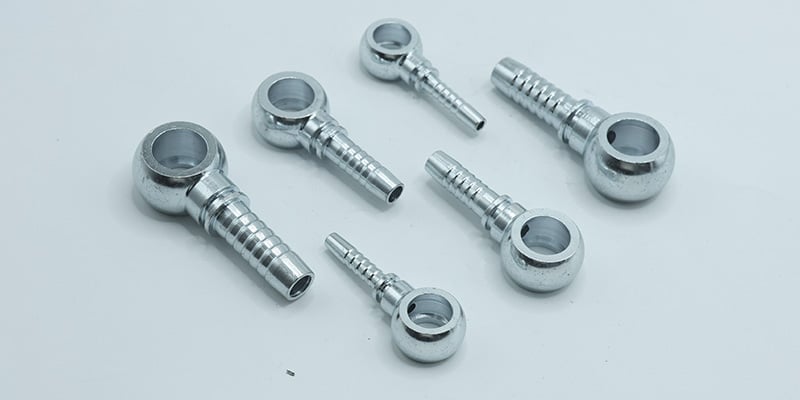
Diseño de racores Banjo
El diseño del racor banjo es inteligente pero sencillo, y muy eficaz, ya que consta de varios componentes clave que trabajan juntos para garantizar un rendimiento óptimo:
Cuerpo: El cuerpo del racor banjo suele ser redondo con forma cilíndrica hueca. Dispone de orificios de entrada y salida para el flujo de fluidos, que suelen conectarse a mangueras o tuberías. El cuerpo está diseñado para alojar el tornillo, lo que permite el paso del fluido a la vez que mantiene una conexión segura.
Perno: El perno es un componente crucial que atraviesa el centro del cuerpo del racor. Suele ser hueco, lo que permite que el fluido fluya a través de su centro. El perno tiene un extremo roscado que permite fijarlo y apretarlo al racor. Los orificios del eje del perno permiten que el fluido entre y salga del cuerpo del racor, garantizando un flujo continuo.
Ojal: El ojal, o la parte anular del cuerpo del racor, rodea al tornillo. Permite fijar el perno dentro del racor al tiempo que proporciona una abertura para el paso del fluido. El diseño del ojal garantiza que el racor pueda apretarse sin restringir el flujo de fluido.
Juntas (juntas tóricas): Para evitar fugas y garantizar una conexión segura, los racores banjo están equipados con juntas, normalmente de caucho o materiales sintéticos. Estas juntas tóricas encajan perfectamente en el perno y en el interior del cuerpo del racor, creando un sello hermético que impide la fuga de fluidos y la entrada de contaminantes en el sistema.


Materiales de montaje de banjos
Los racores banjo se fabrican con diversos materiales, que se eligen en función de los requisitos de la aplicación y del fluido transportado. Los materiales más comunes son:
Acero: Los racores banjo de acero son conocidos por su resistencia y durabilidad, y suelen utilizarse en entornos de alta presión y donde la robustez es fundamental.
Latón: Los racores de latón ofrecen una excelente resistencia a la corrosión y se utilizan habitualmente en aplicaciones con agua o fluidos ligeramente corrosivos.
Aluminio: Los racores banjo de aluminio ligeros y resistentes a la corrosión son adecuados para aplicaciones en las que se desea reducir el peso sin sacrificar el rendimiento.
Principio de funcionamiento del racor banjo
La dinámica de fluidos dentro de un racor banjo es un aspecto crucial de su función. El diseño permite que el fluido entre y salga del racor de forma eficiente, manteniendo un caudal constante incluso en condiciones de presión variables.
El fluido entra en el racor banjo a través de un perno hueco. Este perno está diseñado con un canal central que permite que el fluido fluya a lo largo de su longitud. Los orificios o puertos situados estratégicamente a lo largo del perno guían el fluido desde el canal central hasta el cuerpo del racor. Este diseño garantiza que el fluido fluya sin obstáculos dentro del perno, lo que resulta en un flujo suave y continuo.
Tras salir del perno a través de los orificios, el fluido entra en la sección interior del cuerpo del racor. El orificio rodea el perno, formando un canal anular que permite que el fluido fluya libremente en todas direcciones. Este flujo circular garantiza que el fluido pueda llegar fácilmente a la salida, incluso si el racor está situado en un espacio reducido o cerrado. El diseño del orificio también ayuda a distribuir uniformemente el fluido, reduciendo las turbulencias y manteniendo un caudal constante.
Aplicaciones de racores banjo
Industria del automóvil: Los racores banjo se utilizan ampliamente en la industria del automóvil, en particular en los sistemas de frenado y los conductos de combustible.
Sistemas de frenado: En los sistemas de frenado de automoción, los racores banjo son cruciales para conectar los latiguillos de freno a las pinzas de freno. Su diseño compacto y flexible facilita su instalación en espacios reducidos alrededor de las ruedas y los componentes de la suspensión. La conexión segura y a prueba de fugas que proporcionan los racores banjo garantiza un rendimiento y una seguridad de frenado fiables.
Líneas de combustible: Los racores banjo también se utilizan en las líneas de combustible, especialmente en aplicaciones de alto rendimiento y carreras. Soportan altas presiones y ofrecen un sellado fiable, por lo que son ideales para sistemas de suministro de combustible. Estos racores garantizan un flujo fluido del combustible desde el depósito hasta el motor, mejorando la eficiencia y el rendimiento general del vehículo.
Bombas y motores hidráulicos: En los sistemas hidráulicos, los racores banjo se utilizan para conectar bombas y motores hidráulicos a otras partes del circuito. Su diseño facilita la integración en espacios reducidos, garantizando un flujo de fluido eficaz entre los distintos componentes. El sellado fiable que proporcionan los racores banjo evita fugas y mantiene la integridad del sistema hidráulico.
Actuadores y cilindros: Los racores banjo también se utilizan para conectar actuadores y cilindros hidráulicos, garantizando un movimiento suave y controlado. Los racores soportan altas presiones y ofrecen una conexión flexible, por lo que son ideales para aplicaciones que requieren un control preciso de los fluidos.
Cuándo sustituir los racores banjo:
Saber cuándo y cómo sustituir los racores banjo es crucial para mantener la integridad de su sistema hidráulico. Siga estas directrices para una sustitución eficaz:
Daños visibles: Sustituya los racores banjo que muestren signos evidentes de agrietamiento, corrosión o deformación.
Fugas persistentes: Si las fugas persisten después de reemplazar los sellos y apretar las conexiones, puede ser el momento de reemplazar el accesorio banjo.
Juntas desgastadas: Si las juntas se desgastan o dañan con frecuencia, puede indicar daños en el propio racor banjo.
Actualizaciones del sistema: Durante las actualizaciones o revisiones del sistema, considere la posibilidad de sustituir los racores banjo antiguos para garantizar la compatibilidad y la fiabilidad.
- ¿Qué es la protección de mangueras hidráulicas?
- Los 20 principales fabricantes de mangueras hidráulicas del mundo en 2026

- ¿Qué influirá en el precio de las mangueras?
- Sinopulse participará en CONEXPO-CON 2026 en el Centro de Convenciones de Las Vegas de EE. UU.
- Guía completa de mangueras hidráulicas