

High Temperature Hose
High Temperature Hoses are developed for High Pressure cleaning applications, at working temperatures up to 155 °C (311 °F), combining excellent handling and long service life with superior safety standards. Working pressures up to 21 MPa. Strong and reliable
Working temperature range
-40 °C a +135 °C petroleum based fluids (intermitente 155°C)
Application
Factories, workshops, restaurants, quarries, mines, construction sites, farming projects and concrete handling etc. where a quality multi purpose hose offers a one-off solution to all your needs. The hose is non-conductive construction which is resistant to air, water, petroleum-based products, many chemicals, solvents and sprays.
Construcción
Tubo: High-strength synthetic rubber.
Reforzamiento: One layer of high-strength steel wire mesh.
Cubrir: Braided textile sheath, Black or Blue color.
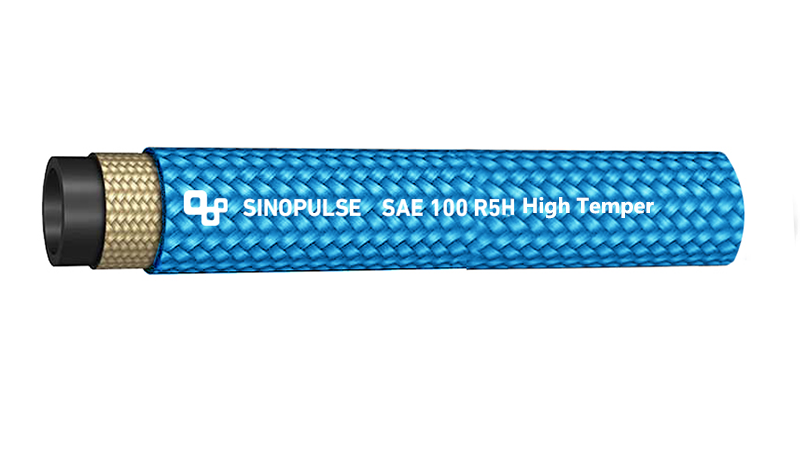
Choose Sinopulse For Your High Temperature Hoses 155°C Supplier
- Extreme Temperature Resistance
- Extreme Duty Cycle Tested for Hostile Engine Environments
- Pressure Endurance
- Available in Various Lengths
High Temp & High Pressure Hose Presupuesto
| Código | Estrellarse | Size mm | Size Inch | Inside Diameter mm | Outside Diameter mm | Working Pressure bar | Working Pressure psi | Bursting Pressure bar | Bursting Pressure psi | Bend Radius mm | Weight kgs/m | Length m |
| SNP-R5H03 | -03 | 4.8 | 3/16 de pulgada | 4.6-5.4 | 12.7 | 210 | 3045 | 840 | 12180 | 75 | 0.13 | 50/100 |
| SNP-R5H04 | -04 | 6.4 | 1/4 de pulgada | 6.2-7.0 | 14.3 | 210 | 3045 | 840 | 12180 | 85 | 0.16 | 50/100 |
| SNP-R5H05 | -05 | 7.9 | 5/16 de pulgada | 7.7-8.5 | 16.7 | 157 | 2277 | 628 | 9106 | 100 | 0.2 | 50/100 |
| SNP-R5H06 | -06 | 10.3 | 13/32 inch | 9.3-10.1 | 19.5 | 140 | 2030 | 560 | 8120 | 115 | 0.24 | 50/100 |
| SNP-R5H08 | -08 | 12.7 | 1/2 inch | 12.3-13.5 | 22.8 | 122 | 1769 | 488 | 7076 | 140 | 0.35 | 50/100 |
| SNP-R5H10 | -10 | 15.9 | 5/8 inch | 15.9-17.0 | 26.8 | 105 | 1523 | 420 | 6090 | 180 | 0.43 | 50/100 |
| SNP-R5H14 | -14 | 22.2 | 7/8 inch | 22.2-23.3 | 32.9 | 84 | 1224 | 324 | 4882 | 240 | 0.45 | 50/100 |
| SNP-R5H16 | -16 | 28.6 | 1-1/8 inch | 28.6-29.8 | 38.5 | 43 | 624 | 172 | 2494 | 280 | 0.55 | 50 |
| SNP-R5H20 | -20 | 34.9 | 1-3/8 inch | 34.9-36.1 | 43.7 | 35 | 508 | 140 | 2030 | 305 | 0.73 | 50 |
| SNP-R5H24 | -24 | 46 | 1-13/16 inch | 46.0-47.2 | 55.2 | 24 | 348 | 96 | 1392 | 265 | 0.99 | 50 |
This is the high-temperature SAE 100R5 specifications for example, you may check any type of high-temperature hoses, as follow high temperature hoses products:

TEMPERATURA: -40°C to +135°C petroleum-based fluids (intermittent 155°C).
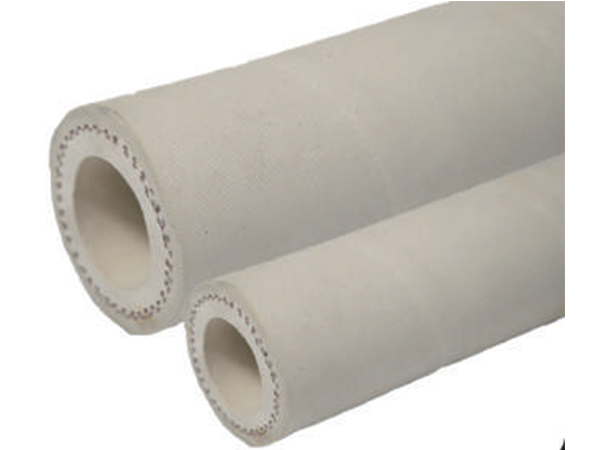

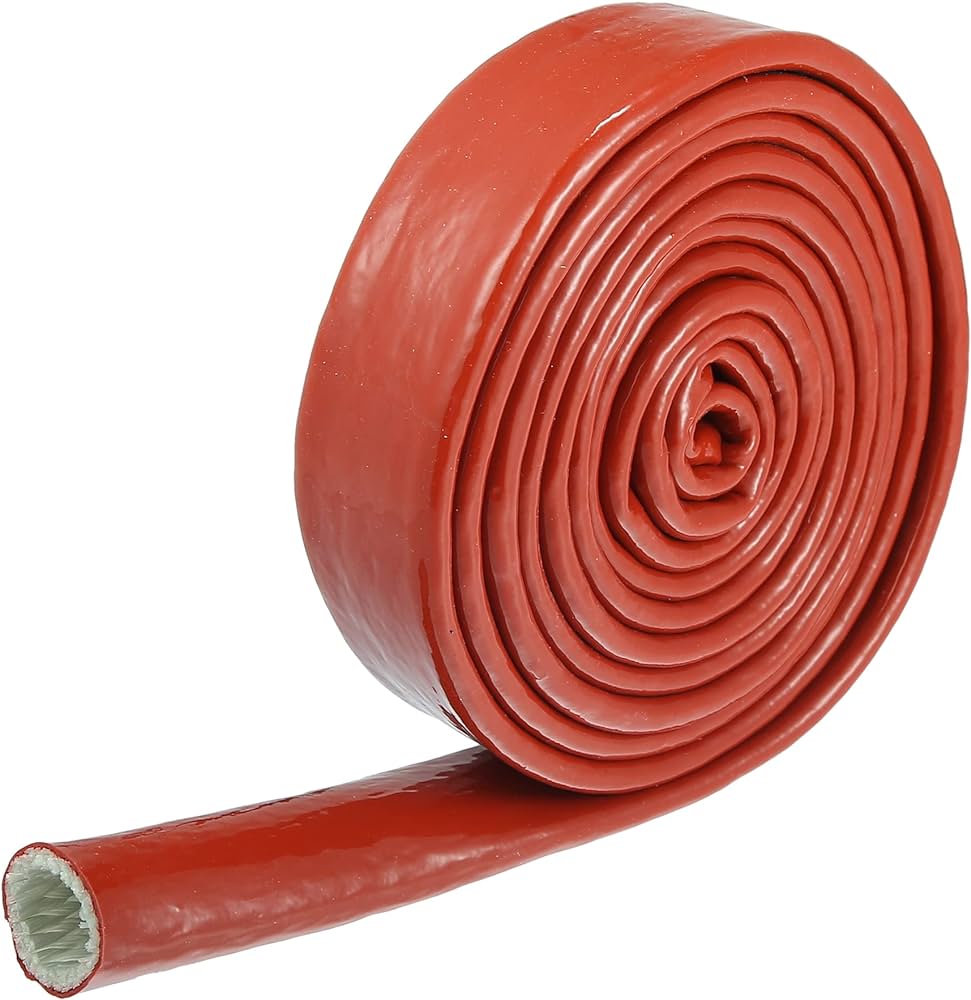
TEMPERATURA: -40°C to- 560°C(instantaneous temperature)
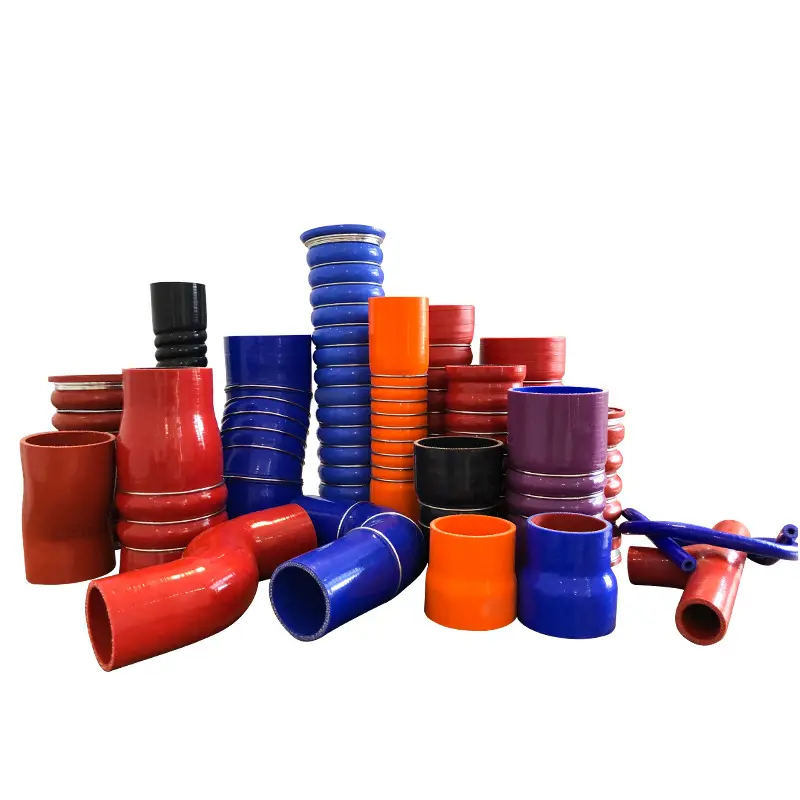
high temperature reinforced silicone hoses meet or exceed SAEJ20 standard.
Fábrica de mangueras Sinopulse
Raw Material:
Imported rubber material Vietnam and Thailand
High tensile strength 2750Mpa steel wire from China's first-class factory
Powerful, safe and stable hydraulic hose products
Good dispersibility, high bearing pressure and superior pulse performance.
Excellent oil resistance, heat resistance and aging resistance.
Excellent bending resistance and fatigue resistance

Factory Workshop:
Sinopulse is a 100% manufacturer of hydraulic hoses and industrial hoses, including all oilfields, agriculture, transportation, construction, mining, and forestry.
Daily output 500,000 meters of hoses, workshop covering 40,000 m²
40 production lines, involving high-speed joint machines, braiding machines, high-speed spiral machines, Italy VP automatic industrial machines, and Complete series Laboratory Testing Equipment
120 Skilled workers, 6 Engineers with 2 technical counselors from famous international companies,2 QC departments, and 2 warehouse managers are fall of our lovely people.
50 Sales and three groups of logistics specialists serve our clients from Italy, Germany, Uk, Spain, the USA, Canada, Brazil, Argentina, Panama, Peru, Chile, Viet Nam, Indonesia, Australia, Romania

Laboratory:
Our factory introduces a full range of laboratory testing equipment. It has advanced laboratory capabilities to conduct product quality testing and research and development work to ensure stable and excellent product quality.
After purchasing raw materials, we test each batch to ensure they meet our product's technical requirements.
After production, we test each hose, its working and burst pressure, and conduct a pulse test for each order to ensure that it is 100% qualified after leaving the factory.
We strive to provide our customers with top-notch hoses, doing everything we can to ensure their quality.
"Let our end users feel comfortable in use and safe in driving!" is our common goal.

Product packaging:
1. When packing hydraulic hoses, cartons or wooden boxes according to customer requirements.
2. We will pack the hose after finishing the hose production.
3. Generally, woven bags and plastic films are used for packaging.
4. Special packaging can be provided according to customer requirements. Special packaging is a request of Edible ACC Ording customers.



Productos populares


What is high temperature hose?
High temperature hoses are made to withstand a wide range of temperatures to suit specific applications. The materials used to manufacture these hoses are typically very durable and have excellent thermal stability to withstand the high temperatures in the environments in which they will be used. Determining the maximum temperature the hose will be subjected to is important to ensure it is suitable for your application. High temperature hoses are ideal for applications such as bus station maintenance facilities, public transportation authorities, military vehicle maintenance facilities, OEM vehicle exhaust, heavy equipment maintenance, engine test bench applications, portable heaters, high-end HVAC applications, and even road drying
Is a hydraulic hose heat resistant?
The rubber compound in a typical hydraulic hose is rated for an operating temperature of 212° F (100° C). However, Sinopulse, a professional hose manufacturer, offers a variety of high temperature hydraulic hose products for you to choose from that are suitable for higher temperatures.
What hose can withstand high temperature?
There are many different types of rubber materials used to make hoses, but not all are suitable for high temperature rubber hoses. Any component is only as good as the material it is made of, so it is important to determine which compound is best for your application. The main materials are as follows:
Silicone
Neoprene
Nitrile
EPDM
TPE
Viton
What temperature can rubber hose withstand?
Temperature range of rubber hoses is Up to 480° F (250°C), The commonly used high temperature tube temperature is 100℃.
What is the maximum temperature for a flexible hose?
Hot Water Tubes - Temperature Range 0-180 ℃
Mold-Cooling Flexible Hoses - Stainless Steel, Heat Resistant to 180°C
Rubber Hose for Hot Water - Heat Resistant to 100°C
How high a temperature is needed to melt nylon hose
Nylon has a melting point of 374°F (190°C), which is much higher than many other resins. In addition to its heat resistance, the material's crystalline structure gives it high abrasion and chemical resistance.
What garden hose material can handle high temperatures better
Our garden hose and washer hose can handle temperature up to 155℃.
Where to buy high temperature vacuum hose?
We manufacture and sell high temperature vacuum hose. This hose is suited for high temperature air handling applications and is ideal for plastic processing applications because the narrow pitch allows for tight bending radius while maintaining a smooth air flow. However, we don't recommend it for continuous flexing. It is also non-kinking and resistant to many oils & solvents, ozone, water, fungus, and alkalis.
Can silicone hose be used at high temperatures?
Of course, it can be used at high temperatures! Silicone rubber tubing electrical insulation performance: silicone hose has good dielectric performance, especially at high temperature, which is much higher than that of ordinary organic rubber
How to Choose a High-Temperature Hose
When choosing a high-temperature hose for an application, there are several design elements to keep in mind to ensure optimal performance, including:
Tamaño
Selecting a properly sized hose is imperative to fulfilling the intended operation. If it’s too big or too small in diameter, it’s unlikely to attach correctly to the system’s connection points. Choosing a hose with the appropriate length is also important as too long hoses pose a tripping or tangling risk, while too short hoses may not cover the distance they need to between equipment.
Temperatura
As indicated by the name, high-temperature hoses are designed for use in high-temperature environments. However, the term “high-temperature” is relative and can vary from one application to another. With this in mind, it’s essential to specify the minimum and maximum temperatures that a hose may be expected to accommodate during an application when selecting hose options. These considerations largely influence hose material selection.
High-temperature hoses are used on equipment where air or fumes are extremely hot. If you don’t utilize a hose applicable to these conditions, it will dangerously burn off. It is critical to select a high-temperature hose that can endure the demands of the application.
Application
Understanding the application in which a high-temperature hose is used for is imperative to your selection process. The type of air and fumes that are transferred must be considered.
If your hose installation has vulnerable surroundings, our high-temperature hoses are necessary. When using hoses that are not high temperature in extreme conditions, your application becomes considerably more susceptible to fire hazards. Typically, hoses in closer proximity of the heat source carry a higher temperature tolerance than the hoses used further away from the source. A common application of this is the transfer of hot air in vehicle exhaust systems.
Material
The hose material should be chosen with regard to the air or fumes being conveyed. As indicated above, some of the factors to consider include state and operating conditions (what are the expected temperatures?). The answers to these and other questions determine which hose material is most appropriate for an application.
Presión
As high-temperature hoses are mostly used for air and fumes, these hoses are suitable for low pressure applications.
High Temperature & High Pressure Hose
Sinopulse offers China quality high temperature hydraulic hoses suitable for use with petroleum based hydraulic fluids and lubricants. We help you maintain your profits with competitive factory prices
For these high temperature hoses, we offer custom length options to meet your specific application requirements.
What is a high temperature hose?
High temperature hoses are made to withstand a wide range of temperatures to suit specific applications. The materials used to make these hoses are typically very durable and have excellent thermal stability to withstand the high temperatures in the environments in which they will be used. Determining the maximum temperature that the hose will be subjected to is important to ensure that it is suitable for your application.
Where are high temperature hoses used?
High temperature hoses are ideal for applications such as bus station maintenance facilities, public transportation authorities, military vehicle maintenance facilities, OEM vehicle exhaust, heavy equipment maintenance, engine test bench applications, portable heaters, high-end HVAC applications, and even pavement drying. High temperature hoses are also needed in facilities such as foundries and in applications such as drying systems and furnaces. These areas require durable hoses that can handle high temperature requirements. Selecting a hose that does not meet high temperature specifications can result in hose failure, which can lead to injuries and other serious hazards.
How Different Materials Affect High Temperature Resistance
Rubber:
Rubber hoses are one of the most commonly used hoses because they are flexible and can withstand a wide range of liquids. However, rubber generally has limited resistance to high temperatures. It performs well in moderate temperature ranges, but can deteriorate with prolonged exposure to extreme heat or cold.
Thermoplastics:
Thermoplastic hoses are often used in applications that require greater chemical resistance and resistance to extreme temperatures. These hoses can withstand a wider range of temperatures than rubber hoses, allowing for greater versatility in environments with fluctuating temperatures. However, thermoplastics can become brittle at very low temperatures.
Metal (such as stainless steel or PTFE):
PTFE (polytetrafluoroethylene) hoses are known for their resistance to high temperatures and are often used in applications that require operation in extremely hot environments. Metal hoses are often made of stainless steel and are also very durable in extremely hot and cold environments. However, they lack the flexibility of rubber or thermoplastic hoses, limiting their use in certain dynamic applications.
Types of Hydraulic Hose by Material
Rubber Hydraulic Hose:
Advantages: Rubber hoses are flexible, durable, and can handle a wide range of hydraulic fluids. Rubber hoses are widely used and are generally cost-effective for most applications.
Disadvantages: Rubber tends to degrade in extreme heat or cold, making it less suitable for temperature-sensitive applications. Prolonged exposure to high temperatures can cause rubber to crack or blister, while low temperatures can cause rubber to become hard and brittle.
Thermoplastic Hydraulic Hose:
Advantages: Thermoplastic hoses are more resistant to chemicals and extreme temperatures than rubber hoses. They are more durable in harsh conditions, including environments with varying temperature ranges.
Limitations: Thermoplastic hoses are more expensive and less flexible than rubber hoses. At very low temperatures, they can become stiff and brittle, leading to cracking or failure.
PTFE Hydraulic Hose:
Unique Benefits: PTFE hoses have extremely high heat resistance, making them ideal for high-temperature applications such as aerospace, chemical processing, and the automotive industry. They have excellent chemical resistance and do not degrade in extreme temperatures. PTFE hose maintains its strength and flexibility even in environments exceeding 400°F (204°C).
Temperature Rating Explanation
Defining Temperature Limits:
Temperature limits are the minimum and maximum temperatures at which a hydraulic hose can safely operate. These limits are specified by the hose manufacturer and vary based on the hose material, construction, and intended use. For example, a rubber hose may have a temperature range of -40°F to 212°F (-40°C to 100°C), while a PTFE hose may have a temperature range of -65°F to 450°F (-54°C to 232°C).
How Temperature Ratings Are Determined:
Manufacturers determine the temperature rating of hydraulic hoses based on rigorous testing. Hoses are subjected to environmental simulations to evaluate their performance under varying temperature conditions. These tests evaluate how temperature affects the hose's material integrity, flexibility, pressure handling, and fluid compatibility. Manufacturers also consider how changes in temperature affect the hose's resistance to wear and abrasion.
Temperature ratings are generally divided into two categories:
Continuous Operation: The temperature range in which a hose can safely operate over an extended period of time without damage.
Intermittent Operation: Hoses can withstand higher or lower temperatures for short periods of time without failure, but continuous use is not recommended.
What is the highest temperature a hydraulic hose can withstand?
The highest temperature a hydraulic hose can withstand depends on the hose material. For example, rubber hoses can typically withstand temperatures up to 212°F (100°C), while PTFE hoses can withstand temperatures up to 450°F (232°C).
How do I know if my hydraulic hose is overheating?
Signs of overheating include bubbling, discoloration, or cracking of the hose cover. Regular inspections can help catch these signs early.
What materials are best for high-temperature hydraulic hoses?
PTFE and stainless steel braided hoses are excellent choices for high-temperature applications because they can withstand extreme heat without degrading.
What is an Operating Temperature?
In high temperature applications, you must have the proper equipment to handle the high temperatures in and around your machine or equipment. Without the proper high temperature ducting, extreme heat can cause permanent damage to the flexible ducting used, your fume extraction system, and derail your project. High temperature is an imprecise word, so it is important to determine this temperature range in order to suggest the right hose for your needs. The most important distinction that must be made is to determine the maximum temperature that the hose will be exposed to. This includes the media moving through the flexible ducting, as well as the temperature in and around the machine to which the flexible hose is attached. High temperature hoses are made from a variety of materials that have defined temperature thresholds. Generally speaking, the price of flexible high temperature hoses and ducting rises as their high temperature capabilities increase. With this in mind, it makes sense to try to choose a hose that will not negatively impact your budget.
Operating temperature refers to the permissible temperature range of the environment that is acceptable to the equipment when the heat-generating machine or mechanical device is operating. The instrument will successfully operate within a specified temperature range, which varies depending on the functional environment of the machine, ranging from the minimum operating temperature to the maximum operating temperature (i.e., the highest temperature). Outside of this safe temperature range, the equipment may fail and become damaged. The reason that the OEM defines a maximum temperature range for the instrument is that the materials of construction of the machinery can only withstand this maximum range. This is very similar to biological organisms which have a sustainable temperature range, which can be called their operating temperature.
High Temperature Duct Options
We offer high temperature pipe in a variety of materials. The various materials offer a wide range of maximum temperatures from 140 degrees Fahrenheit to 1,650 degrees Fahrenheit. With such a wide temperature range, our products are ideal for applications involving smoke exhaust, chimneys, steam work and other very high temperature applications.
Our high temperature pipe inventory includes products made from officially classified flame retardant materials. This means that our high temperature hoses are tested and are a good choice for applications where the flexible hose is placed near flammable materials and are a suitable choice for jobs with strict fire safety regulations. The potential damage that an uncontrolled fire can cause to pipes cannot be overstated; even the slightest of incidents can have serious consequences not only to your flexible pipe system, but also to the entire infrastructure of a particular area. When it comes to fire protection, nothing is more important than proper precautions, chief among which is to only use high temperature pipe in areas where you know it will be subject to extreme heat or friction.
The wide variety of materials used to manufacture high temperature pipes provides the end user with a wide variety of hoses designed to fit your application and budget.
If your application requires hose flexibility and easy transport, we offer highly compressible products for ease of shipping and storage, as well as products that can bend continuously without sacrificing airflow. For heavy-duty applications, we offer extremely durable flexible ducting products that have self-supporting qualities, crush resistance, and the ability to withstand external abrasion. Often, both flexible and rigid high-temperature ducting are used together. Often, interior compartments with lower temperatures will use flexible, compressible hoses to minimize the space occupied while still maximizing ventilation quality.
Sinopulse, as a leading hose manufacturer, has been supplying high temperature hoses and other highly durable, high quality products to customers across a wide range of industries. During this time, we have built an excellent reputation for providing customized solutions that meet our customers' unique needs, allowing them to keep their businesses growing and expanding. View our medium and high temperature hose offerings for specific temperature ratings and applications, or contact our hose and tubing experts today. We can cut high-temperature high-pressure hose to a custom length, just give us a call. You can contact our team for any information about the high temperature hoses shown here. All of these high temperature hoses for exhaust gas removal and other exhaust gas removal hoses are proven to be worthwhile investments.