

Manguera de dirección asistida
Las mangueras de dirección asistida se utilizan para transferir el fluido hidráulico desde la bomba de dirección asistida hasta el mecanismo de dirección. Son de caucho reforzado y están diseñadas para soportar altas presiones y temperaturas. Normalmente se conectan a la bomba de dirección asistida mediante un conector y al mecanismo de dirección mediante un perno banjo.

La manguera de presión de dirección asistida es una manguera flexible que transporta fluido hidráulico presurizado desde la bomba de dirección asistida hasta el mecanismo de dirección.

La manguera de retorno es un tipo de manguera que se utiliza para devolver el fluido desde una máquina o sistema a un depósito o tanque.

- ¿Qué es la protección de mangueras hidráulicas?

- Los 20 principales fabricantes de mangueras hidráulicas del mundo en 2026
- ¿Qué influirá en el precio de las mangueras?
- Sinopulse participará en CONEXPO-CON 2026 en el Centro de Convenciones de Las Vegas de EE. UU.
- Guía completa de mangueras hidráulicas


¿Qué son las mangueras de dirección asistida?
El sistema de dirección asistida consta de un depósito que almacena el líquido de dirección asistida y una bomba accionada por el motor mediante una correa. Las mangueras de dirección asistida transportan el líquido desde el depósito hasta el mecanismo de dirección, donde circula antes de regresar al depósito. Esto facilita la conducción del vehículo.
Las mangueras de dirección asistida son esenciales en todo tipo de vehículos, desde automóviles hasta equipos industriales.
Tipos de mangueras de dirección asistida
Las mangueras de dirección asistida se dividen principalmente en dos tipos: mangueras de alta presión y mangueras de baja presión (o de retorno).
La manguera de dirección asistida de alta presión está diseñada para soportar presiones y temperaturas más altas que la manguera de retorno. Su temperatura puede superar los 270 grados Fahrenheit (aproximadamente 132 grados Celsius) en cualquier momento, y la presión puede superar las 1500 libras por pulgada cuadrada (aproximadamente 790 bares). El líquido de dirección asistida es altamente inflamable, por lo que la integridad de las mangueras es crucial. La manguera de alta presión es responsable de suministrar líquido presurizado al mecanismo de dirección.
La manguera de baja presión (o de retorno), como su nombre indica, devuelve el fluido al depósito. Dado que transporta fluido a temperaturas y presiones más bajas que la manguera de alta presión, está diseñada para soportar presiones más bajas.
Causas de fugas en la manguera de la dirección asistida
Abultamiento, suavidad
Al igual que otras mangueras, si la manguera empieza a abultarse, indica que está envejeciendo. Lo mismo ocurre si se ablanda. Esto significa que su capa interna se está deteriorando y su rendimiento está disminuyendo. Estas mangueras deben reemplazarse lo antes posible para evitar una emergencia en el futuro cercano.
Grietas, agujeros
Si se encuentran agujeros o grietas visibles durante la inspección, esto podría indicar una fuga. El líquido de la dirección asistida es altamente inflamable y una fuga en el motor puede ser peligrosa. Nunca rellene simplemente el depósito. La fuga debe repararse de inmediato.
Desgaste
Inspeccione cuidadosamente la manguera para detectar desgaste o abrasión. Si la capa exterior de la manguera presenta signos de daño, es probable que la capa interior también lo esté. ¿Cuál es la causa de la fricción? Compruebe si hay fijaciones sueltas, juntas con fugas o cualquier otro componente desalineado que pueda dañar la manguera. Si la manguera está dañada, ajústela o reemplácela.
Guarniciones
Revise las conexiones de la manguera. ¿Hay corrosión? ¿Están bien apretadas? ¿Hay desgaste alrededor de las conexiones? ¿Hay fugas? Cualquiera de estos síntomas podría indicar que es necesario reemplazar la manguera.
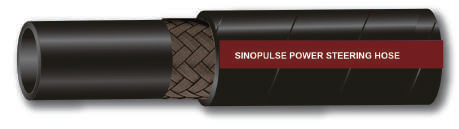
Manguera de dirección asistida Sinopulse
Fabricante de mangueras hidráulicas a medida para el sector automotriz. Ofrecemos mangueras de goma para freno, embrague, acero inoxidable trenzado, tubo metálico y dirección asistida. Disponemos de líneas de freno y embrague, tubos hidráulicos y accesorios.