
Hydraulic hose fittings play a crucial connecting role within hydraulic systems. There are numerous types of hydraulic hoses; among them, JIC and JIS are two common varieties—and also two that are frequently confused. Using the wrong type of fitting can lead to issues such as leaks or an inability to properly install the connection.
This article will help you understand the differences of JIC and JIS fittings - JIC vs JIS Fittings, and to guide you on how to select the appropriate fitting for your needs.
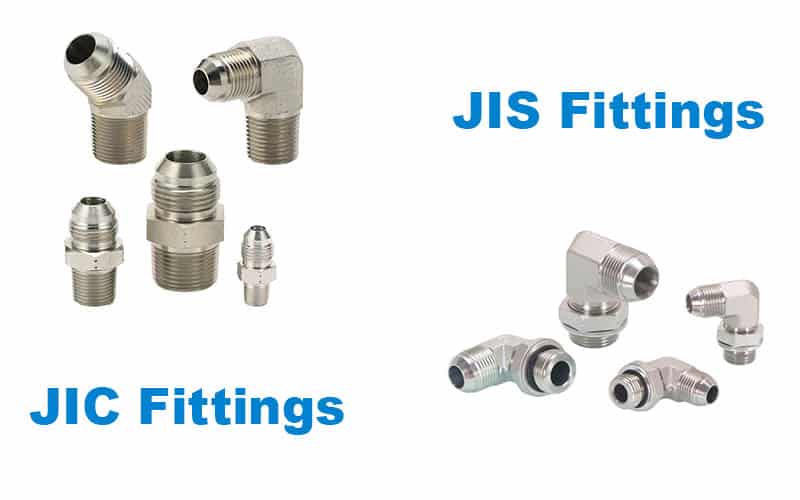
What Are JIC Fittings?
JIC fitting also named Joint Industry Council fittings. Their design features a 37°flare, which enables a metal-to-metal seal. Compliant with the SAE J514 standard, these fittings are primarily utilized in the North American market.
JIC Fittings Features
JIC Fittings has a metal-to-metal sealing design, JIC fittings offer robust sealing performance under high-pressure conditions. Furthermore, given their widespread global adoption, you can quickly and easily locate the specific JIC fittings you need. They are highly standardized and fully interchangeable with fittings within the SAE standard system.
JIC Fittings Advantages and Disadvantages
JIC fittings are widely utilized and highly reliable in high-pressure systems, capable of withstanding extremely high pressures. You will find them employed in high-pressure hydraulic systems, automotive and aerospace applications, and various types of heavy machinery. Furthermore, their widespread global adoption makes them readily available and convenient to purchase.
However, JIC fittings are not compatible with metric hydraulic systems; if you wish to use them within a metric setup, an adapter is required. Additionally, when installing JIC fittings, care must be taken to properly align the flared surfaces to prevent loosening and potential leaks.
How to Install JIC fitting
First, you must clear any impurities from the pipe to ensure it is clean, thereby preventing blockages during the installation of the fitting. Next, based on the material, pressure rating, and inner diameter of the hose you are using, select the appropriate JIC fitting; ensure a proper match between the fitting and the hose to prevent leaks. You may then insert the JIC fitting into the pipe and tighten it using a wrench or screwdriver. However, be careful not to overtighten, as this could damage both the fitting and the pipe. Once installation is complete, operate the system to check for any signs of leakage and to verify that the seal is secure.
What Are JIS Fittings?
JIS stands for Japanese Industrial Standard fittings. They feature a 30-degree flare design. The threads utilized are either metric or BSP threads, and a liquid sealant or sealing tape is required to assist in creating a proper seal. These fittings are widely used throughout Japan and the Asian market.
Features of JIS Fittings
JIS fittings are widely used throughout Asia; therefore, if you are utilizing equipment systems of Asian or Japanese origin, JIS fittings are the more suitable choice. They feature a variety of sealing configurations—including 30° flared and 60° conical sealing surfaces—with different angles corresponding to specific types of equipment connections.
Advantages and Disadvantages of JIS
JIS fittings are commonly used in many Japanese-made heavy equipment systems—such as those from Komatsu and Hitachi. Furthermore, they are compatible with metric standards and are interchangeable.
However, their global adoption rate is low, making them difficult to source outside of Asia. Additionally, due to their visual resemblance to other types of fittings, they frequently cause confusion among users.
JIC Fittings vs JIS Fittings: Key Differences
| Feature | JIC Fittings | JIS Fittings |
| Flare Angle | 37° | 30° |
| Thread Type | UNF (SAE) | Metric / BSP |
| Standard | SAE J514 | JIS B8363 |
| Sealing Method | Metal-to-metal | Metal-to-metal (different angle) |
| Regional Use | US / Global | Japan / Asia |
| Compatibility | Not compatible | Not compatible |
How to Distinguish Between JIC and JIS Fittings
First, you can use a tool to measure the flare angle of the fitting. If it features a 37° flare, it is a JIC fitting; if it has a 30° flare, it is a JIS fitting.
If you are unable to determine the angle, you can check the thread type instead. Most JIS threads are either metric or BSP threads, whereas JIC fittings predominantly use UNF threads, which are finer in pitch.
For a more precise method of distinguishing between them, you can use a thread gauge to measure the thread pitch and angle; generally, JIC threads have a finer pitch.
If you have tried all the methods above but still cannot distinguish between the fittings, you can contact the supplier who provided them to you. Request the fitting specifications or consult their experts directly to identify the type; they will be able to provide you with a quick answer.