
A hydraulic hose is a key part in hydraulic systems. it transmit fluid power in machinery and equipment. It is designed to handle extreme high pressure. It can high perform to carry hydraulic fluids between different components, such as pumps, valves, cylinders, and motors.
Hydraulic Hose Components
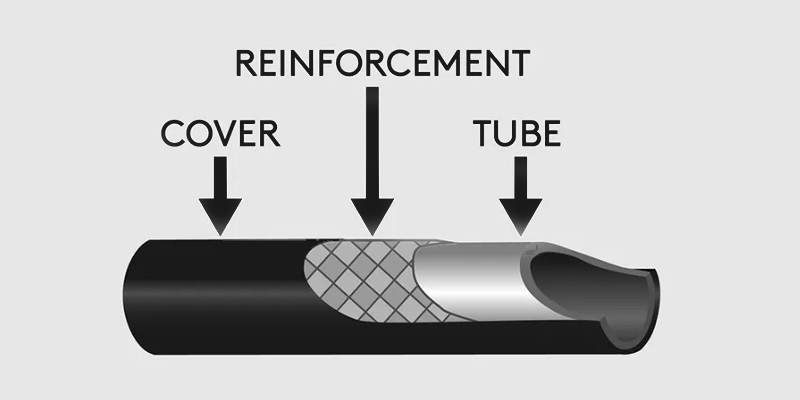
A hydraulic hose is specifically designed for hydraulic systems. They convey high-pressure oil or water from pumps to actuators. It is at the actuators that this fluid is used to create mechanical movement. They are made up of three different parts: inner tube, a reinforcement layer, and an outer cover. Next, we will introduce these three parts detail to you to help you better understand hydraulic hoses.
Inner Tube
Hydraulic hose's inner tube, is the inner tube component that carries the hydraulic fluid from one end of the hose to the other. It needs to be flexible. This is particularly critical on equipment with flexible joints. Additionally, the hose must be compatible with the fluid it carries.
The different types of hydraulic fluids are mentioned below:
Petroleum-based fluid: Protects from wear and tear, oxidation, corrosion, and extreme pressure.
Water-based fluid: Used for fire-resistance because of its high-water content.
Synthetic-based fluid: Provides fire-resistance, low-friction, thermal stability and is suitable for high-temperature and high-pressure applications.
Inner tube material typically includes a thermoplastic, synthetic rubber and Polytetrafluoroethylene (PTFE) to resist corrosion and chemical .
The thermoplastics employed typically include polyamide, polyester, and even fluoropolymers. These materials all exhibit high resistance to solvents, acids, and bases.
Synthetic Rubbers: Excellent flexibility.
Fluoropolymers: Excellent chemical and corrosion resistance, stable high-temperature operation, and a long shelf life.
Thermoplastics: Support smaller minimum bending radii while providing excellent resistance to bending and knotting.
Reinforcement Layer
Hydraulic hose reinforcement layer determines the hose's working pressure. The pressure capacity of a hydraulic hose is its defining characteristic. Consequently, the required working pressure directly determines the hose's construction. The more layers in the reinforcement, the higher the pressure rating. It typically comes in braided, spiral, or helical configurations. Reinforcement layers are typically made from materials such as braided wire, spiral-wound wire, or textiles. The choice of reinforcement depends on the required pressure rating and flexibility.
A spiral wire reinforcement hydraulic hose uses four or more layers of spiral-wound, high-tensile steel wire. This structure makes the hose very strong, but also fairly rigid. Its flexibility is therefore limited. It is specifically designed for extremely high-pressure applications. You'll typically find it in construction equipment and heavy-duty off-road vehicles.
The Multi-Spiral Hose is engineered with multiple layers of reinforcement, ensuring maximum strength and durability. Its unique spiral construction allows for increased flexibility without compromising on performance. Whether you’re dealing with heavy machinery or demanding industrial applications, this hose can handle it all.
Braided wire reinforcement hose consists of a synthetic or natural rubber inner tube, reinforced with one or more layers of steel wire. It offers excellent flexibility and high resistance to abrasion.
When it comes to reliable and durable hose options, braided hoses are a top choice. These hoses have gained popularity across various industries for their exceptional strength and flexibility.
Textile braided hydraulic hose is more flexible than spiral hose, giving the hose a smaller radius and good flexibility. Braided hoses are widely used in industries such as manufacturing, construction, automotive, aerospace, and more. They find application in conveying fluids like water, oil, gas, chemicals while maintaining optimal flow rates and preventing leaks or bursts.
Helical suction and return hoses offer the greatest flexibility, and their structure prevents collapse under vacuum pressure, providing better resistance to impact loads than braided hoses. Helices don’t overlap each other, avoiding wear by rubbing against each other; resulting in better impulse load resistance than plain braided hoses. Return line hose applications that would collapse both braided and spiral hose on itself
Cover
The hydraulic hose cover protects the hose reinforcement and tube from the outside environment. It's designed as abrasion, ozone and oil-resistant tubing, and to stand up to the elements. Outer covers can be made from synthetic rubber, thermoplastic, or hybrid materials, depending on the specific application and environmental conditions. The reasons PUR is a popular choice comes down to its excellent abrasion and impact resistance. It’s also the ideal cover hose material due to its vibration resistance. The synthetic rubber used is usually neoprene, which also offers outstanding abrasion resistance. It can accommodate a range of operating temperatures but has a shorter shelf life than PUR and is not as flexible.
Conclusion of hydraulic hose component
In general, a hydraulic hose consists of three main components: the inner tube, the reinforcement layer, and the outer cover.
The inner tube carries the hydraulic fluid, the reinforcement layer provides strength to withstand high pressures, and the outer cover protects the hose from external factors
By understanding the components and structure of hydraulic hoses, you can make more accurate selections and better manage your system.