
Hydraulic hoses can be found in virtually every industry. In hydraulic systems, they transport hydraulic fluids, ensuring efficient operation of machinery and systems. They work, guaranteeing secure, reliable performance under high pressure and preventing hydraulic fluid leakage. However, there are many hydraulic hose types and materials available, selecting the appropriate hose is no easy task. Sinopulse is a leading manufacturer of high-pressure, high-temperature hydraulic hose, with over 20 years of experience in the hydraulic hose industry. In this comprehensive guide to hydraulic hoses, Sinopulse will assist readers in understanding the various types of hoses, their constituent materials, and how to properly select, install, and maintain them.
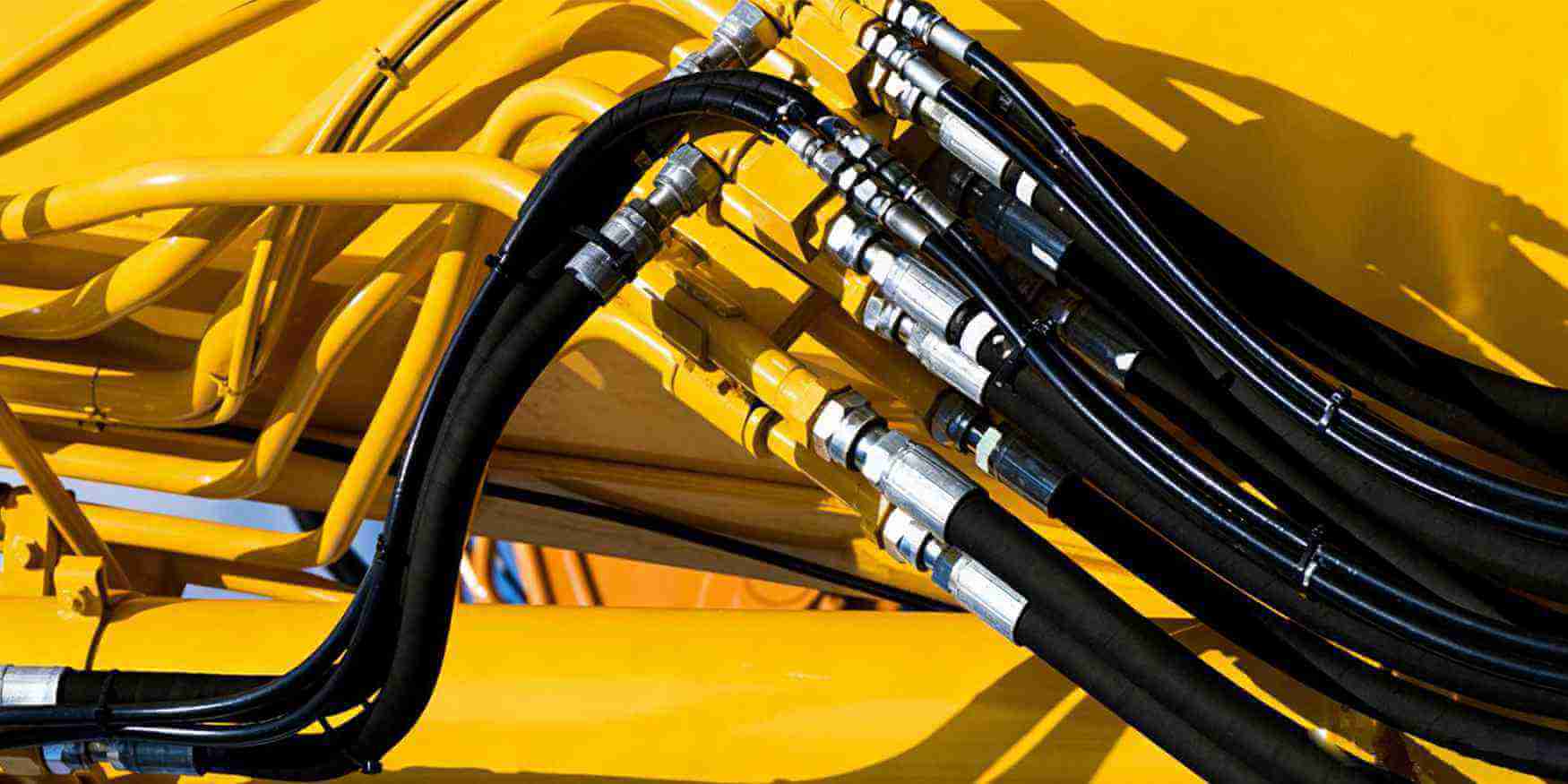
Hydraulic hoses are versatile and durable, widely used in industrial applications. Manufactured using advanced technology and adhering to stringent quality standards (SAE, DIN, ISO, etc.), these hoses function reliably even in harsh environments with high temperatures and humidity. This guide provides a comprehensive overview of various types of hydraulic hoses, their components, applications, and maintenance, offering practical tips for improving hose performance and extending their lifespan.
What is a hydraulic hose?
A hydraulic hose is a flexible pipe used in hydraulic systems to transfer high-pressure fluids (such as hydraulic oil, water, or other media) and connect components. This type of hose is flexible and durable, used to transport liquids or gases from one hydraulic component to another. Therefore, compared to hydraulic pipes, hydraulic hoses are more flexible, lighter, and more adaptable. They are often used as a replacement for hydraulic steel pipes.
Some media transported by hydraulic hoses include:
synthetic oils;
vegetable oils;
water;
petroleum-derived oils;
vaporized chemicals.
Because hydraulic hoses transport high-pressure, high-temperature fluids, the materials used in their manufacture must be of high quality to ensure proper operation under high pressure and temperature conditions and to prevent leaks or accidents.
Therefore, these hoses are made of multiple materials. The inner rubber layer ensures compatibility with the working medium and smooth flow, the reinforcing layer provides pressure resistance and tensile strength, and the outer layer protects against environmental corrosion.
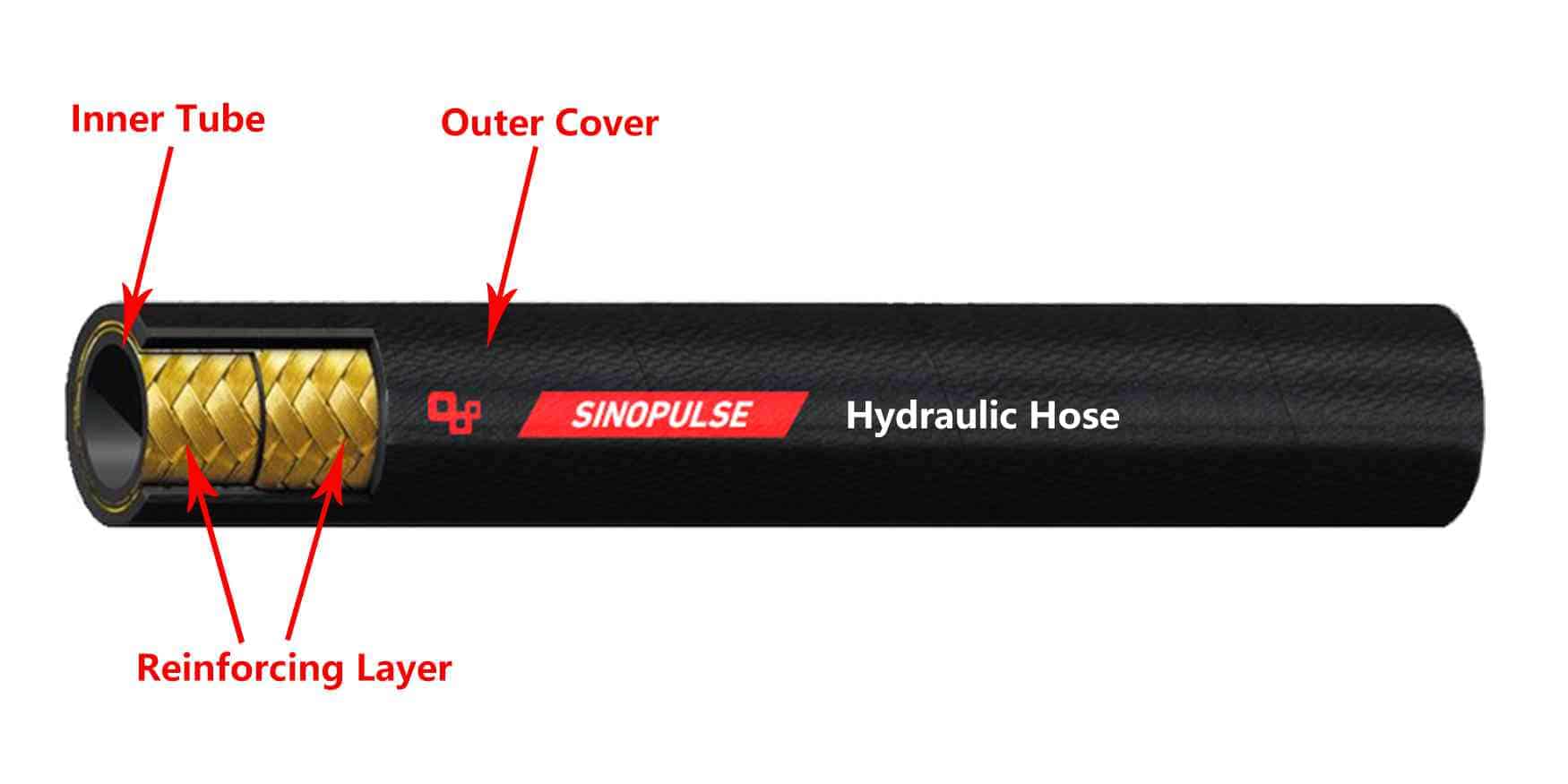
Inner tube
A hose for conveying fluids. This hose is flexible and durable and suitable for the materials being conveyed. Typically, hoses are made of synthetic rubber, silicone, neoprene, and polytetrafluoroethylene (PTFE), with an outer layer of stainless steel.
Hydraulic hoses made of thermoplastic or elastomer materials have good oil resistance and aging resistance, maintaining flexibility even at temperatures as low as -40°C. Thermoplastic hoses also offer advantages such as light weight, chemical resistance, and flexibility. Both thermoplastic and elastomer hoses have excellent resistance to UV radiation and impact.
Reinforcing Layer
It is made of steel wire or textile fibers and may consist of one or more layers, depending on the pressure level required to transport the liquid.
This layer enhances the strength and stability of the pipe, making it less prone to cracking and tearing.
In the reinforcing layer, steel wire is used in two different ways for reinforcement.
In braided hoses, the wires are alternately wound in different directions around the hose core, forming a braided layer.
In spiral hoses, the steel wire is wound around the inner layer. This structure can have up to six layers and is suitable for high-pressure environments up to 500 bar.
Textile hoses use high-tech synthetic fibers, such as aramid, to ensure optimal pressure stability. Furthermore, these hoses are flexible and lightweight, suitable for low-pressure environments down to 100 bar.
Outer Cover Layer
The outer layer protects the internal components of the hose from damage caused by temperature, humidity, and other factors that can lead to hose aging. Synthetic rubber is one of the common components of this coating.
Other components
Some special-purpose hoses may also include conductive or insulating layers to meet anti-static or extreme temperature requirements.
Protective sleeve: In some hoses, especially those designed for harsher environments, an additional reinforcing layer may be added to the outer sheath to improve its abrasion resistance and impact resistance.
Connections: Both ends of the hose are typically equipped with fittings such as adapters, flanges, or connectors to connect the hose to the hydraulic system.
Crimping or joining: This is the process of connecting the two ends of the hose by crimping or joining, ensuring a secure and sealed connection.
Marking: Hydraulic hoses are usually marked with important information such as operating pressure, maximum temperature, compatible fluid types, and other relevant data.
Different types of hydraulic hoses
There are many types of hydraulic hoses. Due to their wide range of applications, many different types of hydraulic hoses can be found according to their function.
Therefore, hydraulic hoses can be classified as follows:
Pressure types
Low-Pressure Hydraulic Hose
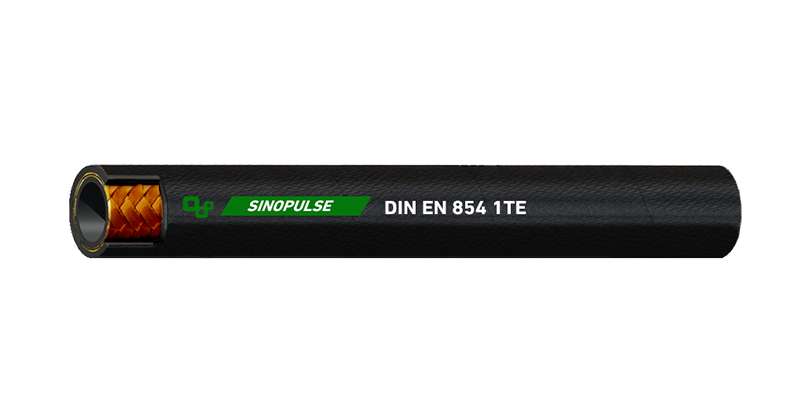
Low pressure hydraulic hose is suitable for gasoline, oils, fuels, lubricants, air, or water. it is synthetic rubber hose, and reinforced by one or two layers of braided textile. The maximum working pressure of this hose is 300 psi and can operate within a temperature range of -40°C to +100°C.
Medium-Pressure Hydraulic Hose
Recommended for chemical and steam transportation because their circuits and hydraulic fluids are petroleum and ester-based.
These industrial medium pressure hydraulic hoses are used in medium-pressure hydraulic systems.
They are suitable for a wide range of machinery and equipment in the agricultural, mining, and construction industries, offering flexibility, strength, and durability.
High-Pressure Hydraulic Hose
These high pressure hydraulic hoses meet the needs of the food industry and can withstand extreme working environments (such as high-pressure hoses used in car washes). Their flexibility and coatings make them suitable for extreme conditions.
They are designed to withstand extremely high pressures, ensuring safety and efficiency. They are suitable for applications requiring the transport of fluids under high pressure, such as mining equipment and heavy machinery.
They are also suitable for oil drilling equipment, where fluids need to be injected at extremely high pressures to fracture underground rock formations, thereby facilitating the extraction of oil or natural gas.
In automotive applications, high-pressure hydraulic hoses are primarily used for brake lines and steering lines.
Ultra-high pressure hydraulic hose
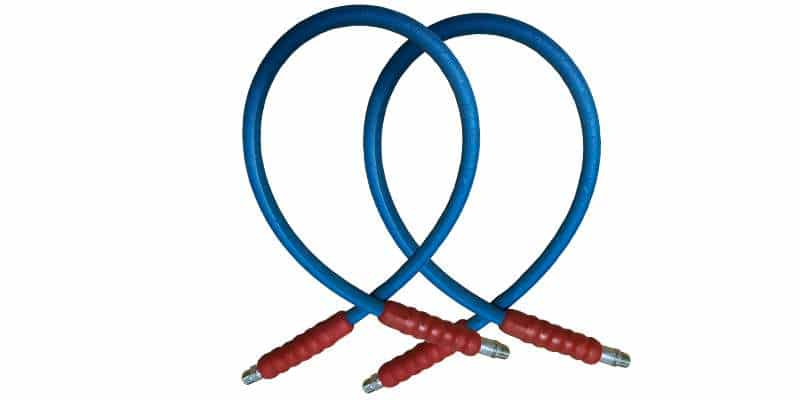
This is a ultra high-pressure car wash hose with enhanced performance, used for water jet applications. Extremely high pressure hydraulic hose standards include R-13 / R-15 hoses.
Design Type
Rubber steel wire braided hydraulic hoses
These are made of multiple layers of braided wire. They are highly flexible and have a smooth exterior that makes them ideal for use in high-pressure applications. Braided hydraulic hoses are widely used in applications where flexibility and strength are essential, such as in construction equipment, mining machinery and industrial machinery.
Rubber Multi-steel wire spiral hydraulic hoses
These are constructed of multiple layers of wire spiraled around a central hose core. Multi-spiral hydraulic hoses are commonly used in heavy-duty working environments such as steel manufacturing and oil and gas industries.
Push-lock hydraulic hoses
These hoses are designed to be used without the need for clamps or special fittings. They are easy to install and are ideal for low-pressure applications such as vacuum lines or fuel lines.
Rubber Push-lock hydraulic hoses require a low nipple insertion force, enabling the user to perform the hose assemblies on-site on the machines, saving time and cost.
Thermoplastic Push-lock hydraulic hoses require a higher nipple insertion force and are less flexible when compared to rubber hoses but they provide a high level of ozone resistance.
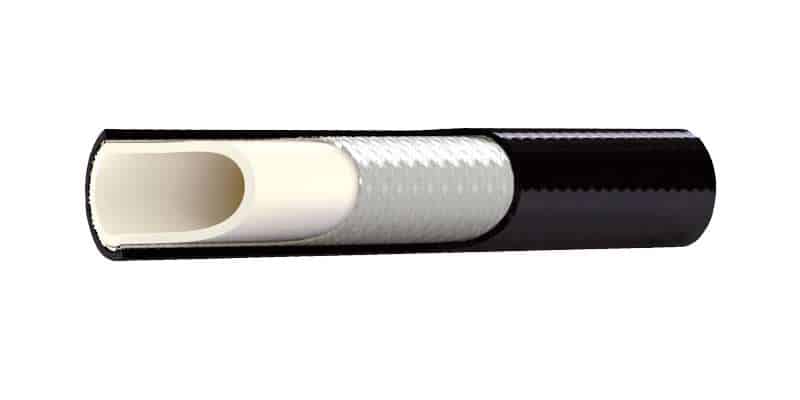
Thermoplastic hydraulic hoses are lightweight, flexible, and have good chemical resistance, making them suitable for agricultural applications where they may come into contact with chemicals and in various weather conditions. Furthermore, because they can operate in humid environments, they are also suitable for applications requiring high-pressure water cleaning.
Polytetrafluoroethylene (PTFE) hoses
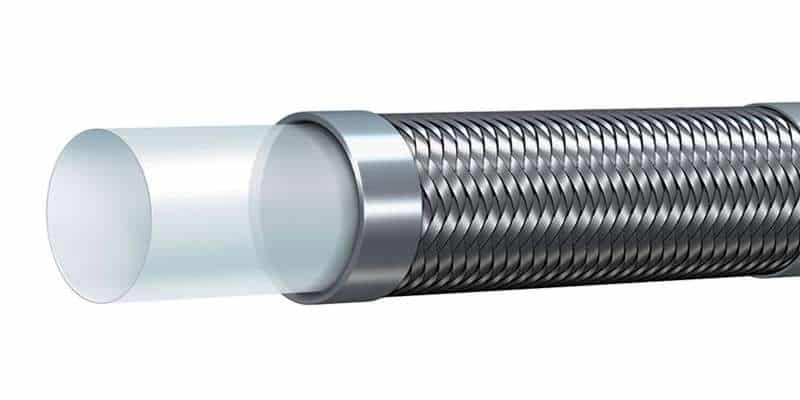
They possess excellent chemical resistance, making them ideal for conveying corrosive fluids in the chemical and petrochemical industries. Their smooth inner surface also minimizes pressure drop and prevents residue buildup. These hoses are made of Teflon material and are used primarily for high-temperature applications. They have excellent chemical resistance and are ideal for use in the aerospace and chemical processing industries.
What are hydraulic hoses used for?
Hydraulic hoses are a crucial, simple, and efficient part of the hydraulic system—a system used in industrial equipment.
This system uses high-pressure fluid to generate power to drive machinery, enabling it to operate and move with consistently high controllability, precision, and low risk.
Therefore, the hose's role is to transport these fluids and transmit their pressure to critical machine components, such as motors and hydraulic pumps. This activates the system and initiates the operation of the equipment.
Applications and Industries of Hydraulic Hoses
Hydraulic hoses have a wide range of applications in hydraulic systems. Here are some of the most common applications:
Automotive Industry: Cars equipped with power steering systems use these hoses, a feature that makes vehicle handling more practical, convenient, and safe.
Construction and Mining Industry: Industries using heavy machinery (such as forklifts and excavators) also require the high performance of hydraulic hoses. In this case, hydraulic hoses are used to activate the hydraulic cylinders responsible for the movement of the equipment.
Agriculture and Agricultural Machinery: Here, the use of hydraulic hoses is also related to the type of machine used, such as seeders and harvesters, whose operation is similar to that of forklifts and excavators.
Aerospace Industry: In aircraft, braking systems, wings, and landing gear systems are all hydraulic, therefore hydraulic hoses are used to transport fluids.
Marine Industry: In this field, hydraulic hoses are used in various systems, such as propulsion systems, winch systems, and steering systems for ships and other vessels.
Benefits of Using Hydraulic Hoses
Hydraulic hoses are crucial in hydraulic systems. They offer several advantages:
High Strength and Durability
Hydraulic hoses are manufactured to withstand high operating pressures and function properly even in harsh environments. Therefore, these hoses are resistant to high temperatures, abrasion, strong impacts, and corrosive chemicals.
This means that even under harsh conditions, hydraulic hoses will not suffer corrosion, tearing, or other damage that could affect their intended use.
However, it is important to note that the durability of the hose depends on proper use according to the manufacturer's instructions.
Flexibility
Unlike pipes, hydraulic hoses are highly flexible and malleable components. These characteristics facilitate assembly and allow for installation in a wide variety of equipment and systems.
As we have seen, hydraulic hoses are extremely versatile components, adaptable to various equipment and fluids, capable of conveying oil, water, fuel, coolant, and many other liquids.
The dimensions of hydraulic hoses vary depending on factors such as fluid pressure and temperature, fittings, and operating environment.
Safety
Hydraulic hoses are manufactured in strict accordance with quality standards and meet their operational requirements. Therefore, the risk of failure and accidents is significantly reduced.
Easy Maintenance
Replacing and repairing hydraulic hoses is neither time-consuming nor difficult, greatly simplifying the work of the professionals responsible for this task and reducing the cost of the operation.
Vibration Absorption Capability
The high pressure and large flow rate of the fluid being transported naturally generate significant vibration and noise. However, hydraulic hoses can absorb these vibrations, thereby improving machine stability and ensuring operational safety.
How are hydraulic hoses manufactured?
The first step is the fabrication of the inner rubber layer. Rubber material is extruded using an extruder to form the inner rubber layer of the hose. This layer comes into direct contact with the hydraulic oil and needs to have good oil resistance and sealing properties.
Next is the winding or braiding of the reinforcing layer. Using specialized equipment, reinforcing materials such as steel wire are wound or braided around the inner rubber layer according to design requirements, enhancing the hose's pressure resistance.
Afterward, the outer rubber layer is coated. The rubber is again extruded to coat the reinforcing layer, protecting it and improving the hose's overall wear resistance and weather resistance.
Finally, a vulcanization process is performed, causing the rubber to undergo a cross-linking reaction, improving its physical properties and chemical stability.
After production, the finished product undergoes quality control and testing. The hose's pressure resistance, high-temperature resistance, and sealing performance are checked to ensure they meet standards. Only products that pass these tests are allowed to enter the market.
How to Test Hydraulic Hoses
All hydraulic hoses are regularly tested on our in-house pulse and burst pressure testing benches. We can also test hydraulic hoses and hose fittings to meet specific customer needs, such as higher pressure ranges or special applications.
How to Choose the Right Hydraulic Hose
Application: Analyze application specifications such as operating pressure, temperature, and fluid type. These factors will influence hose selection.
Environment: Consider the presence of external influencing factors such as oil contamination, chemicals, and UV radiation.
Operating Pressure: Ensure the hose's operating pressure rating is suitable for the application requirements. Consider potential pressure spikes and select a hose capable of withstanding them. Do not choose solely based on the nominal PSI. It considers pressure spikes and hydraulic shock absorption. Always allow for a safety margin.
Inner Diameter: Inappropriate diameter can lead to pressure drop (ΔP), overheating, and reduced efficiency.
Temperature: Consider both fluid and ambient temperatures to ensure the hose material can withstand temperature variations in the operating environment. Some hoses are designed to withstand extreme temperatures, while others may harden or damage at high temperatures. Check the heat range of the fluid and environment. Excessive temperatures can damage reinforcement and coverings.
Bending Radius: Evaluate the hose's flexibility and bending radius. Ensure the hose can bend to meet installation requirements without compromising its integrity. Avoid bending hoses below the minimum radius. This will shorten their lifespan and may even lead to premature failure.
Chemical Compatibility: Confirm that the hose is compatible with the type of hydraulic fluid to be used. Some hydraulic fluids are corrosive or have special properties, requiring the use of specific hoses.
Reinforcement and Abrasion Resistance: Consider the operating environment. If there is a risk of abrasion, choose a hose with a robust reinforcing layer and an abrasion-resistant outer layer.
Length and Size: Determine the required hose length and ensure the size is suitable for installation. Consider that changes in temperature and pressure can affect the expansion or contraction of the hose. Too long a hose will increase pressure loss, while too short a hose may cause excessive stress at the connection.
Connection and Assembly: Ensure that the hose connection is compatible with the system components and that the components are suitable for the application.
Regulations and Standards: Verify that the hose complies with industry regulations and standards to ensure safety and quality.
Common Faults and Causes of Hydraulic Hoses
Hydraulic hoses may experience several problems during use:
- Outer layer cracks: Usually caused by aging, ozone corrosion, or extreme temperatures.
- Bulging deformation: Indicates damage to the inner layer or breakage of the reinforcing layer.
- Fitting Leakage: May be caused by improper installation or damaged seals.
- Bursting: Overpressure or fatigue damage are the main causes.
- Inner layer detachment: Caused by incompatibility between hydraulic oil and inner layer material or excessively high temperatures.
How to Extend the Lifespan of Hydraulic Hoses?
Hydraulic hoses are durable, but their lifespan is specified by the manufacturer. Improper use can further shorten their lifespan.
Therefore, we have summarized some simple tips to extend the lifespan of machine hydraulic hoses. Please see below:
Regularly Inspect and Monitor for Leaks
Regularly inspecting hydraulic hoses is crucial to detect potential wear, damage, leaks, or malfunctions that could lead to accidents.
Proper Pressure and Temperature Limits
All hydraulic hoses are pre-set by the manufacturer to withstand specific temperature and pressure parameters. These characteristics must be adhered to.
Exposing hoses to fluids above permissible temperatures or specified pressures is extremely dangerous and can cause the hose to rupture along its length, resulting in serious workplace accidents and increasing the risk of environmental contamination in the area where the hose operates.
Proper Storage and Prevention of Physical Damage
Hydraulic hoses are made of durable materials, but this does not mean they should be exposed to harsh weather and abrasive substances, or that their coatings can be subjected to any type of damage.
On the contrary, hoses need to be protected from impacts, cuts, abrasion, high temperatures, and other harsh environments. Proper maintenance can significantly extend the lifespan of hoses.
Preventative Maintenance
Preventative maintenance aims to identify potential problems with hydraulic hoses that can worsen over time, especially in the absence of proper maintenance.
During inspection, several aspects should be checked, such as for tears, leaks, and other defects.
Manufacturers recommend periodic replacement of hydraulic hoses. This helps ensure the efficiency and safety of the hydraulic system and the hoses themselves.
The hose replacement cycle is specified by the manufacturer and noted in the product manual. However, depending on the hose installation environment, the actual replacement cycle may be significantly shorter. Therefore, regular maintenance is crucial.
How to Crimp and Install Hydraulic Hose
Properly crimping hydraulic hoses prevents leaks during fluid transport. Please see the hydraulic hose crimping method below.
Cut the appropriate hose length using suitable machinery and equipment.
Select the terminal to insert the hose (mark the equipment to ensure it is ready for the press safely).
Confirm the cap model and the hose number you can reach on the crimping chart.
Check the machine's oil level and ensure the rotation follows the arrow indication.
Select the nut that corresponds to the hose size to be crimped on the press.
Insert the hose into the machine nut; you can choose between the automatic and manual buttons. Automatic button: automatic operation. Pulse button: manual operation. Select manual button.
After completion, use calipers to measure the crimping depth to ensure it matches the values on the table. Once the values are confirmed, begin crimping.
How to Maintain Hydraulic Hose
First, you must conduct weekly inspections of the hose's outer layer to check for any cracks, bulges, or signs of oil leakage. You should also examine the hydraulic hose joints within the system to ensure they have not loosened due to system vibration. After each work cycle is completed, clean any surface dirt or debris to prevent hose damage caused by residual corrosive substances. Finally, after a period of use, perform a pressure-holding test; if any minor leaks are discovered in the hose, replace it immediately.
Sinopulse: A leading manufacturer of high-quality hydraulic hoses and fittings for 20 years.
Sinopulse manufactures and supplies a wide range of hydraulic hoses and tubing. High-pressure SAE hydraulic hoses are available for industrial and agricultural systems. SAE 100 R1AT, R2AT, R12, R5, and R14 sizes are offered in various diameters and pressure ranges. Ideal for hydraulic equipment, heavy machinery, piping, and high-demand applications. We offer a wide variety of products and accessories, including hoses for fuel, chemicals, oil absorption, and abrasion resistance applications. We also stock hoses specifically for the food industry, such as those for wine and olive oil delivery. For steam transmission and high-temperature environments, such as steelmaking, we also offer Teflon hoses. We provide metal hoses for a wide range of industrial applications, as well as a variety of flexible tubing for numerous industries, including steelmaking, hydraulics, and other industrial sectors.
We custom-produce hydraulic hoses to meet specific customer requirements. We possess all the necessary auxiliary machinery for assembling any hose, including lathes, machining centers, welding machines, testing benches, and more.
Hose can be made of synthetic rubber (EPDM, NBR, etc.) or thermoplastic materials (PU, PA), the specific choice depending on the fluid being transported, the operating temperature, and the maximum pressure.
They are all custom-made to the exact dimensions and specific requirements of each installation project.
Contact Sinopulse now to choose the right hydraulic hose for you.