
What are Hydraulic Hose Assemblies?
Premade Hydraulic Hose Assemblies transport hydraulic fluid to hydraulic components such as pumps, valves, oil tanks, and motors. Primary applications in industrial mechanical equipment such as construction, agriculture, and manufacturing
They consist of three parts: hose, two fittings, and a clamp or sleeve (if needed). Hydraulic hose components can withstand high pressure, temperature changes, and harsh environments.
We offer a comprehensive range of premade hydraulic hose products—including rubber, thermoplastic, and PTFE hoses—all available with matching fittings. Additionally, we supply hose crimping machines, related equipment, and accessories.
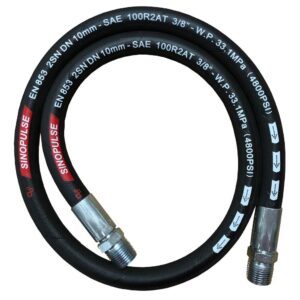
What are the fittings types of premade hydraulic hose assemblies?
You can install various fittings on pre-made hydraulic hose assemblies, such as BSPP fittings, JIC fittings, NPT fittings, etc.
EN 853 2SN 2 Steel Wire Braided Hydraulic Hose Assembly (with Crimping Fittings) Technical Specification
| Size | Inside Diameter | Outside Diameter | Working Pressure | Bursting Pressure | Bend Radius | Weight | Length | ||||
| Dash | mm | Inch | mm | mm | bar | psi | bar | psi | mm | kgs/m | m |
| 2SN-04 | 6.4 | 1/4" | 6.2-7.0 | 13.4 | 450 bar | 6525 psi | 1800 | 26100 | 75 | 0.290 | 50/100 |
| 2SN-05 | 7.9 | 5/16" | 7.7-8.5 | 15.0 | 420 bar | 6090 psi | 1680 | 24360 | 85 | 0.330 | 50/100 |
| 2SN-06 | 9.5 | 3/8" | 9.3-10.1 | 17.0 | 385 bar | 5583 psi | 1540 | 22330 | 90 | 0.420 | 50/100 |
| 2SN-08 | 12.7 | 1/2" | 12.3-13.5 | 20.7 | 345 bar | 5003 psi | 1380 | 20010 | 130 | 0.550 | 50/100 |
| 2SN-10 | 15.9 | 5/8" | 15.5-16.7 | 23.6 | 290 bar | 4205 psi | 1160 | 16820 | 150 | 0.650 | 50/100 |
| 2SN-12 | 19.1 | 3/4" | 18.6-19.8 | 27.7 | 280 bar | 4060 psi | 1120 | 16240 | 180 | 0.790 | 50/100 |
| 2SN-16 | 25.4 | 1" | 25.0-26.4 | 35.6 | 200 bar | 2900 psi | 800 | 11600 | 230 | 1.180 | 50/100 |
Our premade hydraulic hose for medium, high, and ultra-high pressure applications, covering internal diameters ranging from 3/16" to 2". We are capable of manufacturing hose assemblies featuring single, double, four, and six layers of steel wire reinforcement. Provided minimum order quantities are met, we can rapidly produce these assemblies—covering pressure ratings from 1,000 psi to 5,500 psi—thereby effectively minimizing costly downtime.
Step-By-Step Custom-made Hydraulic Hose Assembly