
Hydraulic systems are used in construction machinery, industrial equipment, and automotive braking systems. These applications have different requirements for hose pressure ratings, materials, and safety standards. In this article, we will compare the differences between hydraulic hoses and brake hoses, including what they are, their structure, pressure, fluid compatibility, and standard requirements, to guide you in choosing the correct hose.
What is a hydraulic hose?
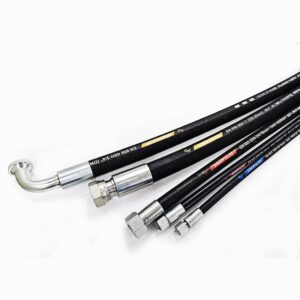
A hydraulic hose is used in hydraulic systems to transport hydraulic fluid between hydraulic components.
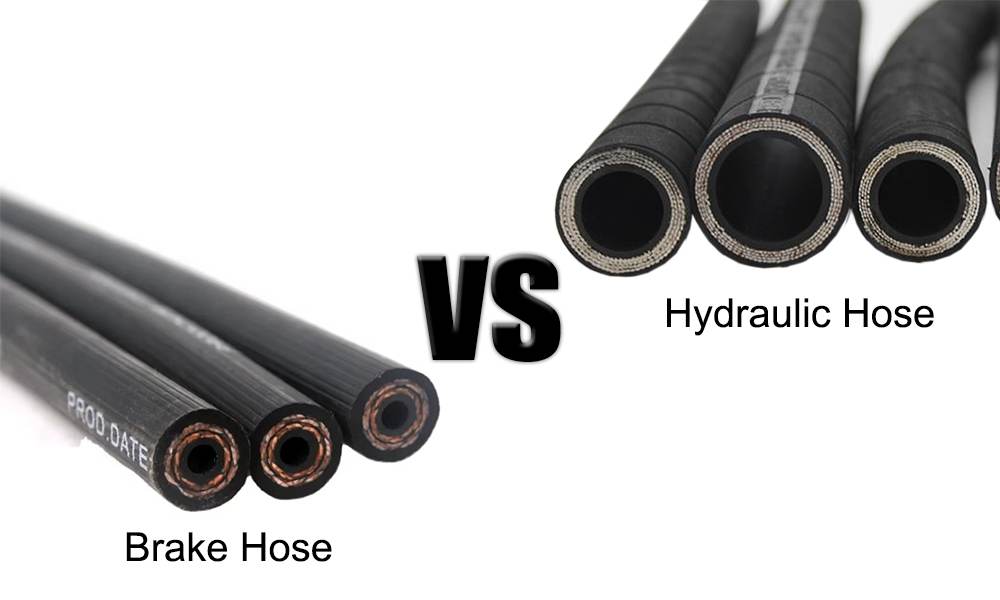
It consists of three layers: an inner tube, a reinforcement, and an outer cover. The inner tube must be compatible with hydraulic fluids. The reinforcing layer is made of steel wire or textiles to increase the hose's strength and withstand high pressure. The reinforcing layer typically uses a spiral or braided design. Different designs and materials can withstand different pressures. The outer layer of the hose protects it from abrasion and corrosion. For even better protection, hose protection wrap can be installed.
Types Hydraulic hoses
Hydraulic hose can be divide into 4 types by material: rubber hydraulic hoses, thermoplastic hoses, and flexible stainless steel hoses, teflon hoses feature a PTFE inner tube, providing excellent chemical resistance and a wide temperature range. They are suitable for applications involving corrosive fluids.
Based on hose construction, there are also braided hoses and multi-layer spiral hoses.
Braided hoses consist of an inner tube of synthetic or natural rubber, wrapped with one or more layers of braided fabric or steel wire. They offer excellent flexibility and high abrasion resistance. They are widely used in manufacturing, construction, automotive, aerospace, and many other industries. They can be used to transport fluids such as water, oil, gas, and chemicals while maintaining optimal flow rates and preventing leaks or bursts. Multi-layer spiral hoses are reinforced with four or six layers of high-strength steel wire, offering higher strength and durability, and are suitable for high-pressure applications.
Standards
The Society of Automotive Engineers (SAE) in the United States sets standards for hydraulic hoses, fittings, and components. These standards ensure compatibility and performance of products from different manufacturers.
European standards (EN) are widely used in Europe to ensure the quality and safety of hydraulic hoses. These standards cover dimensions, performance, and testing requirements.
Applications
Hydraulic hoses are crucial in agricultural equipment such as tractors and harvesters. They enable hydraulic systems to perform tasks such as lifting, steering, and controlling attachments.
Hydraulic hoses are found in various vehicles for multiple functions, including power steering, braking, and suspension systems. They enable these systems to operate smoothly and reliably.
Hydraulic hoses are used in construction machinery such as excavators, loaders, and cranes to transmit hydraulic power for operations such as lifting and digging. They are also used in agricultural equipment such as trucks, harvesters, fertilizer machines, and manure spreaders.
Hydraulic hoses are used in manufacturing processes such as injection molding, metal forming, and robotics. They facilitate the operation of hydraulic machinery and control systems.
Mining equipment relies on hydraulic hoses for functions such as drilling, crushing, and material conveying. These hoses can withstand harsh conditions and high-pressure environments.
Hydraulic hoses are used in steering, winch, and hoisting systems in marine applications. They can withstand seawater.
What is a Brake Hose?
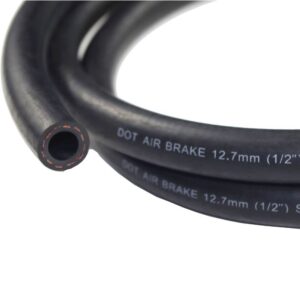
Brake hoses and lines are used to connect components of a car's hydraulic braking system. They are primarily used to deliver brake fluid from the master cylinder to the various hydraulic components. There is a distinction between metal brake lines and rubber brake hoses.
Metal brake lines connect the master cylinder to the rubber brake hoses. Rubber brake hoses, with their flexibility, connect the brake lines to the brake calipers of each wheel.
Rubber brake hoses also have three layers: an inner tube, a reinforcing layer, and an outer layer. The inner layer material needs to be able to withstand brake fluid, the reinforcing layer is made of braided fibers to provide pressure strength, and the outer layer protection needs to be oil-resistant and heat-resistant; a fabric mesh layer can also be added for extra protection.
Types
Metal brake hoses are generally made of galvanized steel and stainless steel. They are more robust, less prone to deformation, and can transmit pressure stably.
The difference between metal brake hoses and rubber brake hoses: Rubber brake hoses are made of rubber and offer excellent braking performance. They can operate over a wider temperature and hydraulic pressure range and are more affordable than stainless steel hoses. Rubber brake hoses are used on the front wheels to ensure steering and suspension movement, while those on the rear wheels ensure rear suspension travel. Although rubber brake hoses can withstand high pressure, they can still crack, blister, or leak. Therefore, they should be inspected at least every six months.
Stainless steel brake hoses are robust and durable, with an outer stainless steel sheath. Compared to rubber brake hoses, stainless steel brake hoses are less susceptible to physical damage from corrosion and environmental factors. However, they are also more expensive and less flexible.
Applications
Brake lines and hoses connect core braking components such as the master cylinder, wheel cylinders, brake discs, and brake pads, forming a complete hydraulic circuit.
Hydraulic Hose vs. Brake Hose
Brake hoses are essentially a type of hydraulic hose, so the two are easily confused. Brake hoses are automotive-specific hydraulic hoses, requiring greater flexibility, high-temperature resistance, and compliance with DOT standards. Below, I will provide a more detailed understanding of their differences:
Hydraulic hoses have a wider range of applications, capable of transporting hydraulic fluids such as hydraulic oil, mineral oil, and synthetic oil.
Brake hoses, on the other hand, transport DOT3/4/5.1 or specific brake fluids and must comply with specific DOT standards.
Hydraulic hoses can withstand higher pressures and have higher oil resistance.
However, they need to be compatible with brake fluids, have low expansion, and ensure safe operation of the braking system.
Brake hoses also have a compact installation environment, making them more flexible and having a larger bending radius than industrial hydraulic hoses.
Industrial hydraulic hoses need to meet basic standards, such as SAE 100R series and EN standards, while brake hoses have stricter requirements, needing to comply with DOT, SAE J1401, and other certifications.
Industrial hydraulic hoses use crimping and threaded connections, employing high-pressure-specific hydraulic fittings. Brake hoses also have dedicated fittings to prevent leaks.
Are they interchangeable?
Generally, ordinary industrial hydraulic hoses and brake hoses are not interchangeable. Automotive brake hoses are specialized hydraulic hoses. Braking systems are characterized by high-frequency changes, which can easily cause hose expansion. Therefore, brake-specific hoses need to have low expansion; otherwise, the brake pedal force will become softer, the braking distance will increase, and there will be a significant safety hazard. Ordinary hydraulic systems require higher pressure and load requirements than braking systems. Forcibly replacing them with brake system hoses will accelerate hose aging and breakage.
How to choose?
When choosing the correct hydraulic hose or brake hose, the most important thing is to determine the hose specifications and material. This ensures the safe and stable operation of the hydraulic system.
Fluid type
If conveying DOT3/4/5.1 brake fluid, a high-temperature resistant, low-expansion brake hose compatible with the brake fluid is required.
If conveying hydraulic fluids such as mineral oil or synthetic oil in the hydraulic system, it is best to choose a suitable industrial hydraulic hose. Of course, in addition to the fluid type, you also need to confirm the operating temperature and environment to avoid the risk of leakage due to improper use.
Pressure
Brake hoses can withstand lower pressures than industrial hydraulic hoses, but they need to have stability and low expansion under high pulses. If higher pressure is required, hydraulic hoses should be considered.
Certifications
Brake hoses must comply with DOT and SAE J1401 certifications, while hydraulic hoses must meet or exceed SAE, EN 853/856, ISO, and other standards.
Both hydraulic hoses and brake hoses are key components in specific hydraulic systems used to transmit hydraulic power. If you still have questions about how to choose them, or want to purchase quality hydraulic hoses, contact Sinopulse hose experts for professional hose advice.