
Hydraulic hose fittings are used for the flexible connection of two fluid ports. They are easily installed and uninstalled if necessary. NPT (National Pipe Thread) and JIC (Joint Industry Council) are both commonly used fitting types in fluid transport systems, but their designs and applications differ. Incorrect selection can lead to incompatibility or even leaks. This article will help you understand the differences between them and correctly select and purchase NPT and JIC fittings.
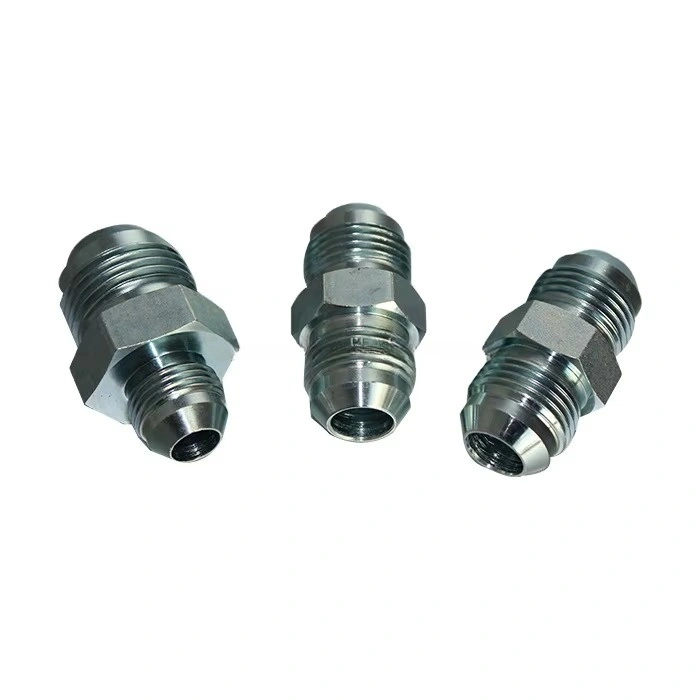
What is an NPT Fitting?
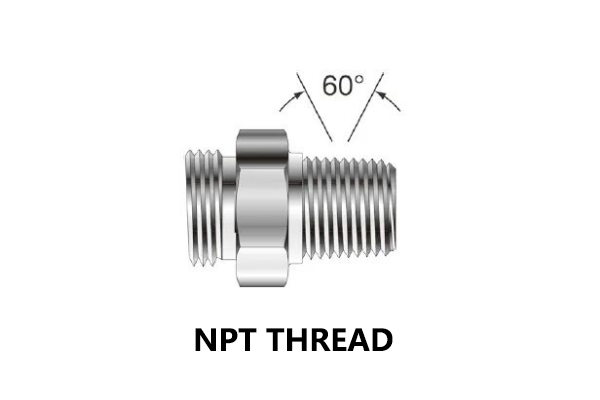
NPT stands for National (American) Pipe Thread; it is a U.S. standard 60-degree tapered thread. It is widely used throughout North America. Its threads feature a tapered design with a taper ratio of 1:16. This means that for every inch of thread length, the diameter decreases by 1/16 of an inch. Sealing is achieved by tightening the threads; these fittings are commonly used in piping systems for water, gas, and similar media, effectively preventing leaks and offering excellent compatibility.
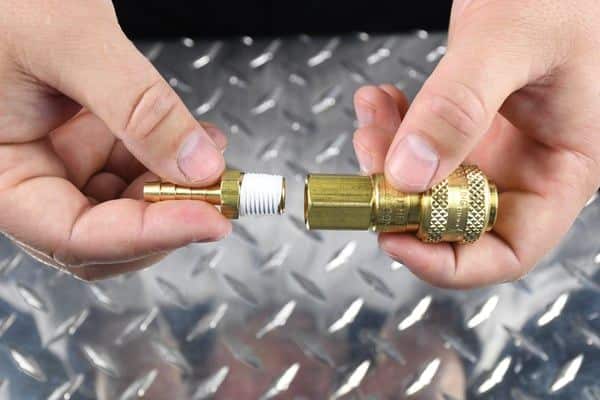
Sealing is achieved through a tapered threaded connection involving compressive deformation, in conjunction with a sealant (such as PTFE or other sealing agents).
What Are JIC Fittings?
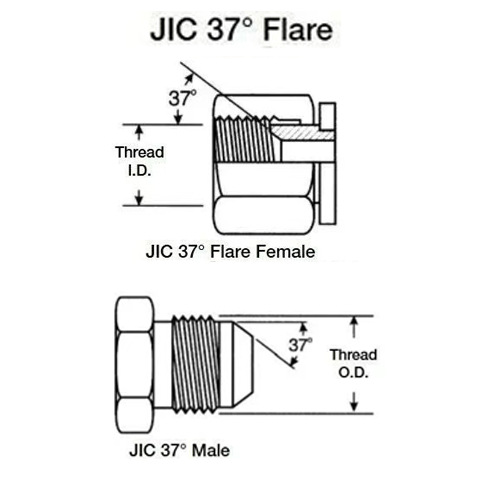
JIC fittings are common hydraulic connectors widely used in industrial sectors. JIC stands for "Joint Industry Council"; these fittings typically feature parallel threads and a 37-degree flared sealing surface. This design achieves a seal through the metal-to-metal compression of tapered surfaces, allowing them to withstand high-pressure surges more effectively than flat-face seals. JIC fittings are manufactured from a variety of materials, with nickel alloys, brass, carbon steel, and stainless steel being the most common choices. Standard sizes range from 1/8 inch to 2 inches, with the 1/4-inch, 3/8-inch, and 1/2-inch sizes being the most frequently utilized.
JIC Fitting Types
Female JIC: This fitting features external threads and a 37-degree flare. When paired with its corresponding male counterpart, it establishes a metal-to-metal seal.
Male JIC 37°: This fitting features internal threads, a 37-degree flare, and a sleeve. The sleeve compresses against the external-threaded fitting, ensuring a tight and secure fit.
JIC Swivel Fittings: The internally threaded swivel JIC fitting consists of two primary components: The Nut—this component features internal UNF threads; and the 37-Degree Flare Fitting—as the name suggests, this component features a 37-degree flared seat. Typically, these two components are crimped together to form a single, integral unit. This design allows the fitting to swivel, thereby facilitating easier connection with its corresponding externally threaded JIC counterpart. The swivel functionality ensures a more flexible and efficient connection, thereby simplifying the installation process.
NPT vs. JIC: The Differences
The distinctions between JIC (American-style) fittings and NPT (American tapered thread) fittings lie in their thread types, sealing methods, and applications. You should select the appropriate fitting based on your specific requirements.
Thread Type:
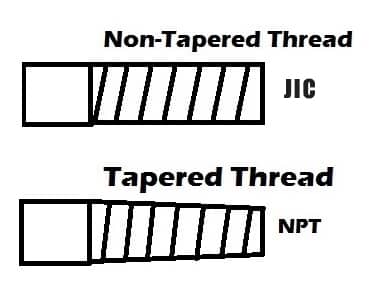
JIC fittings utilize American parallel threads (UNF), featuring a 60° thread profile angle and no taper.
NPT fittings, conversely, employ American tapered pipe threads; these feature a 1:16 taper ratio and a 60° thread profile angle, where the threads themselves serve as the primary sealing mechanism.
Sealing :
JIC threaded fittings primarily achieve a seal through metal-to-metal line contact at a 37° cone angle; they provide robust sealing performance under high pressure and do not require any additional sealing components.
NPT fittings seal via the compressive force of their tapered threads; they require the use of thread sealant or PTFE tape, and their sealing effectiveness is significantly influenced by the applied tightening torque.
Applications:
Due to their superior sealing performance and ease of disassembly, JIC fittings are primarily utilized in medium-to-high-pressure systems (operating at less than 6000 psi) and in applications requiring frequent disconnection—such as hydraulic and pneumatic systems.
NPT fittings are suitable for medium-to-low-pressure systems (operating at less than 3000 psi) and static sealing applications, such as pipe connections and valve interfaces. If you are working with a limited budget, NPT fittings are an excellent choice, as they are more affordable; however, they do require the application of a sealant to ensure a proper seal.
For hydraulic and pneumatic systems, as well as equipment requiring frequent maintenance, select JIC fittings; for pipeline connections, valve interfaces, and low-to-medium pressure static applications, select NPT fittings.
Sealing: JIC fittings require no sealant during installation, whereas NPT fittings must utilize sealant or PTFE tape.
Leakage Risk: In high-pressure and high-vibration environments, the sealing stability of JIC fittings is superior to that of NPT fittings. JIC fittings are less prone to leakage.
Quick view the difference between NPT and JIC
| Item | NPT | JIC |
| Sealing Method | Metal-to-metal sealing type | 37° seats with a seal |
| Sealant Required | YES | NO |
| Reusable | NO | YES |
| High-Pressure Resistance | NO | YES |
| Installation Difficulty | NORMAL | EASY |
| Leakage Risk | HIGH | LOW |
JIC and NPT Size Chart
NPT Fitting Size Chart
| NPT Size | Male O.D. | Female I.D. | Threads per Inch | ||
| Fraction (in.) | Decimal (in.) | Fraction (in.) | Decimal (in.) | ||
| 1/8 in. | 13/32 | 0.41 | 3/8 | 0.38 | 27 |
| 1/4 in. | 17/32 | 0.54 | 1/2 | 0.49 | 18 |
| 3/8 in. | 11/16 | 0.68 | 5/8 | 0.63 | 18 |
| 1/2 in. | 27/32 | 0.84 | 25/32 | 0.77 | 14 |
| 3/4 in. | 1 1/16 | 1.05 | 1 | 0.98 | 14 |
| 1 in. | 1 5/16 | 1.32 | 1 1/4 | 1.24 | 11.5 |
JIC Fittings size chart
| JIC Dash Size | Nominal Size | No. Threads Per Inch | Female Threads Thread I.D. (Inc.) | Male Threads Thread O.D. (Inc.) |
| -2 | 1/8" | 24 | 17/64" | 5/16" |
| -3 | 3/16" | 24 | 21/64" | 3/8" |
| -4 | 1/4" | 20 | 25/64" | 7/16" |
| -5 | 5/16" | 20 | 29/64" | 1/2" |
| -6 | 3/8" | 18 | 1/2" | 9/16" |
| -8 | 1/2" | 16 | 11/16" | 3/4" |
| -10 | 5/8" | 14 | 13/16" | 7/8" |
| -12 | 3/4" | 12 | 31/32" | 1-1/16" |
| -14 | 7/8" | 12 | 1-7/64" | 1-3/16" |
| -16 | 1" | 12 | 1-15/64" | 1-5/16" |
| -20 | 1-1/4" | 12 | 1-35/64" | 1-5/8" |
| -24 | 1-1/2" | 12 | 1-51/64" | 1-7/8" |
| -32 | 2" | 12 | 2-27/64" | 2-1/2" |
NPT Fittings: Advantages and Disadvantages
Advantages
Wide Applications: NPT fittings, American standard threaded connections, are suitable for various piping systems, such as those in the petroleum, chemical, pharmaceutical, and food processing industries. They can also be used in pneumatic and hydraulic systems. The same specification of NPT fitting can be used to connect different equipment and systems.
Corrosion-Resistant Materials: NPT fittings are typically made of corrosion-resistant materials such as stainless steel and carbon steel, enabling long-term stable operation in harsh environments. They possess good durability and stability.
Affordable: NPT fittings are readily available and inexpensive.
Sealing: NPT fittings use tapered threads. The tapered design generates radial pressure when the threads engage, tightening as they are tightened, providing excellent sealing performance and ensuring the pipeline's airtightness, preventing leaks.
Easy Installation: NPT fittings do not require O-rings, gaskets, or sealants. The threads form a self-sealing structure with the pipe threads; simply insert the pipe into the fitting and rotate it a certain angle to complete the connection.
Easy Identification: NPT connectors have a fixed number of threads per inch (e.g., 1/2" NPT has 14 threads per inch), making them easy to identify with a thread gauge.
Reusable: NPT connectors can be repeatedly disassembled, facilitating pipe maintenance and replacement. They are used in everything from household plumbing to industrial equipment.
Disadvantages:
Although NPT fittings are convenient and reliable, it is important to note that they require PTFE tape for sealing during installation, and must not be overtightened to avoid damaging the threads.
JIC Fittings: Advantages and Disadvantages
Advantages:
JIC threads are characterized by their 37-degree flared sealing surface design, which makes pipe connections more secure and prevents leaks.
JIC threads also have high precision requirements to ensure stable performance in various environments. During manufacturing, JIC threads must adhere to strict standards and specifications to ensure their quality and reliability.
The widespread use of JIC threads is also related to their excellent interchangeability and versatility. Because the JIC thread standard is widely used in various industrial fields, JIC thread products from different manufacturers are interchangeable, which greatly improves the convenience of equipment maintenance and parts replacement.
JIC fitting metal-to-metal compression of tapered surfaces seal methode make it reuseble
Disadvantages:
Advances in heavy machinery technology have led to more demanding sealing requirements in many applications. Unless manufacturing standards impose stricter tolerances on the flared seat surface, JIC fittings perform poorly in high-pressure fluid sealing. O-ring seals are better suited for these applications.
NPT Applications
NPT threads are widely used and are the preferred choice for pipe connections in North America. From household water and gas pipes to industrial oil, chemical, and natural gas pipeline systems, NPT threads are recognized for their sealing performance and reliability.
In households, NPT threaded fittings are used to connect the inlet and outlet pipes of faucets, water heaters, washing machines, and other appliances. Their tight seal prevents water leaks and safety hazards.
In industry, NPT threads have even wider applications. From oil extraction and natural gas transportation to the production, storage, and transportation of chemical products, NPT threads demonstrate excellent performance and stability, ensuring smooth industrial production.
JIC Applications
JIC American standard fittings are widely used in various industrial sectors due to their high-pressure adaptability and reliable sealing.
Their main applications include hydraulic lines in construction machinery (excavators, loaders, hydraulic lifts), aircraft hydraulic systems (landing gear, brakes) in the aerospace industry, hydraulic presses and injection molding machines in industrial manufacturing, and high-pressure pipeline connections in mining machinery and underground equipment.
It is also used in fluid transmission in the chemical and energy fields, small and medium diameter pipelines for instruments and meters, hydraulic systems for agricultural machinery (tractors) and forestry equipment (logging trucks), as well as in marine systems for ship steering and winch hydraulic devices.
How to Choose the Right Fitting
When selecting threaded fittings, the following factors need to be considered: operating environment temperature, pressure, flow rate, and material selection. Different materials can adapt to different working conditions.
JIC (Joint Industry Council) fittings, on the other hand, utilize a 37-degree flare seating surface to create a metal-to-metal seal, making them suitable for high-pressure hydraulic systems. NPT (National Pipe Thread) fittings use a tapered thread to create a seal and are commonly used in plumbing and piping applications.
If you are still confused about the differences between NPT and JIC, please contact us. Our experts will answer your questions.