What Material Is Flexible Hose
Flexible hose is a flexible, durable material that can be bent or twisted without breaking. The most common material for hose manufacturing is plastic, specifically PVC (polyvinyl chloride) or TPE (thermoplastic elastomer). The hose is flexible and can bend, making it ideal for use in confined spaces. Flexible hoses are strong enough to withstand heavy loads. There are many types of flexible hoses available for various complex configurations. This article will introduce you to the 10 main materials used in flexible hoses.
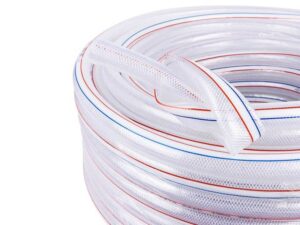
Ten Materials of Flexible Hose?
PVC
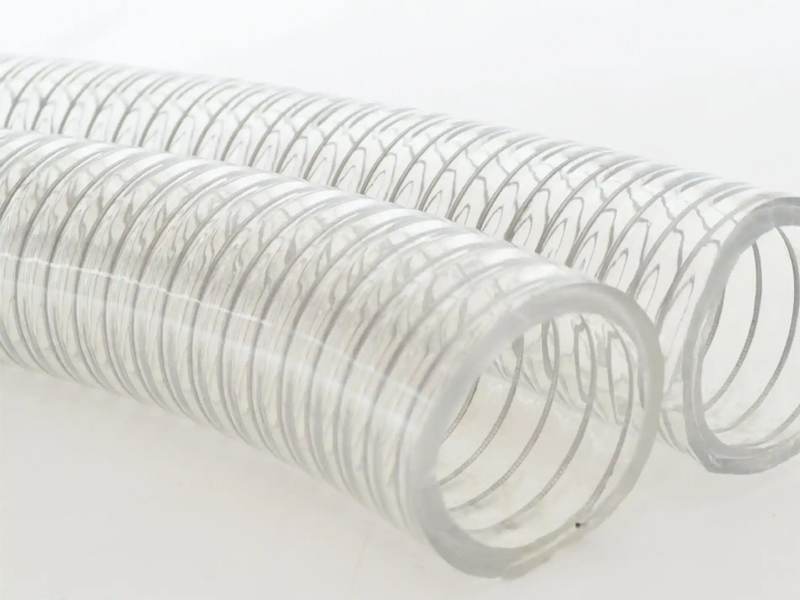
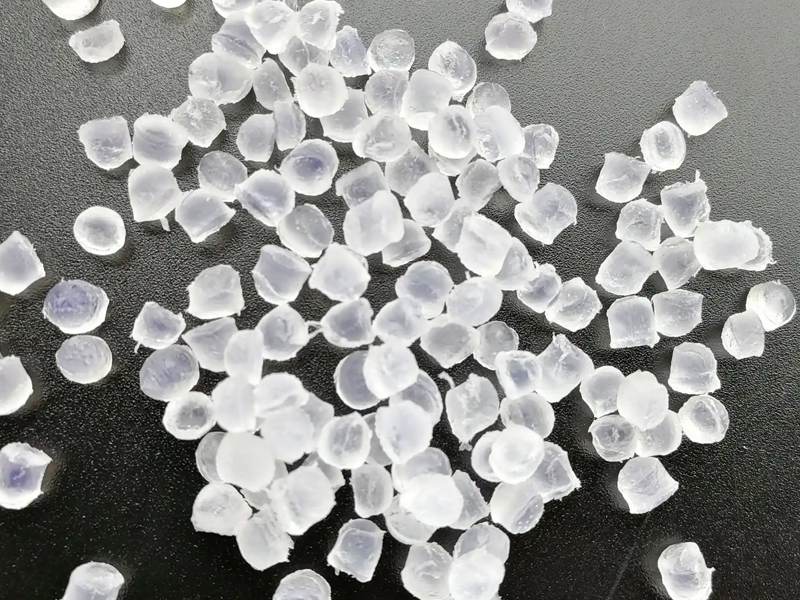
Polyvinyl chloride (PVC) is a widely used plastic in the manufacture of hoses. It is popular due to its low price, light weight, and good chemical resistance and UV resistance. Using PVC hoses offers many advantages. PVC hoses are abrasion-resistant, ensuring long-term use. Flexible PVC hoses are very lightweight, reducing the effort required for handling and making operation easier. PVC hoses also have some chemical resistance, making them suitable for conveying weak acids and alkalis. PVC hoses are commonly used in applications requiring high pressure and high temperature, and are also suitable for the food and medical industries. The biggest advantage of using PVC is its low price. If the cost of the hose is a significant factor in your hose selection, PVC may be the most suitable choice.
EPDM
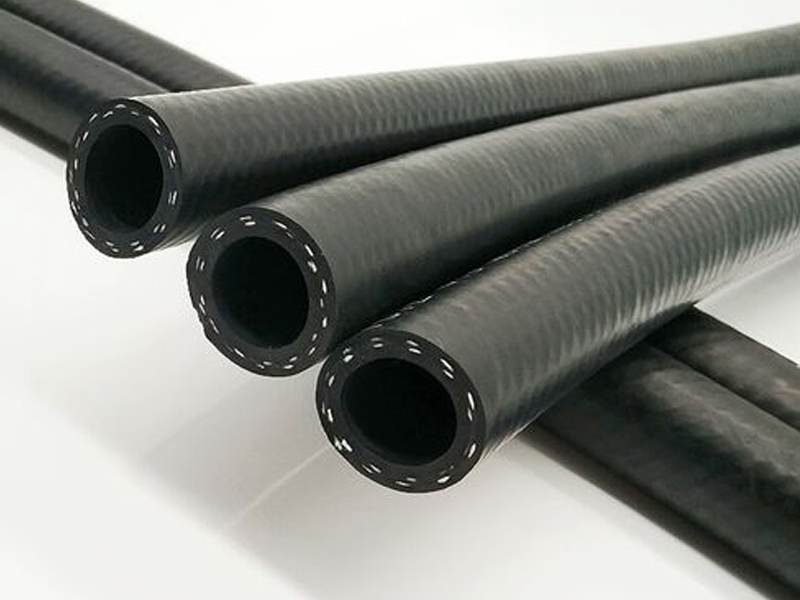
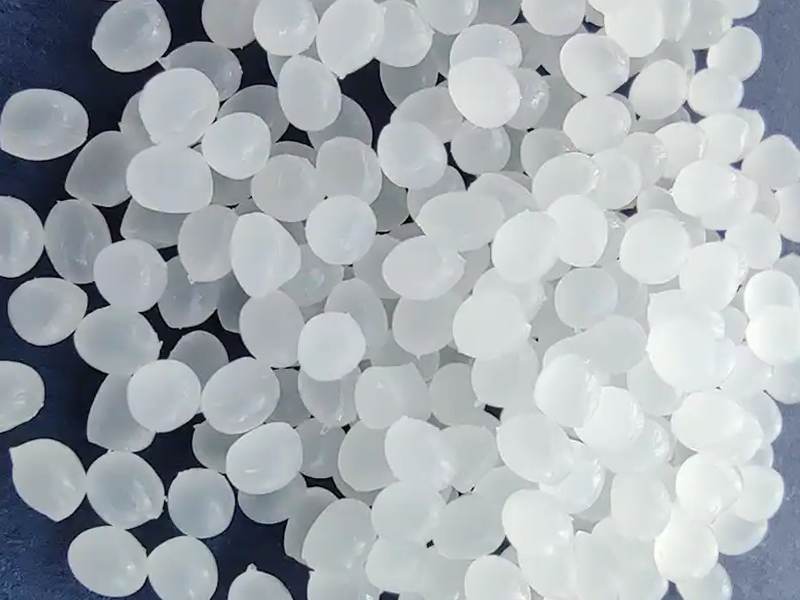
Ethylene propylene diene monomer (EPDM) rubber is one of the most commonly used synthetic rubbers, frequently used in the manufacture of seals, hoses, pipes, and tubing. It is particularly suitable for outdoor applications. It is often used to manufacture EPDM radiator hoses and heating hoses. EPDM hoses are highly flexible and resistant to UV radiation, ozone, and other harsh weather conditions. EPDM hoses also possess excellent durability and flexibility. They can withstand twisting, bending, and stretching without breaking. This is thanks to their impact resistance, meaning they can absorb shock and maintain their shape. Furthermore, EPDM hoses have a longer service life under various environmental conditions and do not age in most cases. Their heat resistance range is -55°C to 135°C.
TPE or Thermoplastic
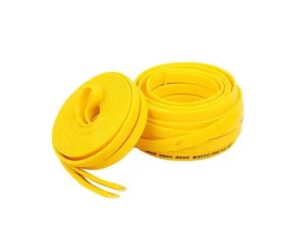
TPE refers to thermoplastic elastomers. It combines the properties of both rubber and plastic. This means TPE can provide the characteristics of both materials simultaneously. It not only possesses the high elasticity, high strength, and high resilience of rubber, but also the characteristics of injection molding. Furthermore, it is environmentally friendly, non-toxic, safe, has a wide hardness range, excellent colorability, a soft touch, weather resistance, fatigue resistance, and temperature resistance. However, this flexible hose material is particularly suitable for high-temperature environments. They are commonly used in food production, as well as fuel and medical tubing. Thermoplastic hoses are extremely flexible and lightweight. Most importantly, this material is 100% recyclable, making it very environmentally friendly.
PTFE
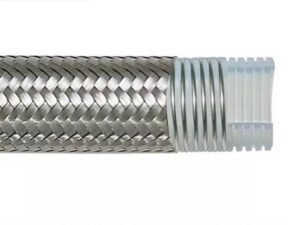
PTFE is an abbreviation for polytetrafluoroethylene. This material is widely popular due to its excellent chemical and heat resistance. It is used in the chemical and high-temperature air transport industries, as well as in the pharmaceutical sector. PTFE hoses exhibit strong chemical resistance and heat resistance. Their temperature ratings are typically from -60°C (-76°F) to +260°C (+500°F). Common applications of PTFE hoses include the chemical processing, pharmaceutical, and food industries for transporting corrosive chemicals, where strong chemical and high-temperature resistance is required.
Nylon
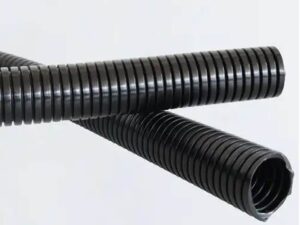
Nylon tubing (polyamide tubing, or PA tubing for short) is a type of tubing made of polyamide material. It possesses excellent flexibility and is widely used in various industrial and commercial fields. They are suitable for conveying a variety of fluids, including water, oil, and some mild chemical reagents. Nylon tubing has a long service life, even reaching decades. It is flexible and bendable, and resistant to corrosion from many chemicals. Nylon tubing has high tensile strength and high rigidity, making it ideal for pneumatic applications requiring high pressure resistance.
Silicone
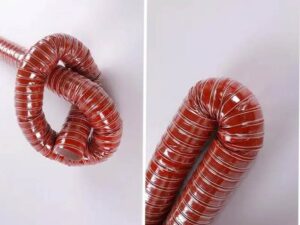
Silicone is another material used to manufacture hoses. Silicone hoses are exceptionally resistant to extreme temperatures. They perform well in both high and low temperature environments and are resistant to chemical corrosion and UV radiation. They are commonly used in the automotive industry, such as engine hoses, and also in industrial applications, such as hot air ducts. Silicone is very flexible and can withstand sudden bending. It is also used to make chemical delivery hoses. Silicone hoses are ideal for use in high and low temperature environments ranging from -60°C (-76℉) to 230°C (446℉).
Polyurethane (PU)
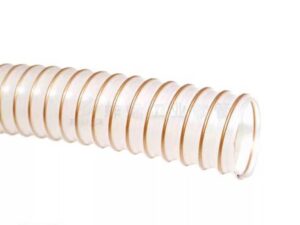
PU tubing is short for Polyurethane Tubing, a common plastic material frequently used in hose manufacturing. It is high in strength, flexible, and tear-resistant. Another reason for its popularity is its lightweight nature. PU tubing is the preferred pneumatic pressure hose in the pneumatic industry. It is commonly used in pneumatic systems, vacuum cleaners, dust collectors, and other products. PU hoses exhibit excellent weather resistance and abrasion resistance, remaining firm even in cold weather. Flexible PU hoses are ideal for conveying fuels and lubricants.
Nitrile Butadiene Rubber (NBR)
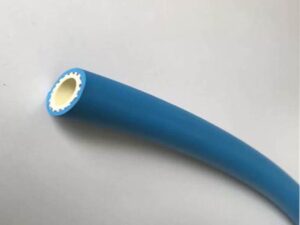
Nitrile butadiene rubber (NBR) possesses excellent flexibility and oil resistance, making NBR hoses commonly used in applications involving petroleum and oils.Due to its corrosion resistance, it is ideal for outdoor applications. It maintains its flexibility even in cold conditions. Its operating temperature range is moderate, from -40°C to 120°C.
Metal
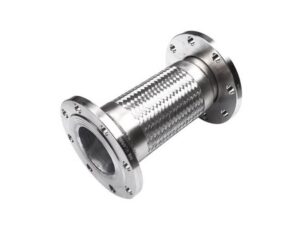
The main body of a metal flexible hose is made of metal materials such as stainless steel, copper, and aluminum, and internally consists of three parts: a corrugated tube, a braided sleeve, and a connector. It can withstand high-pressure oil and gas fluids, ensuring the safe transport of media. Therefore, it is commonly used in high-pressure environments, such as oil extraction, chemical transportation, and aerospace. It can also adapt to the requirements of pipeline thermal expansion and vibration absorption, playing a crucial role in industries such as metallurgy and power. It is ideally suited for use in high-temperature environments, with an operating temperature range between -50 degrees Celsius and 300 degrees Celsius.
Composite Materials
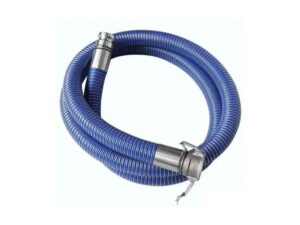
This flexible hose material is particularly suitable for heavy-duty applications. Composite hoses are composed of multiple layers of different materials, most commonly plastics, rubber, and metals. Composite hoses are widely used in the chemical industry and are also frequently used in high-pressure applications.
Composite hoses are more robust and durable than other hoses. They are designed to handle high flow rates and can also be used to transport corrosive liquids.
How to Choose a Right Hose Material?
All flexible hose materials are suitable for making flexible hoses. However, the right choice depends on your specific application. We'll guide you through choosing the right hose material.
Operating Temperature: Does it involve high or extremely low heat? If you need to withstand temperatures above 100 degrees Celsius, silicone and PTFE may be ideal.
Operating Pressure: Try to understand whether the hose will withstand low, medium, or high pressure. In this case, you must pay attention to the safety factor, typically 4:1 or 3:1. The value on the left is the burst pressure, and the value on the right is the operating pressure. For example, if the hose's operating pressure is 100 MPa, its burst pressure ratio must be 400 MPa or 300 MPa. Note that the exact ratio depends on the standard.
Media: You need to determine what kind of fluid or direct gas will be transported through the hose. Also, note that your hose may come into contact with corrosive substances. Therefore, you must ensure that your hose can perfectly handle the liquid being transported.
Flexibility: Does your project involve a tight space? If so, you must choose a hose material with optimal flexibility. Finally, ensure the hose is highly durable. If you require even higher strength, choose EPDM, PVC, or metal.
Standards: Many countries widely use different types of standards, such as ISO, DIN, EN, and SAE.
Budget: Cost must be balanced with quality, warranty, and success rate. Your project may require high room temperature conditions. For example, in such cases, a flexible hose with a high-temperature rating might not be a wise decision. Therefore, constantly balance project requirements with your overall budget.
A variety of materials can be used to manufacture hoses, but the most common are PVC, TPE, and silicone. Each material has its unique properties and advantages, and the choice of material depends on the specific application and requirements of the hose. Whether you need a flexible, durable, chemically resistant, or high-temperature resistant hose, there's always a material to meet your needs. Choosing between these materials can be a bit tricky. But if you understand their properties, you can quickly connect them to your project requirements. If you need any assistance in selecting the right material, please feel free to contact our customer support team.