

Automotive Hose
Automotive hoses are flexible tubes that convey fluids and gases in automotive systems. They are used in various applications, such as cooling systems, fuel delivery, and power steering systems. Automotive hoses are made from multiple materials, including rubber, plastic, and metal. They are designed to withstand extreme temperatures, pressure, and vibration. Automotive hoses are available in various sizes and shapes to fit the needs of different vehicles.
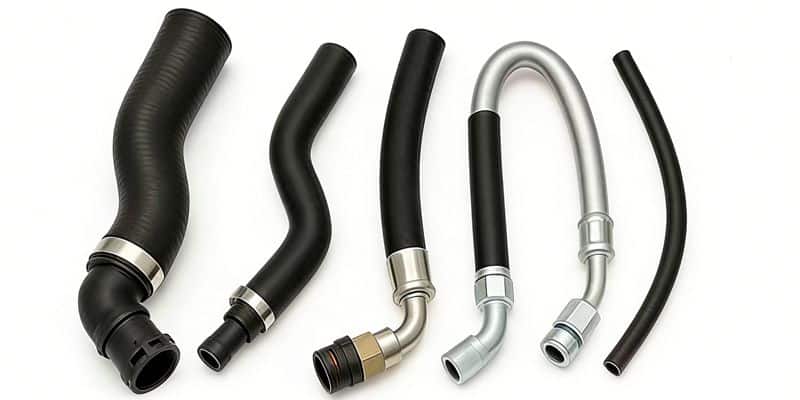
Sinopulse high-performance automotive hoses, silicone hoses, rubber hoses and custom rubber parts are ideal for air, water, coolant and fuel application. OEMs use our hoses for engine applications in trucks, power generation, construction and agricultural machines, and general industrial equipment. We provide products engineered to meet manufacturers' specifications for pressure, temperature, flexibility and air or fluid distribution. In addition to turning to us for noise, vibration and temperature control solutions, ask about hose suppliers that make polymers their specialty.
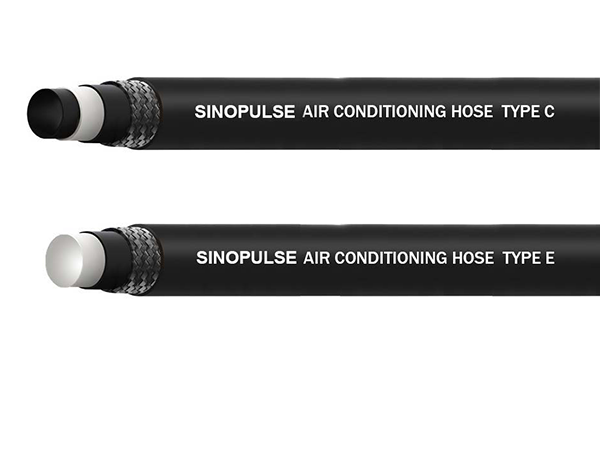

SAE J1401 Hydraulic Brake Hose, SAE J1402 Air Brake Hose, SAE J1403 Vacuum Brake Hose

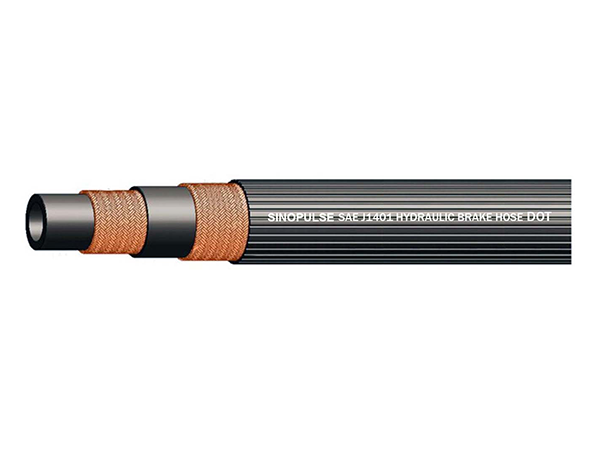
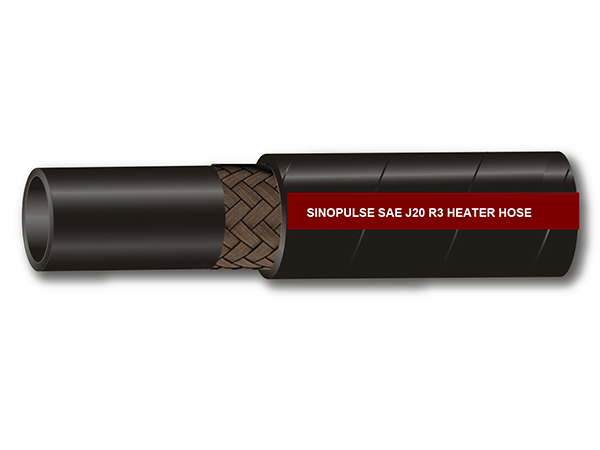
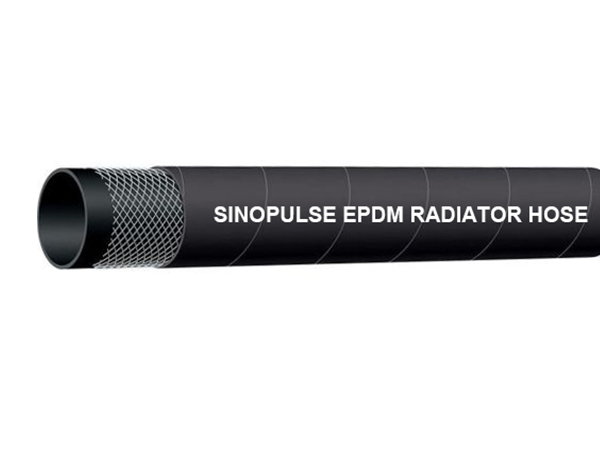

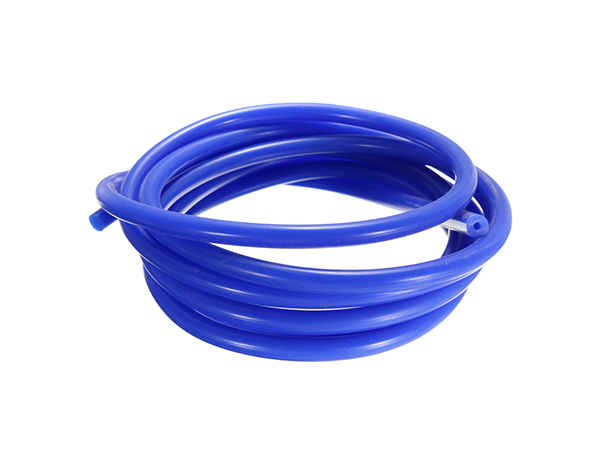
Silicone Hose, EPDM Hose,Radiator Hose, Engine Water Hose, Warm Air Hose, Turbo Tube
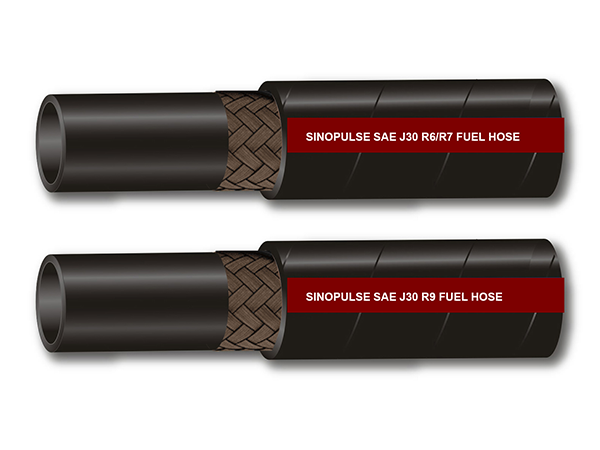
SAEJ30 R6 / SAEJ30 R7/ DIN 73379 Type 2A, SAE J30 R9 FUEL INJECTION HOSE

SAE J188 HIGH PRESSURE POWER STEERING HOSE, SAE J189 Low Pressure Power Steering Hose,Return Hose
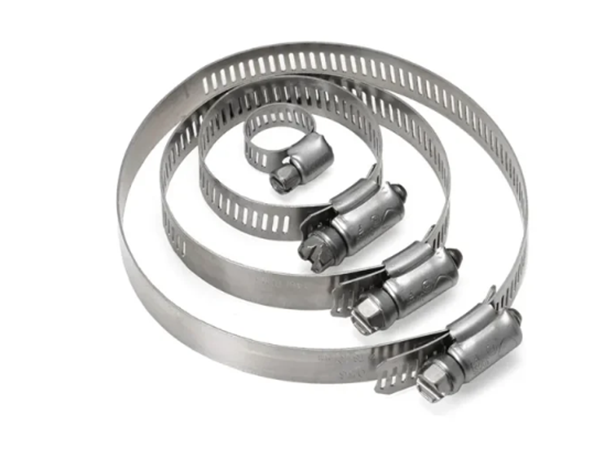
We produce many types of hose clamps such as American type hose clamp, European type hose clamps, Germany Type hose clamp, British Type hose clamp, U clamps, t-bolt clamps, hi-torque hose clamp and so on.
Sinopulse is a prominent manufacturer and distributor of quality automotive hoses, offering a wide range of sizes, styles and construction materials to meet your needs. All hose products meet stringent specifications and standards. We offer both metric and imperial hose assemblies.
Automotive hoses (also known as engine hoses, vehicle hoses, auto hoses, and car hoses) carry fluids to engines, radiators, and other vehicle components to fuel them, lubricate them, cool them, and keep them from malfunctioning.
Automotive hose applications include:
Garage exhaust hose
Heater hose
Impact tool air hose
Transmission oil cooler hose
Power steering oil return hose
Flexible exhaust hose
Water/car wash rack hose
Fresh air intake hose
Preformed bend hose
Wiper/vacuum hose
Radiator overflow hose
Lane signal call hose
Multi-purpose clear vinyl hose
Air hose, rubber and PVC
Gas station air hose
Fuel line hose
Radiator coolant hose
Silicone turbo boot
Silicone bellows
Tank fill hose
We supply and manufacture the following air pipes according to vehicle type:
Heavy Trucking
Charge-Air-Cooler (CAC) Hoses
Emissions System Hoses
Turbo Hoses
Aftercooler Hoses
Mass Transportation
Air Cleaner Hoses
Intercoolers
Radiator Hoses
Filter System Hoses
Agriculture & Construction
Coolant Hoses
Radiator Hoses
Air & Water Hoses
Crossover Tubing
The automotive hoses we offer are engineered to meet the manufacturer's specifications for pressure, temperature, flexibility, and air or fluid distribution. In addition to turning to us for noise, vibration, and temperature control solutions, you can also consult and make Sinopulse your dedicated automotive hose supplier.
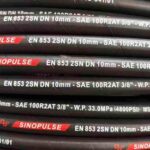


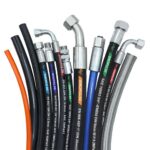
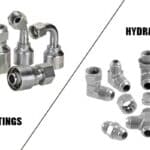
Hot Products

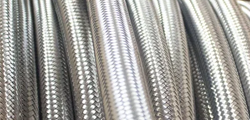


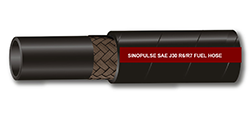


Sinopulse offers a wide variety of truck and car hoses to keep your vehicle running reliably and smoothly. From brake hoses to hoses designed for car washes, we have the right automotive hose for your needs. We offer complete fuel line kits, transmission oil lines, radiator hoses, clamps, brackets, and air conditioning and heating ducts to provide you with a one-stop service!
Automotive hose types
Brake Hose
Air brake hoses ensure vehicle safety and efficiency.
In a car's braking system, the brake hose connects the master cylinder to the brake calipers, transmitting brake fluid and ensuring pressure. When the brake pedal is depressed, the brake fluid rapidly transmits pressure through the hose, bringing the brake pads into contact with the brake discs, thus achieving deceleration. If the hose ages, swells, or ruptures, it can cause the brakes to soften or even fail, seriously impacting driving safety.
It is typically made of high-strength rubber or a braided metal layer, possessing properties such as high pressure resistance, corrosion resistance, and aging resistance.
This crucial component plays a vital role in the braking system, ensuring the reliable and efficient operation of the air brake system. Whether it's a commercial truck, bus, or other heavy-duty vehicle, high-quality air brake hoses are essential for maintaining optimal braking performance.
Air brake hoses are designed to withstand extreme pressure and temperature fluctuations. As a conduit for compressed air, it delivers compressed air from the brake chambers to the braking mechanism. Its robust and durable construction ensures it can withstand the harsh conditions frequently encountered on the road.
Air brake hoses not only need to be robust and durable but must also meet industry safety standards. These hoses undergo rigorous testing to ensure they maintain their integrity under high pressure. With certified air brake hoses, you can have peace of mind knowing your braking system is reliable and safe.
Air Compressor Hose
Air compressor hoses not only need to be durable and flexible, but also possess excellent abrasion resistance, weather resistance, and chemical corrosion resistance. This ensures the hose's service life and minimizes the risk of leaks or bursts, thus avoiding costly downtime or accidents. High-quality air compressor hoses should come with suitable fittings that securely connect to the compressor and tools. This ensures a tight seal, preventing pressure or energy efficiency loss.
AIR COOLER HOSE
In hot weather, the AIR COOLER HOSE is a key component for keeping you cool. Whether for personal use or industrial environments, the reliable and efficient AIR COOLER HOSE makes a significant difference.
Automotive Exhaust Hose
An automotive exhaust hose, also called an exhaust bellows, is installed inside the exhaust pipe between the engine exhaust manifold and the muffler. Its function is to provide a flexible connection throughout the exhaust system, helping to reduce vibration and noise, facilitating installation, and extending the lifespan of the exhaust muffler system.
It is the safe passage for vehicle exhaust gases to escape. Designed to withstand high temperatures, corrosive substances, and high pressure, it is a critical component ensuring optimal engine performance. Without a reliable exhaust hose, the vehicle will not function properly, leading to decreased efficiency and potentially damaging other engine components.
The importance of automotive exhaust hoses extends beyond emission control. They also effectively suppress sound wave vibrations generated during engine combustion, significantly reducing noise pollution. This not only contributes to a quieter driving experience but also ensures compliance with stringent noise regulations set by various regulatory bodies.
Fuel Hose
Fuel hoses play a crucial role in the safe and efficient delivery of fuel across various industries and are an essential component of automotive fuel systems. Fuel hoses are primarily used to transfer fuel from the fuel tank to the engine and are typically made of pressure-resistant, corrosion-resistant rubber, polyurethane, or plastic materials.
They are mainly used for fuel delivery in the power systems of gasoline-powered vehicles and must meet low fuel permeability requirements to reduce evaporative contamination.
Whether in automotive, aerospace, or industrial applications, reliable and high-quality fuel hoses are essential to prevent leaks, spills, and potential hazards. They are designed to deliver various fuels, including gasoline, diesel, and even alternative fuels such as ethanol. Fuel hoses are functionally classified into three types: high-pressure fuel hoses, low-pressure fuel hoses, and return fuel hoses. Routine maintenance involves regularly inspecting the hoses for cracks, bulges, or signs of leakage, promptly cleaning internal impurities, replacing worn parts, and ensuring that the seals at connections meet standards.
Automotive Vacuum Hose
Automotive vacuum hoses are crucial components connecting various parts, ensuring the proper functioning of airflow and vacuum pressure within the vehicle. Unlike ordinary hoses, automotive vacuum hoses perform critical tasks such as signal transmission, pressure equalization, and exhaust gas diversion. They are key components connecting the brake vacuum pump and the engine intake manifold.
Automotive vacuum hoses have a wide range of applications, including emission control, engine performance regulation, and powering various systems such as braking systems, HVAC (Heating, Ventilation, and Air Conditioning) systems, and fuel delivery systems. Without reliable vacuum hoses, these systems would struggle to function properly.
When the engine is running, the vacuum hose transmits the negative pressure from the intake manifold to the vacuum pump. The vacuum pump contains a diaphragm; the negative pressure acts on one side of the diaphragm, while the other side contacts the brake master cylinder and also bears pressure from the brake pedal. This design makes the braking system more efficient and responsive.
These hoses are designed to withstand high temperatures, resist the chemical corrosion of engine oils, and maintain flexibility even under harsh conditions. Improvements in material composition and design have significantly enhanced the reliability and lifespan of automotive vacuum hoses.
HEATER HOSE
The HEATER HOSE plays a crucial role in ensuring the smooth operation of a vehicle's heating system. This often-overlooked yet essential component is responsible for delivering engine coolant to the heater core, achieving efficient heat transfer and ensuring a comfortable interior temperature during colder months.
It replaces the original equipment heater core in most passenger cars and light trucks. The heater core is designed for the high-temperature environment of the engine compartment. It can withstand corrosive solutions and additives and has excellent weather resistance, ensuring a long and reliable service life. The heater core can withstand the high temperatures and antifreeze coolant in the engine compartment and can be bent and shaped to perfectly fit any vehicle engine.
The heater core is typically made of durable rubber or silicone materials that can withstand high temperatures and the continuous action of coolant. It connects the engine's cooling system to the heater core, which is responsible for heating the air entering the vehicle.
If the heater core malfunctions, problems such as insufficient heating output or even coolant leaks may occur. These issues can cause discomfort for you and your passengers, especially in cold weather.
Whether you need a straight or curved hose, it is crucial to choose a hose that meets original equipment manufacturer (OEM) specifications, is securely installed, and is leak-free.
Radiator and Coolant Hose
The radiator and coolant hoses play a crucial role in the smooth operation of a vehicle's cooling system. Radiator hoses are large-diameter rubber hoses used to transfer coolant between the engine and radiator and back to the water pump.
Radiator hoses are designed to transfer glycol-based coolants to and from the radiator as well as through other components in the vehicle's cooling system.
Automotive Hose Sizes
Selecting the appropriate hose size requires considering several factors to ensure optimal performance and efficiency. Hose size plays a crucial role in flow rate, pressure resistance, and overall functionality.
Inner Diameter
The inner diameter of an automotive hose is one of the key factors affecting flow rate and operating efficiency. An inner diameter that is too small will obstruct flow and reduce efficiency; while an inner diameter that is too large may increase the risk of hose leakage. Therefore, when selecting an automotive hose, the appropriate inner diameter size needs to be determined comprehensively based on factors such as the vehicle model, system pressure, and type of medium being transported.
Outer Diameter
The outer diameter of automotive hoses not only affects their placement and installation within the vehicle, but is also closely related to issues such as clearance and wear between the hose and surrounding components. When selecting the hose's outer diameter, it is necessary to ensure that the hose can smoothly pass through pre-drilled holes inside the vehicle and maintains sufficient clearance with surrounding components to prevent damage to the hose due to friction or collisions during vehicle operation.
Length
Customized according to the engine compartment layout; too long may cause bending drag, while too short may lead to leakage.
Wall Thickness
The wall thickness of a hose is a crucial factor affecting its pressure resistance and durability. Too thin a wall reduces the hose's pressure resistance, increasing the risk of bursting under high pressure; while too thick a wall can increase the overall weight and cost of the hose. Therefore, when selecting a hose, the appropriate wall thickness must be determined based on factors such as the vehicle system's maximum operating pressure and the ambient temperature.
Automotive Hose Materials
Rubber
Rubber is a widely used and crucial material, playing a vital role in various industries and daily life. From automobiles to construction, rubber is applied in countless fields due to its unique properties and durability.
Rubber is one of the most commonly used materials for automotive hoses. Common types of rubber include EPDM (ethylene propylene diene monomer). It has good elasticity and corrosion resistance, capable of withstanding vibrations and temperature changes during vehicle operation. Furthermore, rubber materials have high abrasion resistance and tensile strength, allowing the hoses to maintain stable performance in harsh working environments. Rubber hoses are widely used in critical components of automotive fuel systems, cooling systems, and air conditioning systems.
This type of rubber possesses characteristics such as corrosion resistance, oxidation resistance, high temperature resistance, and explosion-proof properties, resulting in a relatively long service life and ensuring normal operation in high-temperature and harsh environments. It typically incorporates steel wire braided layers or steel wire spiral layers for reinforcement, thereby improving strength and pressure resistance.
PVC
PVC automotive hoses play a vital role in the automotive industry, providing reliable and flexible solutions for a wide range of applications. From fuel lines to cooling systems, PVC automotive hoses are durable, chemically resistant, and abrasion-resistant, maintaining excellent performance even at high temperatures.
These hoses are designed to withstand the harsh conditions of the automotive environment, ensuring smooth and efficient fluid flow within the vehicle. Whether delivering fuel, engine oil, or coolant, PVC automotive hoses provide a robust connection, preventing leaks and ensuring optimal performance.
One of the key advantages of PVC automotive hoses is their versatility. They can be easily molded into various shapes and sizes to meet the specific needs of different vehicles. This flexibility allows for more efficient piping layout and installation while maximizing space utilization within the engine compartment.
Furthermore, PVC automotive hoses are renowned for their long service life and high reliability. They are carefully designed to withstand extreme weather conditions, UV radiation, and corrosive chemicals commonly found in automotive fluids. This ensures they maintain their integrity over time, reducing the need for frequent replacements or repairs.
Polyurethane
Polyurethane hoses, also known as PU hoses, are hoses that perform exceptionally well under high-pressure working conditions. Their main characteristics are strong wear resistance, shear resistance, and pressure resistance, capable of withstanding pressures up to 30 MPa. Polyurethane hoses are widely used in industrial, agricultural, and construction fields.
Nylon (PA)
Nylon (PA) is a material commonly used in automotive air conditioning hoses. Nylon hoses have excellent high-temperature resistance, allowing them to operate for extended periods in high-temperature environments without easily aging. Furthermore, nylon hoses possess good durability and pressure resistance, effectively resisting the effects of external pressure.
Compared to rubber hoses, nylon hoses have advantages in high-temperature resistance and durability. However, the flexibility and sealing performance of nylon hoses may be slightly inferior to those of rubber hoses.
Silicone
Silicone is another common material for automotive hoses. Compared to rubber, silicone offers superior high-temperature resistance and chemical stability. Silicone hoses can operate for extended periods in high-temperature environments without aging and exhibit good resistance to a variety of chemicals. Therefore, silicone hoses are widely used in high-temperature areas such as automotive engine compartments and in applications requiring the transmission of special chemical media.
Silicone automotive hoses have revolutionized the automotive industry with their exceptional durability, flexibility, and heat resistance. These hoses play a crucial role in ensuring the smooth operation of various automotive systems, including cooling, heating, and ventilation systems.
Demand for silicone automotive hoses has been steadily increasing due to their ability to withstand extreme temperatures and harsh operating conditions. Whether in high-performance racing cars or everyday commuter vehicles, these hoses provide reliable performance and long-lasting functionality.
One of the key advantages of silicone automotive hoses is their resistance to aging and degradation, resisting the erosion of chemicals, ultraviolet radiation, and ozone. This makes them ideal for applications requiring extremely high durability.
Furthermore, silicone automotive hoses offer excellent flexibility, facilitating installation in confined spaces or complex piping configurations. Even under high pressure, they maintain their shape, ensuring optimal fluid flow and minimizing the risk of leaks or system malfunctions.
In addition to their functional advantages, silicone automotive hoses also boast an aesthetically pleasing appearance; their smooth lines enhance the overall look of any vehicle. They are available in a variety of colors and finishes to suit individual preferences or specific brand requirements.
Automotive Hose Fittings Types
The importance of hoses and fittings in automotive engineering is self-evident. These critical components ensure the smooth and efficient operation of various systems within a vehicle, from fuel delivery to coolant circulation. With technological advancements and increasing vehicle complexity, the demand for high-quality automotive hoses and fittings continues to grow.
Automotive hoses and fittings play a vital role in maintaining the integrity of fluid delivery systems, preventing leaks, and ensuring optimal performance. Whether in passenger cars, commercial vehicles, or heavy machinery, these components are essential for safe and reliable operation.
The automotive industry has made significant progress in the materials and manufacturing processes for hoses and fittings. Today, manufacturers use durable materials such as rubber compounds, silicone, thermoplastics, and reinforcing fibers to produce hoses that can withstand high temperatures, pressure fluctuations, chemical corrosion, and harsh environmental conditions.
Furthermore, precisely designed fittings ensure a strong and reliable connection between different hose segments or with other components within the vehicle system. These fittings are designed to withstand vibration and thermal expansion and contraction cycles while maintaining a leak-proof seal.
In addition, with technological advancements, there is a growing emphasis on efficiency and sustainability. Low-permeability automotive hoses help prevent hydrocarbon evaporation, thus reducing fuel emissions. Similarly, environmentally friendly materials are now being used in the manufacturing process to minimize environmental impact.
Fuel hose fittings: Fuel hose fittings are mainly used in cars to connect engine oil lines, fuel tank lines, and lubrication lines. These fittings are well-designed to withstand oil pressure and have excellent oil resistance and sealing performance. Common connection methods include tapered connections, Bolt connections, and Bayonet connections, ensuring the stability and safety of the fuel system.
Air conditioning hose fittings: Air conditioning hose fittings are an indispensable part of the vehicle's air conditioning system. They are responsible for connecting various lines, including high-pressure, low-pressure, and medium-pressure lines. These fittings have excellent leak-proof performance and sealing performance, and can withstand harsh environments with high pressure and high temperature. Common connection methods include spiral connections, flange connections, and external clamp connections, providing a comfortable driving environment for passengers.
Fuel hose fittings: Fuel hose fittings in cars play a crucial role in connecting fuel tank lines and fuel injectors. They can withstand high pressure and high temperature, and have excellent oil resistance, corrosion resistance, and sealing performance. Pin-type, quick-connect, and threaded connections are common types of fuel hose fittings, ensuring efficient fuel delivery and stable engine operation.
Vacuum hose connectors: Vacuum hose connectors play a crucial role in automobiles, primarily used to connect engine vacuum lines, such as brake vacuum hoses and intake manifold vacuum hoses. These connectors are characterized by high temperature resistance, excellent sealing, and high leak-proof precision. Common vacuum hose connectors include straight connectors, swivel connectors, and clamp connectors, providing precise support for the engine control system.