High pressure hoses
High-pressure hoses – what are they?
High-pressure hoses (HPH), often referred to as high-pressure hydraulic hoses, are flexible pipes used to convey hydraulic oil, mineral oil, liquid fuels, gases, and emulsions under high pressure. They are specially designed to withstand very high pressures to prevent bursting under load. They consist of flexible tubing made of polyurethane or rubber, reinforced with a construction of steel wire, textiles, or synthetic materials.
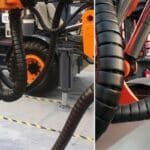
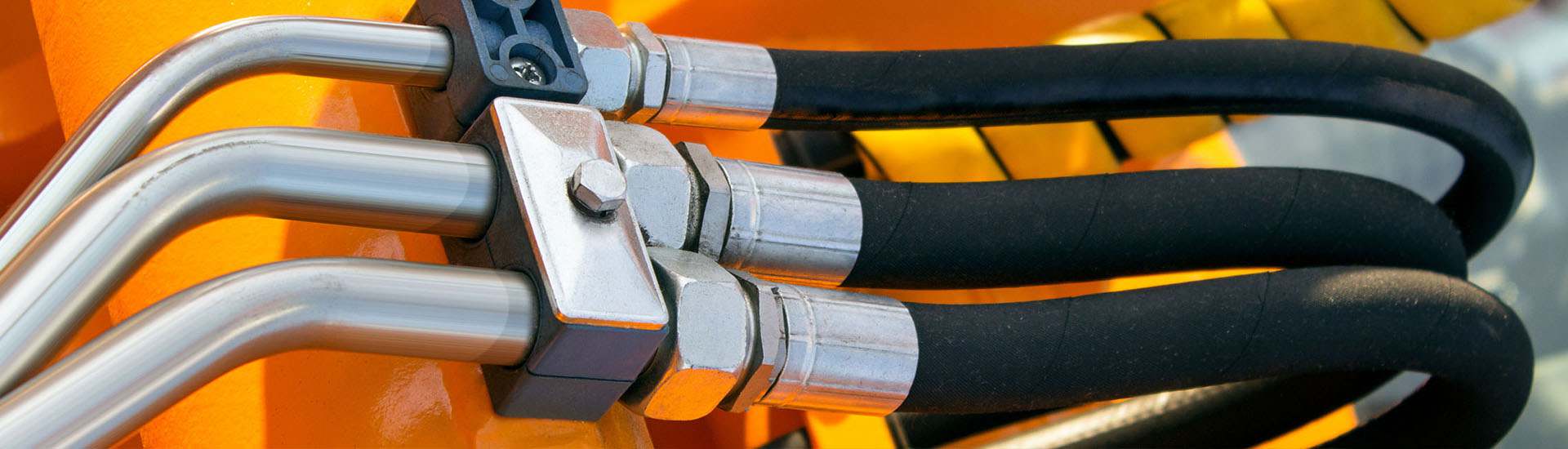
High-pressure hoses are typically installed in places where rigid metal hydraulic piping cannot be used. They are most commonly used to transmit power around bends and moving parts (such as the bucket lifting mechanism of an excavator). High-pressure hoses can transmit not only energy but also materials, such as delivering pressurized drilling fluid downhole.
What are high-pressure hoses used for?
A standard hydraulic system is a component that converts mechanical energy into hydraulic energy to perform specific hydraulic power tasks. The operation of a hydraulic system requires the transmission of high-pressure fluid.
High-pressure hoses are pipes used to transport oil or emulsion fluids. Hydraulic fluid flows through the hose from the hydraulic pump to the hydraulic cylinder or hydraulic motor, and then returns. They are flexible and have thick, robust walls, capable of withstanding strong mechanical stress and fluid pressure.
In addition to hydraulic systems, high-pressure hoses are also used in pneumatic systems. However, in this case, they are used to transport compressed air.
What are the application areas of high-pressure hoses?
Excavators, cranes, tractors, combine harvesters, bulldozers, and various machine tools have greatly facilitated our lives. With their help, we can build houses, plant and harvest crops, transport food, mine minerals, and manufacture goods. All these machines are different – each machine has its own design features and uses, but they have one thing in common – each machine uses a hydraulic system, and an important and indispensable component of this system is the high-pressure hose (HPH).
- Hydraulic systems for pumps, cylinders, turbines, cranes, presses, and other components;
- Railway transportation and agriculture (hydraulic systems in tractors, combines, and diesel locomotives);
- Logging equipment;
- Cargo transportation and road construction equipment (in the system for lifting cabs and controlling attachments);
- Drilling equipment and logging machines;
- In the metallurgical industry (used for transferring work teams, casting facilities, trimming machines, and presses);
- Lifting equipment for warehouses and construction projects;
In addition to their application in hydraulic systems, high-pressure hoses are also widely used in the petroleum industry. Special drilling hoses are used when drilling oil and gas wells.
Structure of High-Pressure Hoses
High-pressure hoses are designed to withstand high fluid pressure, possess high mechanical strength, and minimize vibrations throughout the hydraulic system.
High-pressure hoses are reinforced with metal braiding or winding. This reinforcement layer ensures the high strength of the hose and is made of a special metal wire coated with an anti-corrosion coating, thus ensuring its pressure resistance.
Structurally, high-pressure hoses have the following design:
Inner rubber layer – made of a special rubber compound, ensuring the hose's sealing properties and providing good corrosion resistance and tensile strength in chemical environments;
Reinforcement layer – made of high-strength steel wire or synthetic fibers; there may be multiple such intermediate layers if the hose is intended for use in high-pressure systems;
Outer protective rubber layer prevents external damage and ensures the strength and durability of the hose. This rubber layer has extremely high abrasion resistance.
Because of this multi-layered design, high-pressure hoses can perfectly absorb vibrations and resist high pressure, abrasion, and impact in the working environment.
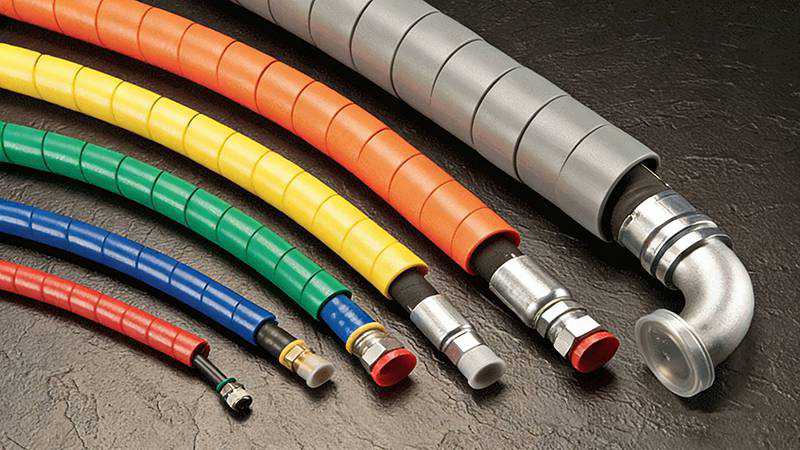
In the finished assembled high-pressure hose, end fittings are installed at both ends, allowing it to be connected to the hydraulic system.
Types of High-Pressure Hoses
High-pressure hoses are divided into two types: braided and spiral-wound. In hydraulic systems, braided hoses are more commonly used than spiral-wound hoses. This is because braided hoses have a much larger bending radius than spiral-wound hoses. This is particularly important for braided hoses, as they are often used in areas with many bends and moving parts. However, spiral-wound hoses can withstand higher working pressures because they can have up to six reinforcement layers, while braided hoses have a maximum of only three layers.
The most commonly used types of high-pressure flexible pipes currently include:
The most common type of hose is the braided hose. In Europe, the production of steel wire braided hoses must comply with EN 853 and EN 857 standards. These standards specify the manufacturing processes for hoses used with hydraulic fluids (ISO 6743-4).
Since hydraulic fluids conforming to the aforementioned ISO standards are also primarily used in hydraulic drive systems in Russia, the European requirements largely apply to hoses conforming to the Russian national standard GOST 6286-73.
The EN 853 standard specifies the production of 1SN and 2SN type hoses. The EN 857 standard applies to high-pressure hoses (formerly known as "compact hoses") and designates them as 1SC and 2SC types. These hoses have a smaller bending radius. Their operating environment is similar to other hoses of the same type.
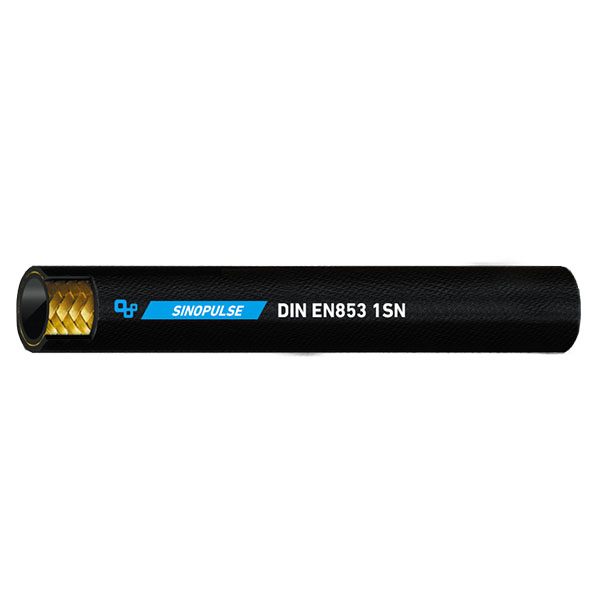
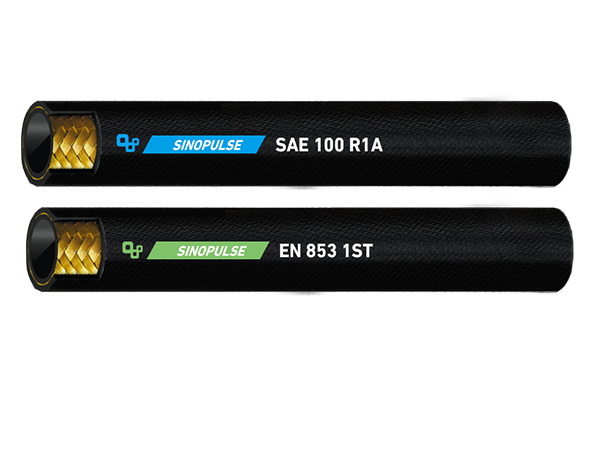
1SN DIN EN 853 standard braided hose - one layer of metal braiding
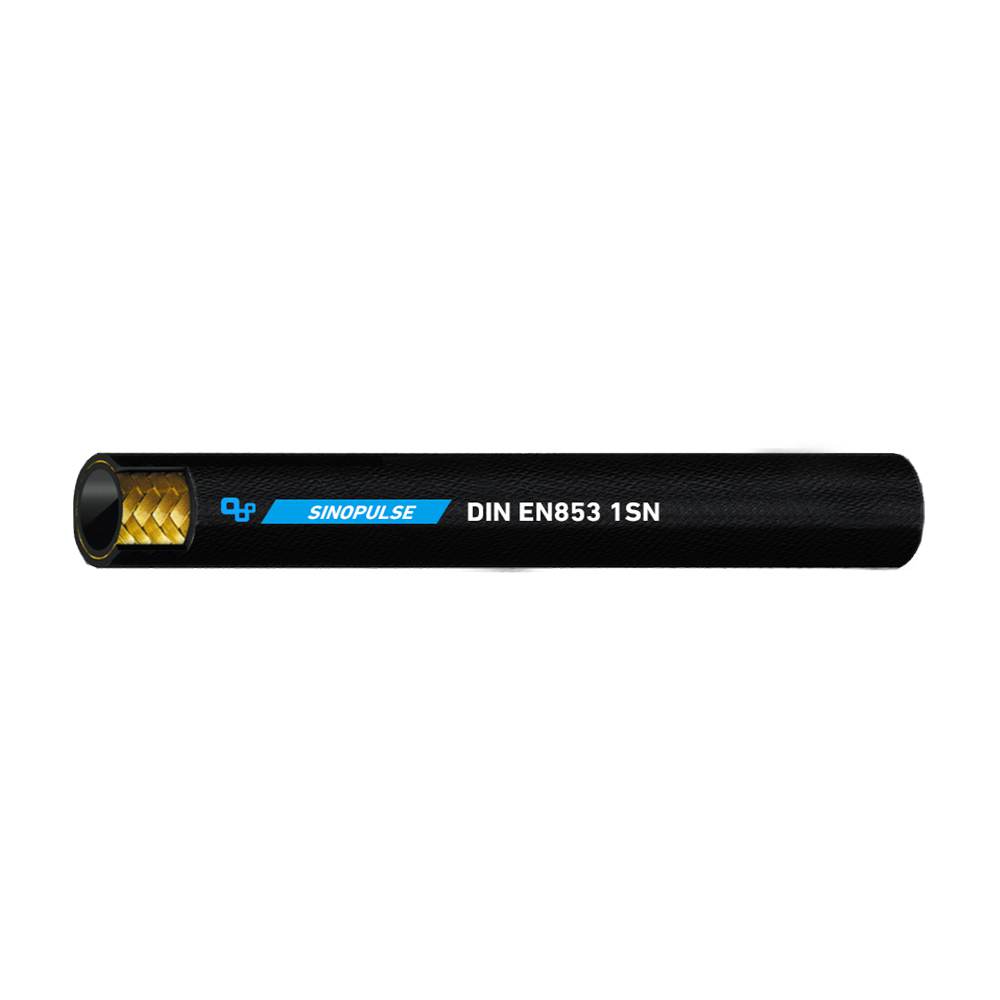
- Inner layer: Oil-resistant synthetic rubber
- Reinforcement layer: One layer of steel wire braiding
- Outer layer: Abrasion-resistant synthetic rubber
- Working temperature: -40°C to +100°C (maximum +120°C)
High-pressure hose 1SN characteristics table based on standard sizes
| Size | Inside Diameter | Outside Diameter | Working Pressure | Bursting Pressure | Bend Radius | Weight | Length | ||||
| DN | mm | Inch | mm | mm | bar | psi | bar | psi | mm | kgs/m | m |
| DN5 | 4.8 | 3/16" | 4.6-5.4 | 12.5 MAX . | 250 | 3625 | 1000 | 14500 | 90 | 0.240 | 50/100 |
| DN6 | 6.4 | 1/4" | 6.2-7.0 | 14. 1MAX . | 225 | 3263 | 900 | 13050 | 100 | 0.255 | 50/100 |
| DN8 | 7.9 | 5/16" | 7.7-8.5 | 15.7 MAX . | 215 | 3118 | 860 | 12470 | 115 | 0.304 | 50/100 |
| DN10 | 9.5 | 3/8" | 9.3-10.1 | 18.1 MAX . | 180 | 2610 | 720 | 10440 | 130 | 0.390 | 50/100 |
| DN12 | 12.7 | 1/2" | 12.3-13.5 | 21.4 MAX . | 160 | 2320 | 640 | 9280 | 180 | 0.472 | 50/100 |
| DN16 | 15.9 | 5/8" | 15.5-16.7 | 24.5 MAX . | 130 | 1885 | 520 | 7540 | 200 | 0.581 | 50/100 |
| DN19 | 19.1 | 3/4" | 18.6-19.8 | 28.5 MAX . | 105 | 1523 | 420 | 6090 | 240 | 0.690 | 50/100 |
| DN25 | 25.4 | 1" | 25.0-26.4 | 36.6 MAX . | 87 | 1261 | 348 | 5044 | 300 | 0.830 | 50/100 |
| DN32 | 31.8 | 1-1/4" | 31.4-33.0 | 44.8 MAX . | 63 | 914 | 252 | 3654 | 420 | 1.325 | 20/40 |
| DN38 | 38.1 | 1-1/2" | 37.7-39.3 | 52.1 MAX . | 50 | 725 | 200 | 2900 | 500 | 1.500 | 20/40 |
| DN50 | 50.8 | 2" | 50.4-52.0 | 65.5 MAX . | 40 | 580 | 160 | 2320 | 630 | 1.875 | 20/40 |
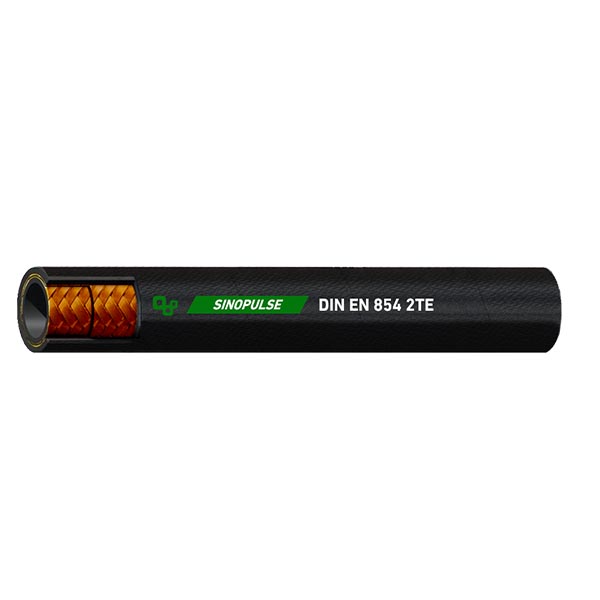
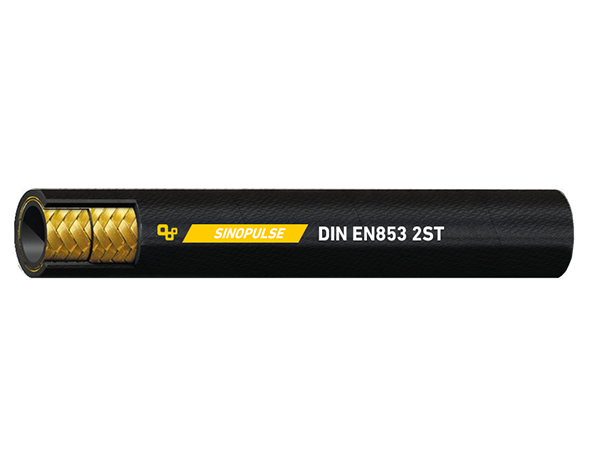
2SN DIN EN 853 Standard Braided Hose - Two Layers of Steel Wire Braiding
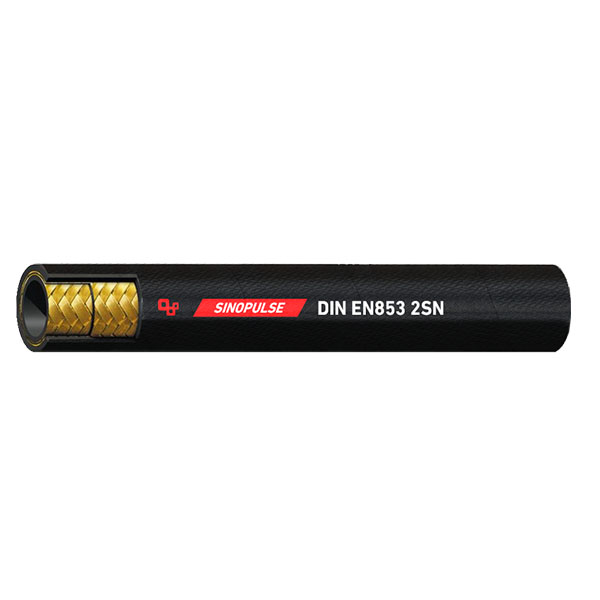
- Inner layer: Oil-resistant synthetic rubber
- Reinforcement layer: Two layers of steel wire braiding
- Outer layer: Abrasion-resistant synthetic rubber
- Working temperature: -40°C to +100°C (maximum +120°C)
High-pressure hose 2SN characteristics table listed according to standard sizes
| Size | Inside Diameter | Outside Diameter | Working Pressure | Bursting Pressure | Bend Radius | Weight | Length | ||||
| DN | mm | Inch | mm | mm | bar | psi | bar | psi | mm | kgs/m | m |
| DN5 | 4.8 | 3/16" | 4.6-5.4 | 14.1 MAX . | 415 | 6018 | 1660 | 24070 | 90 | 0.340 | 50/100 |
| DN6 | 6.4 | 1/4" | 6.2-7.0 | 15.7 MAX . | 400 | 5800 | 1600 | 23200 | 100 | 0.372 | 50/100 |
| DN8 | 7.9 | 5/16" | 7.7-8.5 | 17.3 MAX . | 350 | 5075 | 1400 | 20300 | 115 | 0.430 | 50/100 |
| DN10 | 9.5 | 3/8" | 9.3-10.1 | 19.7 MAX . | 330 | 4785 | 1320 | 19140 | 125 | 0.560 | 50/100 |
| DN12 | 12.7 | 1/2" | 12.3-13.5 | 23.0 MAX . | 275 | 3988 | 1100 | 15950 | 180 | 0.640 | 50/100 |
| DN16 | 15.9 | 5/8" | 15.5-16.7 | 26.2 MAX . | 250 | 3625 | 1000 | 14500 | 200 | 0.732 | 50/100 |
| DN19 | 19.1 | 3/4" | 18.6-19.8 | 30.1 MAX . | 215 | 3118 | 860 | 12470 | 240 | 0.930 | 50/100 |
| DN25 | 25.4 | 1" | 25.0-26.4 | 38.9 MAX . | 165 | 2393 | 660 | 9570 | 300 | 1.360 | 50/100 |
| DN32 | 31.8 | 1-1/4" | 31.4-33.0 | 49.5 MAX . | 125 | 1813 | 500 | 7250 | 420 | 1.850 | 20/40 |
| DN38 | 38.1 | 1-1/2" | 37.7-39.3 | 55.9 MAX . | 90 | 1305 | 360 | 5220 | 500 | 2.300 | 20/40 |
| DN50 | 50.8 | 2" | 50.4-52.0 | 68.6 MAX . | 80 | 1160 | 320 | 4640 | 630 | 2.650 | 20/40 |
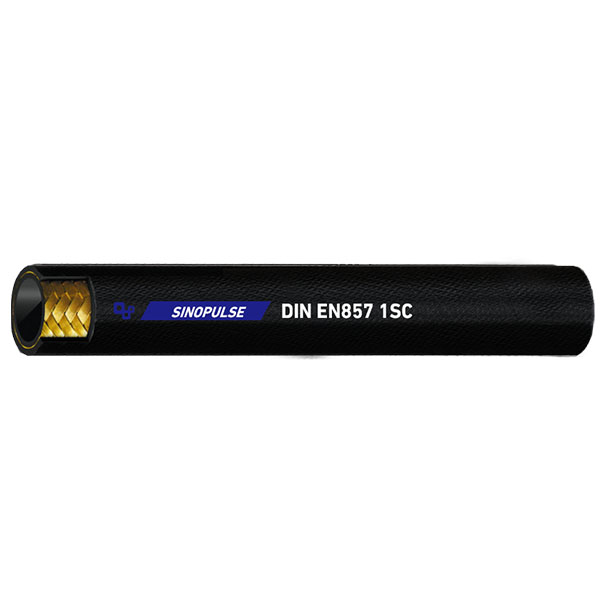
- Inner layer: Oil-resistant synthetic rubber
- Reinforcement layer: One layer of high-strength steel wire braiding
- Outer layer: Abrasion-resistant synthetic rubber
- Working temperature: -40°C to +100°C
High-pressure hose 1SC characteristics table listed according to standard sizes
| Size | Inside Diameter | Outside Diameter | Working Pressure | Bursting Pressure | Bend Radius | Weight | Length | ||||
| DN | mm | Inch | mm | mm | bar | psi | bar | psi | mm | kgs/m | m |
| DN6 | 6.4 | 1/4" | 6.2-7.0 | 13.5 MAX . | 225 | 3263 | 900 | 13050 | 75 | 0.190 | 50/100 |
| DN8 | 7.9 | 5/16" | 7.7-8.5 | 14.5 MAX . | 215 | 3118 | 860 | 12470 | 85 | 0.220 | 50/100 |
| DN10 | 9.5 | 3/8" | 9.3-10.1 | 16.9 MAX . | 180 | 2610 | 720 | 10440 | 90 | 0.250 | 50/100 |
| DN12 | 12.7 | 1/2" | 12.3-13.5 | 20.4 MAX . | 160 | 2320 | 640 | 9280 | 130 | 0.350 | 50/100 |
| DN16 | 15.9 | 5/8" | 15.5-16.7 | 23 MAX . | 130 | 1885 | 520 | 7540 | 150 | 0.450 | 50/100 |
| DN19 | 19.1 | 3/4" | 18.6-19.8 | 26.7 MAX . | 105 | 1523 | 420 | 6090 | 180 | 0.500 | 50/100 |
| DN25 | 25.4 | 1" | 25.0-26.4 | 34.9 MAX . | 88 | 1276 | 352 | 5104 | 230 | 0.750 | 50/100 |
2SC DIN EN 857 Braided Hose - Two layers of metal braiding for a larger bending radius;
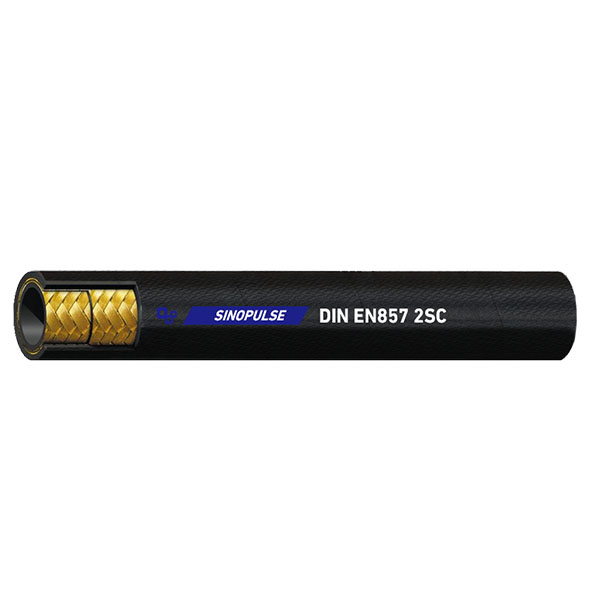
- Inner layer: Oil-resistant synthetic rubber
- Reinforcement layer: Two layers of high-strength steel wire braiding
- Outer layer: Abrasion-resistant synthetic rubber
- Working temperature: -40°C to +100°C
High-pressure hose 2SC characteristics table listed according to standard sizes
| Size | Inside Diameter | Outside Diameter | Working Pressure | Bursting Pressure | Bend Radius | Weight | Length | ||||
| DN | mm | Inch | mm | mm | bar | psi | bar | psi | mm | kgs/m | m |
| DN6 | 6.4 | 1/4" | 6.2-7.0 | 14.2 MAX . | 400 | 5800 | 1600 | 23200 | 75 | 0.290 | 50/100 |
| DN8 | 7.9 | 5/16" | 7.7-8.5 | 16.0 MAX . | 350 | 5075 | 1400 | 20300 | 85 | 0.330 | 50/100 |
| DN10 | 9.5 | 3/8" | 9.3-10.1 | 18.3 MAX . | 330 | 4785 | 1320 | 19140 | 90 | 0.420 | 50/100 |
| DN12 | 12.7 | 1/2" | 12.3-13.5 | 21.5 MAX . | 275 | 3988 | 1100 | 15950 | 130 | 0.550 | 50/100 |
| DN16 | 15.9 | 5/8" | 15.5-16.7 | 24.7 MAX . | 250 | 3625 | 1000 | 14500 | 170 | 0.650 | 50/100 |
| DN19 | 19.1 | 3/4" | 18.6-19.8 | 28.6 MAX . | 215 | 3118 | 860 | 12470 | 200 | 0.790 | 50/100 |
| DN25 | 25.4 | 1" | 25.0-26.4 | 36.6 MAX . | 165 | 2393 | 660 | 9570 | 250 | 1.180 | 50/100 |
The high-pressure hoses are manufactured according to EN 856 standard, which is similar to the Russian GOST 25452-90 standard. These hoses are designed for medium pressure (4SP type), high pressure (4SH type), and high pressure under particularly demanding operating conditions (R13 and R15 types).
4SP DIN EN 856 Four-Spiral Hydraulic Hose;
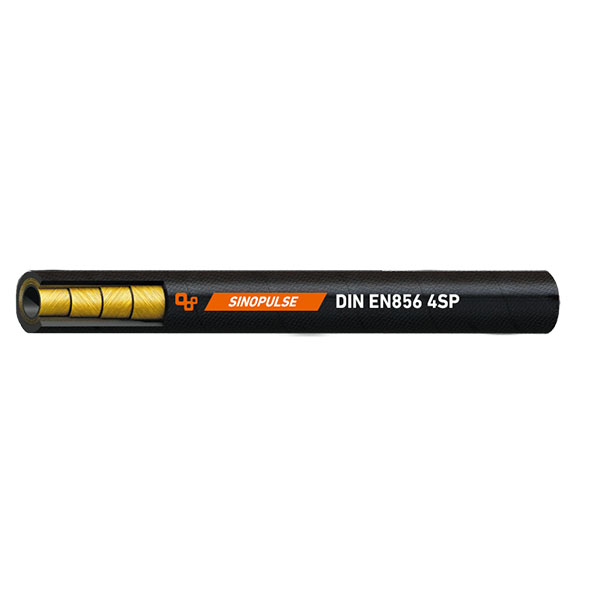
- Inner layer: Oil-resistant synthetic rubber
- Reinforcement: Four layers of steel wire braiding
- Outer layer: Abrasion-resistant synthetic rubber
- Working temperature: -40°C to +100°C (maximum +120°C)
High-pressure hose 4SP characteristics table listed according to standard sizes
| Size | Inside Diameter | Outside Diameter | Working Pressure | Bursting Pressure | Bend Radius | Weight | Length | ||||
| DN | mm | Inch | mm | mm | bar | psi | bar | psi | mm | kgs/m | m |
| DN10 | 9.5 | 3/8" | 9.3-10.1 | 20.6-22.2 | 445 | 6453 | 1780 | 25810 | 180 | 0.700 | 20/40 |
| DN12 | 12.7 | 1/2" | 12.3-13.5 | 23.8-25.4 | 415 | 6018 | 1660 | 24070 | 230 | 0.800 | 20/40 |
| DN16 | 16.0 | 5/8" | 15.5-16.7 | 27.4-29.0 | 350 | 5075 | 1400 | 20300 | 250 | 0.975 | 20/40 |
| DN19 | 19.1 | 3/4" | 18.6-19.8 | 31.4-33.0 | 350 | 5075 | 1400 | 20300 | 300 | 1.450 | 20/40 |
| DN25 | 25.4 | 1" | 25.0-26.4 | 38.5-40.9 | 280 | 4060 | 1120 | 16240 | 340 | 2.050 | 20/40 |
| DN32 | 31.8 | 1-1/4" | 31.4-33.0 | 49.2-52.4 | 210 | 3045 | 840 | 12180 | 460 | 3.060 | 20/40 |
| DN38 | 38.1 | 1-1/2" | 37.7-39.3 | 55.6-58.8 | 185 | 2683 | 740 | 10730 | 560 | 3.650 | 20/40 |
| DN50 | 50.8 | 2" | 50.4-52.0 | 68.2-71.4 | 165 | 2393 | 660 | 9570 | 660 | 4.850 | 20/40 |
4SH DIN EN 856 High-Pressure Hydraulic Hose with Four Spiral Layers;
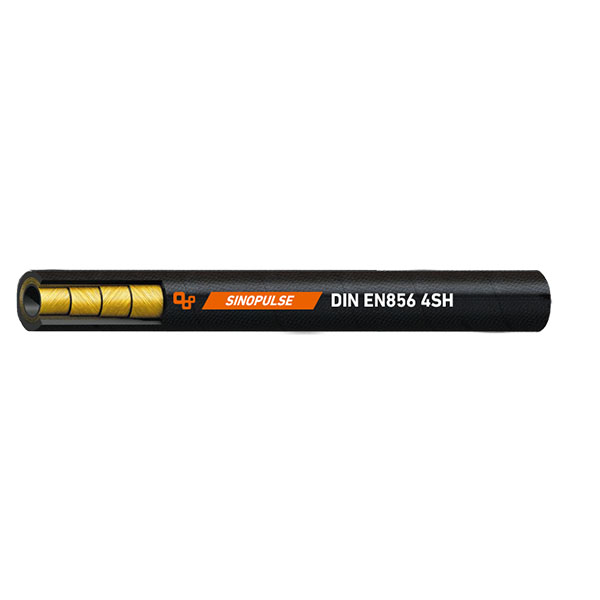
- Inner layer: Oil-resistant synthetic rubber
- Reinforcement layer: Four layers of high-strength steel wire
- Outer layer: Abrasion-resistant synthetic rubber
- Working temperature: -40°C to +100°C (maximum +120°C)
High-pressure hose 4SH characteristics table (classified by standard size)
| Size | Inside Diameter | Outside Diameter | Working Pressure | Bursting Pressure | Bend Radius | Weight | Length | ||||
| DN | mm | Inch | mm | mm | bar | psi | bar | psi | mm | kgs/m | m |
| DN19 | 19.1 | 3/4" | 18.6-19.8 | 31.4-33.0 | 420 | 6090 | 1680 | 24360 | 280 | 1.600 | 20/40 |
| DN25 | 25.4 | 1" | 25.0-26.4 | 37.5-39.9 | 380 | 5510 | 1520 | 22040 | 340 | 2.200 | 20/40 |
| DN32 | 31.8 | 1-1/4" | 31.4-33.0 | 43.9-47.1 | 325 | 4713 | 1300 | 18850 | 460 | 2.750 | 20/40 |
| DN38 | 38.1 | 1-1/2" | 37.7-39.3 | 51.9-55.1 | 290 | 4205 | 1160 | 16820 | 560 | 3.750 | 20/40 |
| DN50 | 50.8 | 2" | 50.4-52.0 | 66.5-69.7 | 250 | 3625 | 1000 | 14500 | 700 | 4.950 | 20/40 |
R12 DIN EN 856 Lightweight Spiral Hose, four-wire reinforced;
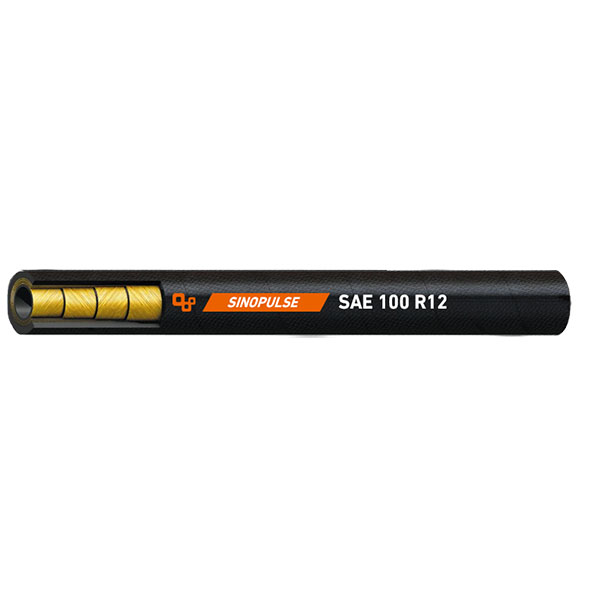
- Inner layer: Oil-resistant synthetic rubber
- Reinforcement layer: Four layers of high-strength steel wire
- Outer layer: Abrasion-resistant synthetic rubber
- Working temperature: -40°C to +100°C (maximum +120°C)
High-pressure hose R12 specifications table (classified by standard sizes)
| Size | Inside Diameter | Outside Diameter | Working Pressure | Bursting Pressure | Bend Radius | Weight | Length | ||||
| DN | mm | Inch | mm | mm | bar | psi | bar | psi | mm | kgs/m | m |
| DN10 | 9.5 | 3/8" | 9.3-10.1 | 19.5-21.0 | 276 | 4002 | 1104 | 16008 | 130 | 0.700 | 20/40 |
| DN12 | 12.7 | 1/2" | 12.3-13.5 | 23.0-24.6 | 276 | 4002 | 1104 | 16008 | 180 | 0.800 | 20/40 |
| DN16 | 15.9 | 5/8" | 15.5-16.7 | 26.6-28.8 | 276 | 4002 | 1104 | 16008 | 200 | 0.975 | 20/40 |
| DN19 | 19.1 | 3/4" | 18.6-19.8 | 29.9-31.5 | 276 | 4002 | 1104 | 16008 | 240 | 1.450 | 20/40 |
| DN25 | 25.4 | 1" | 25.0-26.4 | 36.8-39.2 | 276 | 4002 | 1104 | 16008 | 300 | 2.050 | 20/40 |
| DN32 | 31.8 | 1-1/4" | 31.4-33.0 | 45.4-48.6 | 207 | 3002 | 828 | 12006 | 420 | 3.060 | 20/40 |
| DN38 | 38.1 | 1-1/2" | 37.7-39.3 | 51.9-55.0 | 172 | 2494 | 688 | 9976 | 500 | 3.650 | 20/40 |
| DN50 | 50.8 | 2" | 50.4-52.0 | 65.1-68.3 | 172 | 2494 | 688 | 9976 | 630 | 4.850 | 20/40 |
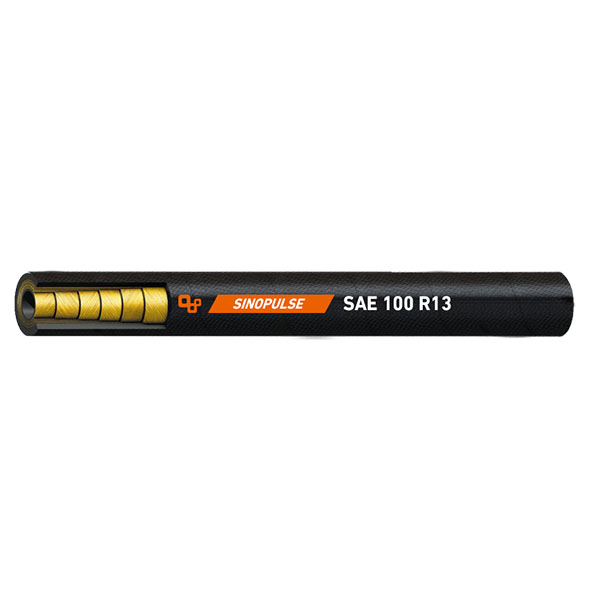
- Inner layer: Synthetic oil-resistant rubber
- Reinforcement: Four layers of spiral steel wire – for diameters dn25 (inclusive) and below; Six layers of spiral steel wire – for diameters dn32 (inclusive) and above.
- Outer layer: Synthetic rubber, highly abrasion-resistant, oil-resistant, ozone-resistant, and weather-resistant
- Working temperature: -40°C to +121°C
R13 Hydraulic Hose Characteristics Table (by standard size)
| Size | Inside Diameter | Outside Diameter | Working Pressure | Bursting Pressure | Bend Radius | Weight | Length | ||||
| DN | mm | Inch | mm | mm | bar | psi | bar | psi | mm | kgs/m | m |
| DN19 | 19.1 | 3/4" | 18.6-19.8 | 31.0-33.2 | 350 | 5075 | 1400 | 20300 | 240 | 1.450 | 20/40 |
| DN25 | 25.4 | 1" | 25.0-26.4 | 37.6-39.8 | 350 | 5075 | 1400 | 20300 | 300 | 2.050 | 20/40 |
| DN32 | 31.8 | 1-1/4" | 31.4-33.0 | 48.3-51.3 | 350 | 5075 | 1400 | 20300 | 420 | 3.950 | 20/40 |
| DN38 | 38.1 | 1-1/2" | 37.7-39.3 | 55.8-58.8 | 350 | 5075 | 1400 | 20300 | 500 | 5.250 | 20/40 |
| DN50 | 50.8 | 2" | 50.4-52.0 | 69.5-72.7 | 350 | 5075 | 1400 | 20300 | 640 | 6.600 | 20/40 |
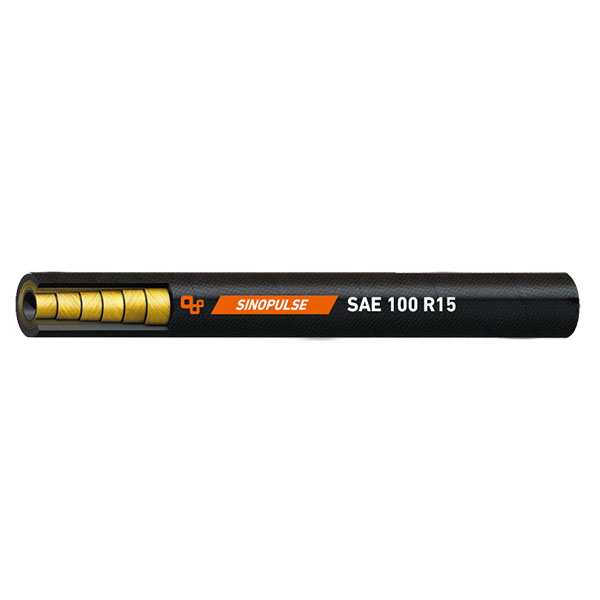
- Inner layer: Synthetic oil-resistant rubber
- Reinforcement: Four layers of high-strength spiral steel wire – for diameters d25 (inclusive) and below; Six layers of high-strength spiral steel wire – for diameters d32 (inclusive) and above
- Outer layer: Synthetic rubber, highly abrasion-resistant, oil-resistant, ozone-resistant, and weather-resistant
- Working temperature: -40°C to +121°C
R15 Hydraulic Hose Specifications Table (by standard size)
| Size | Inside Diameter | Outside Diameter | Working Pressure | Bursting Pressure | Bend Radius | Weight | Length | ||||
| Dash | mm | Inch | mm | mm | bar | psi | bar | psi | mm | kgs/m | m |
| DN10 | 9.5 | 3/8" | 9.3-10.1 | 23.3 MAX . | 420 | 6090 | 1680 | 24360 | 150 | 0.800 | 20/40 |
| DN12 | 12.3 | 1/2" | 12.3-13.5 | 26.8 MAX . | 420 | 6090 | 1680 | 24360 | 200 | 0.900 | 20/40 |
| DN19 | 19.1 | 3/4" | 18.6-19.8 | 36.1 MAX . | 420 | 6090 | 1680 | 24360 | 265 | 1.600 | 20/40 |
| DN25 | 25.4 | 1" | 25.0-26.4 | 42.9 MAX . | 420 | 6090 | 1680 | 24360 | 330 | 2.250 | 20/40 |
| DN32 | 31.8 | 1-1/4" | 31.4-33.0 | 51.5 MAX . | 420 | 6090 | 1680 | 24360 | 445 | 3.950 | 20/40 |
| DN38 | 38.1 | 1-1/2" | 37.7-39.3 | 59.6 MAX . | 420 | 6090 | 1680 | 24360 | 530 | 5.250 | 20/40 |
| DN50 | 50.8 | 2" | 50.4-52.0 | - | 420 | 6090 | 1680 | 24360 | - | 6.600 | 20/40 |
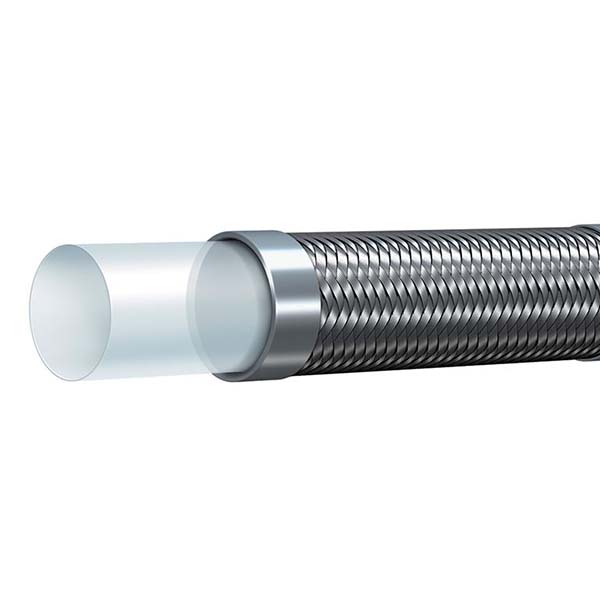
Polytetrafluoroethylene (PTFE) hoses are designed for flexible connections in various machines and equipment components that require higher resistance to high temperatures, high pressure, and corrosive environments, as well as superior performance against working fluid vibration, pressure, and hydraulic shock.
PTFE (Teflon) hoses are characterized by an internal flexible cavity, which is tubular in shape and made of fluoroplastic (Teflon), with layers of stainless steel spiral and mesh braiding applied over it.
Fluoroplastic tubes come in two types: smooth and corrugated. Corrugated hoses offer better flexibility but are significantly more expensive and have lower pressure resistance than smooth hoses.
PTFE hoses are typically connected using traditional hydraulic fittings crimped onto smooth connectors.
- Inner layer: Fluoroplastic tube
- Reinforcement and outer layer: One or two layers of stainless steel braiding to improve the hose's strength characteristics and protect against mechanical damage.
- Applications: Teflon is resistant to a wide range of liquids and gases, including alkalis, solvents, oils, and strong acids.
- Operating temperature: -60°C to +260°C
Characteristics table of high-pressure PTFE hose 1 (1 layer of braiding) (by standard size)
| Size | Inside Diameter | Outside Diameter | Working Pressure | Bursting Pressure | Bend Radius | EsWeightr de pared | Length | ||||
| DN | mm | Inch | mm | mm | bar | psi | bar | psi | mm | mm | m |
| DN3 | 4.9 | 1/8" | 3.0-3.4 | 5.8-6.2 | 280 | 4060 | 828 | 12180 | 40 | 1.000 | 90-110 |
| DN5 | 5.1 | 3/16" | 4.6-5.0 | 7.6-8.2 | 264 | 3828 | 800 | 11484 | 50 | 1.000 | 90-110 |
| DN6 | 6.7 | 1/4" | 6.1-6.5 | 9.1-9.7 | 224 | 3248 | 700 | 9744 | 63 | 1.000 | 90-110 |
| DN8 | 8.4 | 5/16" | 7.9-8.3 | 10.9-11.5 | 207 | 3002 | 621 | 9004.5 | 75 | 1.000 | 90-110 |
| DN10 | 10.3 | 3/8" | 9.5-10 | 12.6-13.2 | 183 | 2654 | 540 | 7960.5 | 125 | 1.000 | 90-110 |
| DN12 | 13.4 | 1/2" | 12.7-13.2 | 15.6-16.2 | 161 | 2335 | 483 | 7003.5 | 165 | 1.000 | 90-110 |
| DN16 | 16.6 | 5/8" | 15.8-16.3 | 18.9-19.5 | 117 | 1697 | 400 | 5089.5 | 200 | 1.000 | 45-55 |
| DN19 | 19.8 | 3/4" | 18.8-19.3 | 22.9-23.5 | 103 | 1494 | 360 | 4480.5 | 230 | 1.500 | 45-55 |
| DN22 | 22.1 | 7/8" | 21.8-22.3 | 26.2-26.8 | 92 | 1334 | 320 | 4002 | 260 | 1.500 | 45-55 |
| DN25 | 26.1 | 1" | 24.8-25.3 | 28.9-29.5 | 80 | 1160 | 240 | 3480 | 300 | 1.500 | 45-55 |
What factors should be considered when selecting high-pressure hoses?
1. Pressure – The selection of high-pressure hoses depends on the parameters of the hydraulic pump and motor used. Peak loads due to pulsation of the conveyed medium must be considered.
2. Diameter – The inner diameter of the hose must provide sufficient flow to pump the required volume of fluid per unit time. Too small a diameter will lead to pressure loss in the hydraulic system.
3. Medium Type – The hose material must be able to withstand contact with the liquid or gas. Various types of hoses are available for use with water, oil, or corrosive chemicals.
4. Temperature – The hose must maintain its properties within the specified temperature range, taking into account the pressure of the conveyed oil, emulsion, or other substances.
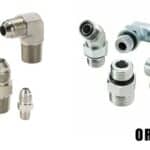
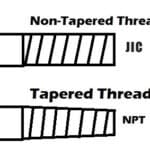
5. Connection Type – The type of connector, thread size, and shape of the connecting elements are crucial for connecting hydraulic system components.
6. External Factors – The operating conditions of the hose must be considered. For example, heavy mechanical loads on the casing, UV radiation, contact with corrosive substances, and severe vibrations.
Our product range includes high-pressure hose assemblies, a critical component for the efficient operation of hydraulic systems.
High-quality and reliable, our high-pressure hoses are designed to withstand extreme conditions and provide long-term service.
Here you can purchase a high-pressure hose characterized by the stability and strength required for specialized equipment.
A variety of available sizes will allow you to choose the perfect option for any need.
FAQ
What are high-pressure hoses and where are they applied?
High-pressure hoses are hoses designed to transmit working fluids under high pressure. They are used in hydraulic systems, specialized equipment, industrial equipment, printing presses, and machine tools.
What types of high-pressure hydraulic hoses are there, and what are the differences between them - 1SN, 2SN, 4SP, and 4SH?
The main difference lies in the number of steel wire braids. More layers mean higher allowable pressure and load resistance. For example, 4SH is designed for the most demanding working conditions.
What is the difference between spiral and braided high-pressure hoses?
In wrapped hoses, the steel wires are spiral in a way that the coil plane is perpendicular to the hose axis. In contrast, in braided hoses, the reinforcing layer consists of interwoven helical coils (different helical lines crossing each other). Therefore, with the same wire diameter and number of wires, the steel wires in spiralled hoses can withstand higher pressure. The steel wires in wrapped hoses are less prone to bending, meaning their allowable bending radius is much larger than that of braided hoses of the same specifications. For this reason, the vast majority of high-pressure hoses use a braided structure.
How do I choose the right high pressure hose for my system?
When making your selection, it's important to consider the working pressure, diameter, media temperature, and type of fitting. Our experts will help you find the best solution based on your specific parameters.
Can I order customized and configured hoses?
Yes, Sinopulse high-pressure hoses can be customized to your required length, with any type of connection and protection kit.
How can I check the quality of the high-pressure hose before installation?
Each hose undergoes leak detection and pressure testing. If you purchase high pressure hoses from our company, you can request product certification and installation and operation instructions.