
Hose clamps are used to attach and seal a hose onto a fitting. Several types of hose clamps are designed for different applications and pressure ranges.
Although small, hose clamps ensure the reliability and safety of fluid delivery systems. Understanding the different types of hose clamps and their applications is crucial to ensuring you choose the right connection.
View Sinopulse Hose Clamps
What is Hose Clamp
Hose clamps play a crucial connecting role in hydraulic systems and industrial pipelines. A hose clamp consists of a strap that wraps around the hose and a screw that applies pressure and tightens the hose onto the fitting. It secures the hose to the fitting, preventing fluid leakage. This makes the connection more stable, preventing leaks or detachment. It is commonly found in the piping and automotive industries.
Hose Clamp Types
Here are some of the different types of hose clamps:
-
Worm Gear Clamps:
Common type, made of stainless steel or galvanized band with a screw.

Stainless Steel Heavy Duty American Type Worm Gear Drive Pipe Clip Hose Clamp -
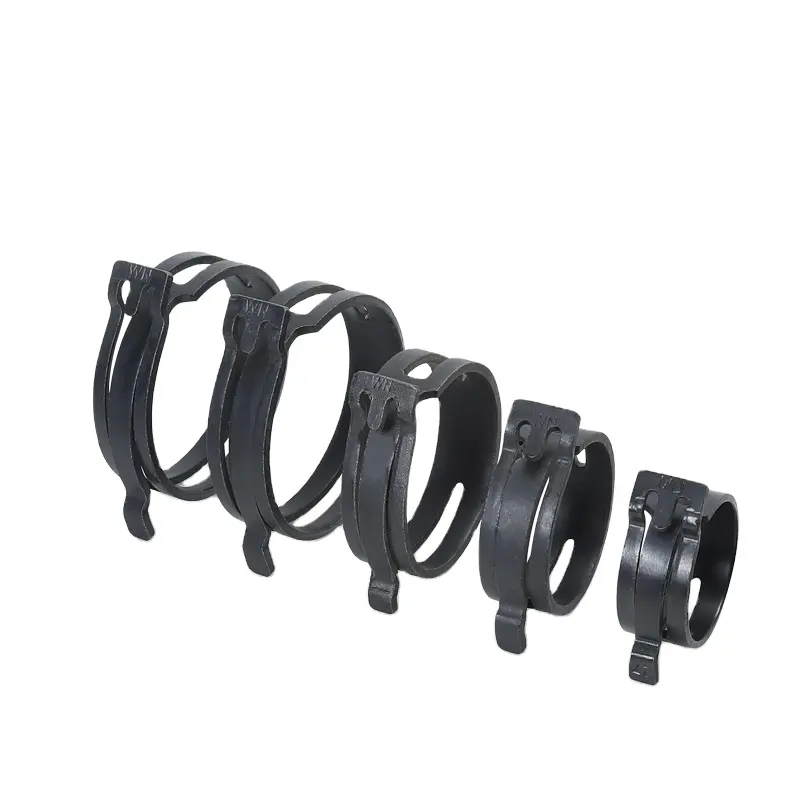
Spring Clamps:
Made of spring steel, often used for automotive coolant hoses.

spring clamp 2inch metal spring clamps spring steel clamp with handle -
T-Bolt Clamps
Heavy-duty t-bolt clamps for high-pressure applications.
Stainless Steel Spring-loaded T-bolt Clamp -
Ear Clamps
: Compressed "ears" to secure hoses.
stainless steel american single ear worm drive hose clamp -
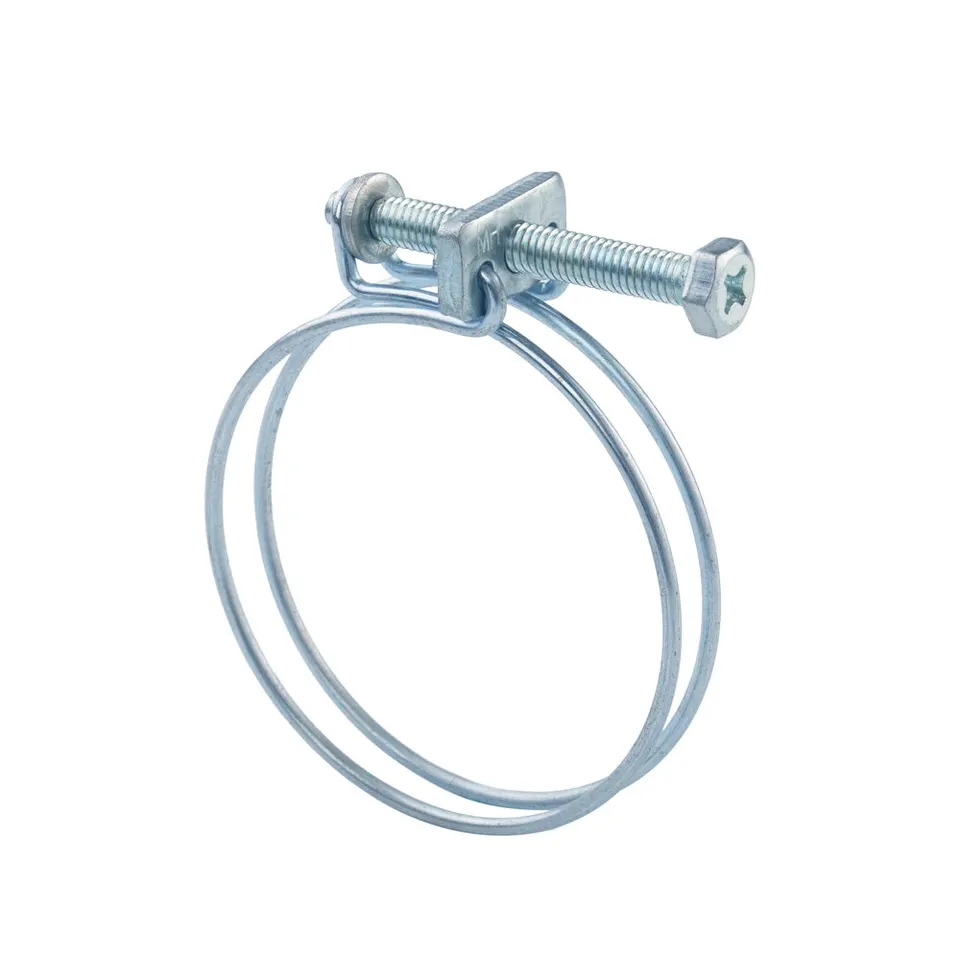
Wire Clamps
: Heavy wire, typically U-shaped.
Standard Galvanized Steel Double Wire Hose Clamp -
Band Clamps
: Versatile clamps with varied materials and sizes.
76mm stainless steel v band clamp bolt with flange kit -
V-Band Clamps
: Primarily for automotive and aerospace applications.
4.0" quick released v band clamp exhaust clamps for truck and turbocharger -
Pinch Clamps
: Ring-shaped, tightened using pincer tools.
high quality Oetiker type single ear pex pipe hose pinch clamp -
Quick Release Clamps
: Ideal for frequent adjustments or hose changes.

hydraulic heavy duty quick release 316 stainless steel hose clamp -
Swivel Clamps
: Offer swivel action when tightened.





Hose Clamp material type
Stainless steel hose clamps also come in different grades- SS304 and SS316. SS304 clamps are more prevalent due to their superior corrosion resistance, used in industrial, automotive, and water systems. For applications with higher environmental requirements, such as marine, food, and pharmaceutical industries, SS316 is more commonly used. The advantages of this material for hose clamps are rust and corrosion resistance, allowing for a long service life; however, this material is more expensive.
Carbon steel hose clamps are made of carbon steel and typically undergo surface treatments to enhance their appearance, such as galvanizing and chrome plating. This material is less expensive than stainless steel, but has poorer corrosion resistance.
Spring clamps are often used in low to medium pressure environments, offering elasticity and self-compensation.
Aluminum hose clamps are lightweight and less prone to rust. Common materials include: stainless steel 304/316, galvanized steel, and plastics (nylon). When to choose 316: For seawater/chemical resistance.
How to choose Hose Clamp
First, you need to know the outer diameter of the hose. The inner diameter of the hose clamp must match the outer diameter of the hose to ensure a tighter connection and prevent loosening.
The environment in which you are applying the hose will influence the material you choose for the hose clamp. Common materials include carbon steel, stainless steel, and plastic. If the hose is installed in a dry, non-corrosive environment, carbon steel clamps are an economical choice. In humid, corrosive environments, such as chemical plants, stainless steel clamps are more suitable, ensuring long-term rust-free performance. Plastic clamps are suitable for applications requiring lighter weight and lower cost.
Operating pressure also affects the choice of hose clamp. Excessive operating pressure can damage the clamp. The required load capacity of the clamp should be determined based on the weight of the pipe, the weight of the internal medium, and the external pressure it may withstand, thus selecting the appropriate clamp. For example, high-pressure pipeline systems in the chemical industry require high-strength clamps.
In high-temperature environments, choose high-temperature resistant clamp materials, such as stainless steel. In low-temperature environments, consider the low-temperature toughness of the clamp material to prevent brittleness and damage. For example, heating pipelines require clamps that can withstand high temperatures.
There are many ways to install hose clamps. You need to select the appropriate clamp and installation method based on the site conditions and requirements.
Where to use hose clamp
Hose Clamps: For domestic water applications, use corrosion-resistant clamps, such as those made of stainless steel or galvanized steel. Clamp clamps or lug clamps are reliable choices for the plumbing industry. These types of clamps offer excellent corrosion resistance and form a strong seal, crucial for maintaining proper water flow and preventing leaks in the plumbing system.
Gardening Hose Clamps: For gardening, landscaping, and indoor gardening, you can choose from a variety of hose clamp materials, including plastic. However, for outdoor use, the durability and lifespan of the hose clamp should be considered. Depending on their characteristics and functions, wire hose clamps, T-bolt hose clamps, and worm gear hose clamps are viable options for the gardening industry. Worm gear hose clamps with winged or butterfly designs are suitable for one-time projects.
Automotive Hose Clamps: Choosing the right clamp for automotive applications is crucial. Consult your vehicle's manual or a car expert for specific advice. T-bolt clamps, clamp clamps, lug clamps, and worm gear clamps are the preferred hose clamps for the automotive industry due to their long lifespan, durability, ease of installation, high reliability, and ability to meet the demanding requirements of automotive applications.
How to Size a Hose Clamp
To determine the correct hose clamp size, measure the hose diameter while it is still connected to the fitting. Since most hose clamps accommodate a range of diameters, it is recommended to choose a clamp with a hose diameter that falls within the middle of its specified range.
How to Install a Hose Clamp
Use a screwdriver or suitable tool to turn the screws or bolts on the hose clamp clockwise. Continue tightening until the hose clamp securely holds the hose in place, preventing leaks or slippage. Avoid under-tightening or over-tightening, and ensure the hose is not squeezed or deformed.
Choose Sinopulse hose clamps
Sinopulse offers a wide variety of clamps, including worm gear clamps, stainless steel clamps, and clamp tools.
We provide a complete range of hose clamps suitable for heavy industrial applications. After all, if you need to purchase hose clamps, please contact us.
Choosing the right clamp type is essential for safety and functionality. Contact Sinopulse - a professional hose fittings manufacturer, and get the right and quality hose clamps!